
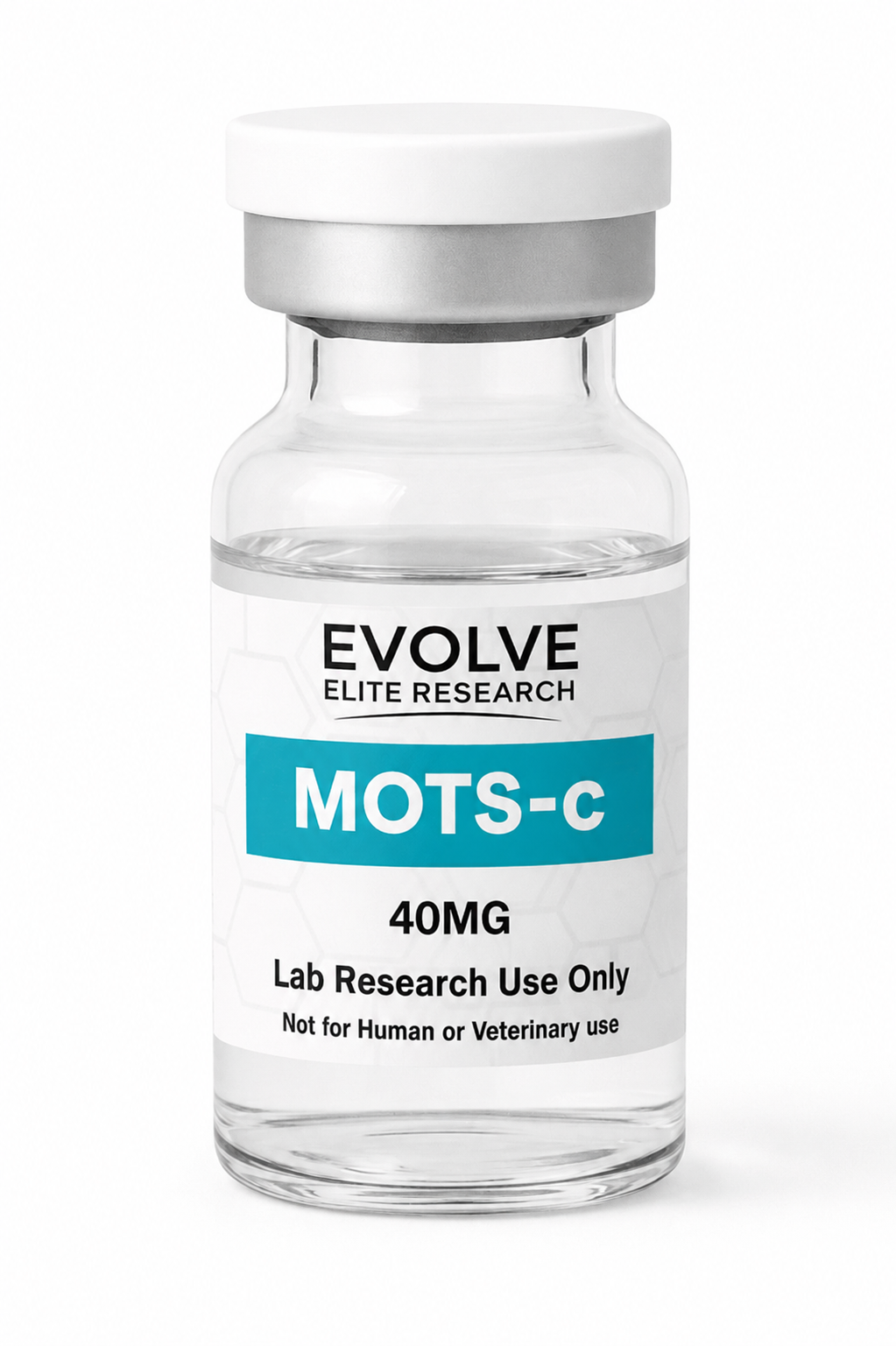
MOTS-c 40MG

$99.00
Technical Specifications
- Product Name: MOTS-c 40MG
- Scientific Name: MOTS-c (Mitochondrial Open Reading Frame of the 12S rRNA-c)
- Common Name: MOTS-c
- Peptide Classification: Synthetic Mitochondrial-Derived Peptide (MDP)
- Primary Research Areas: AMPK-Associated Signaling, Mitochondrial Signaling, Cellular Energy Metabolism, and Oxidative-Stress Research
- Amino Acid Sequence: MRWQEMGYIFYPRKLR
- Molecular Formula: C101H152N28O22S2
- Molecular Weight: Approximately 2,174.6 g/mol
- CAS Number: 1627580-64-6
- PubChem CID: 146675088
- Appearance: White to Off-White Lyophilized Powder
- Research Quantity: 40MG
- Intended Use: Laboratory Research Only
In stock
🔬 For Laboratory Research Use Only.
Not for human consumption, medical, veterinary, or household use.
By purchasing you agree to our
Terms and
Refund Policy.
Expanded research quantity for replicate studies, concentration-response testing and analytical allocation
Mitochondrial-derived peptide represented by the sequence MRWQEMGYIFYPRKLR
Investigated in AMPK, skeletal-muscle, mitochondrial-signaling and nuclear-response models
Prepared and shipped from our Texas facility with fast U.S. order processing
A defined lyophilized research format containing 40MG of MOTS-c, a synthetic 16-amino-acid mitochondrial-derived peptide investigated in controlled laboratory systems involving mitochondrial-to-nuclear communication, cellular energy sensing, AMPK-associated signaling, folate and purine metabolism, skeletal-muscle biology, glucose-handling models, metabolic-stress adaptation and peptide analytical characterization.
MOTS-c 40MG Research Summary
MOTS-c is a 16-amino-acid mitochondrial-derived peptide commonly represented by the sequence Met-Arg-Trp-Gln-Glu-Met-Gly-Tyr-Ile-Phe-Tyr-Pro-Arg-Lys-Leu-Arg.
Its abbreviated sequence is MRWQEMGYIFYPRKLR.
The name MOTS-c is derived from mitochondrial open reading frame of the 12S ribosomal RNA type-c.
MOTS-c was identified through investigation of a short open reading frame located within the mitochondrial 12S ribosomal RNA region.
This places MOTS-c within the broader category of mitochondrial-derived peptides, also abbreviated MDPs.
Mitochondrial-derived peptides are investigated as signaling molecules that may connect mitochondrial status with cellular, tissue and organism-level responses.
Early MOTS-c research examined metabolic regulation in skeletal muscle and identified relationships with folate metabolism, de novo purine biosynthesis and AMP-activated protein kinase.
Additional preclinical research has examined MOTS-c in cellular models involving glucose metabolism, insulin-associated signaling, cellular stress, mitochondrial homeostasis, skeletal-muscle biology, inflammatory signaling and age-associated experimental systems.
Under selected metabolic-stress conditions, MOTS-c has been reported to translocate from the cytoplasmic environment to the nucleus.
Nuclear localization has been investigated in connection with regulation of stress-responsive nuclear gene expression.
This behavior has generated interest in MOTS-c as a potential example of retrograde signaling, in which mitochondrial status influences nuclear responses.
MOTS-c is frequently associated with AMPK activation, but AMPK should not automatically be treated as a direct molecular receptor for the peptide.
A universally established cell-surface receptor that independently explains all reported MOTS-c observations has not been identified.
Experimental research should therefore distinguish direct molecular interaction, metabolic-pathway association, nuclear localization and downstream functional outcomes.
The defined 40MG format may support replicate experiments, concentration-response testing, time-course studies, cellular-compartment analysis, stability investigations and allocation of material for independent HPLC or LC-MS characterization.
MOTS-c 40MG is supplied exclusively for controlled laboratory research. It is not represented as a pharmaceutical product and is not intended for human or veterinary administration.
Technical Specifications
MOTS-c 40MG
MOTS-c
Mitochondrial open reading frame of the 12S rRNA type-c
Mitochondrial-derived peptide
40MG per vial
Lyophilized research material
16 amino-acid residues
MRWQEMGYIFYPRKLR
Met-Arg-Trp-Gln-Glu-Met-Gly-Tyr-Ile-Phe-Tyr-Pro-Arg-Lys-Leu-Arg
Methionine
Arginine
C101H152N28O22S2
Approximately 2,174.6 g/mol
146675088
Linear, non-cyclic peptide
No cysteine residues
No conventional intramolecular disulfide bridge
Mitochondrial 12S rRNA-associated short open reading frame
AMPK, mitochondrial signaling, metabolic stress and skeletal-muscle biology
HPLC, LC-MS, sequence analysis and stability research
Dry lyophilized peptide
Laboratory research only
Molecular calculations should identify whether material is represented as the free peptide, an acetate-associated form, a trifluoroacetate-associated form or another documented counterion form. Total material mass and peptide-equivalent mass should not automatically be treated as identical.
MOTS-c Amino-Acid Sequence
Met-Arg-Trp-Gln-Glu-Met-Gly-Tyr-Ile-Phe-Tyr-Pro-Arg-Lys-Leu-Arg
Abbreviated Sequence:
MRWQEMGYIFYPRKLR
MOTS-c contains 16 amino-acid residues joined through conventional peptide bonds.
The sequence includes two methionine residues, three arginine residues, two tyrosine residues and one residue each of tryptophan, glutamine, glutamic acid, glycine, isoleucine, phenylalanine, proline, lysine and leucine.
Methionine residues contain sulfur and may be susceptible to oxidative modification under selected conditions.
Arginine and lysine contribute basic side chains that may influence net charge, ionization and interaction with negatively charged biological molecules.
Glutamic acid contributes an acidic side chain.
Tryptophan, tyrosine and phenylalanine contribute aromatic structural features and ultraviolet absorbance.
Isoleucine and leucine contribute hydrophobic side-chain characteristics.
Proline may constrain local backbone geometry, while glycine may provide greater conformational flexibility.
The sequence contains no cysteine and does not form a conventional cysteine-dependent disulfide bridge.
Sequence truncation, residue substitution, terminal modification or oxidation creates a chemically distinct MOTS-c-related species.
Molecular Characteristics
MOTS-c contains basic, acidic, aromatic, polar and nonpolar side chains within a relatively short linear peptide.
Its physicochemical behavior may vary with pH, ionic strength, temperature, concentration, buffer composition and container material.
Multiple basic residues may contribute positive charge under many laboratory conditions.
Aromatic residues may contribute hydrophobic interactions and spectroscopic detectability.
Methionine oxidation may produce related species with altered mass and chromatographic behavior.
MOTS-c may produce several charge states during electrospray-ionization mass spectrometry.
Analytical interpretation should distinguish intact MOTS-c from truncated material, oxidized forms, adduct-associated ions and other peptide-related species.
MOTS-c contains 16 residues within a continuous, non-cyclic peptide backbone.
Arginine and lysine contribute positively charged side chains under many conditions.
Tryptophan, tyrosine and phenylalanine contribute aromatic and hydrophobic characteristics.
Two methionine residues create potential sites for oxidative modification.
The sequence contains no cysteine and does not form a conventional disulfide bond.
LC-MS may detect singly and multiply protonated forms of the intact peptide.
Charged and hydrophobic residues may influence recovery from laboratory materials.
Alteration of residue order or terminal structure produces a distinct molecular form.
Mitochondrial-Derived Peptide Biology
Mitochondria contain their own genome in addition to the nuclear genome found within the cell nucleus.
The mitochondrial genome is traditionally associated with genes involved in oxidative phosphorylation, transfer RNAs and ribosomal RNAs.
Research into short open reading frames has identified additional peptide sequences encoded within regions previously studied primarily for other mitochondrial functions.
Peptides translated from these short mitochondrial open reading frames are commonly described as mitochondrial-derived peptides.
MDP research investigates how mitochondria communicate their metabolic and stress status to other cellular compartments.
MOTS-c, humanin and small humanin-like peptides represent distinct mitochondrial-derived peptide families.
These peptides differ in sequence, genomic origin, proposed signaling pathways and experimental applications.
Shared mitochondrial origin does not establish a shared receptor or identical biological mechanism.
Each mitochondrial-derived peptide should be investigated as a separate molecular entity.
Discovery and Scientific Background
MOTS-c was reported as a 16-amino-acid peptide associated with a short open reading frame within the mitochondrial 12S ribosomal RNA region.
Initial research examined MOTS-c in preclinical skeletal-muscle and metabolic systems, including relationships among cellular energy sensing, glucose metabolism and mitochondrial signaling.
The discovery contributed to a broader reassessment of mitochondrial genomic regions and short peptide-coding sequences.
Rather than functioning only as intracellular energy-producing organelles, mitochondria are increasingly investigated as signaling centers.
MOTS-c research supports the concept that mitochondrial signals may influence cellular pathways beyond the organelle itself.
Subsequent studies examined nuclear translocation, stress-responsive gene expression, AMPK signaling and metabolic-stress-associated experimental responses.
Most mechanistic and functional MOTS-c findings remain based on cellular or animal models.
These studies do not establish pharmaceutical safety, clinical efficacy or suitability for personal use.
Mitochondrial-to-Nuclear Retrograde Signaling
Retrograde signaling describes communication from mitochondria toward the nucleus and other cellular systems.
This direction of signaling may inform the cell about mitochondrial energy state, oxidative conditions, nutrient availability or molecular stress.
The nucleus may respond by altering transcription of genes involved in metabolism, antioxidant defense, protein quality control and cellular adaptation.
MOTS-c has been investigated as a mitochondrial-derived signal capable of participating in this communication.
Under selected stress conditions, MOTS-c has been reported to relocate to the nucleus.
Nuclear localization does not independently establish direct DNA binding.
MOTS-c may interact with transcriptional machinery, chromatin-associated proteins or other nuclear regulatory systems indirectly or through protein complexes.
Mechanistic studies should distinguish nuclear entry, nuclear retention, protein interaction and transcriptional consequences.
AMPK-Associated Signaling Research
AMP-activated protein kinase is a central cellular energy-sensing enzyme.
AMPK responds to changes in cellular energy state and integrates signals related to AMP, ADP, ATP, nutrients, stress and upstream kinase activity.
Activation of AMPK may influence glucose transport, fatty-acid metabolism, mitochondrial biogenesis, autophagy and anabolic signaling.
MOTS-c research has repeatedly examined AMPK-associated responses in skeletal muscle and other experimental systems.
Potential endpoints include AMPK phosphorylation, phosphorylation of downstream targets, nucleotide ratios, substrate utilization and gene expression.
Increased AMPK phosphorylation does not independently establish direct binding between MOTS-c and AMPK.
AMPK may be activated downstream of altered folate metabolism, purine synthesis, energetic stress or another upstream process.
Pharmacological inhibitors, genetic suppression and rescue experiments may help evaluate AMPK dependence.
AMPK integrates cellular energy availability with metabolic pathway regulation.
AMPK-associated pathways may influence glucose-transporter localization and activity.
AMPK may regulate enzymes involved in fatty-acid synthesis and oxidation.
AMPK may interact with transcriptional regulators involved in mitochondrial adaptation.
AMPK may oppose selected anabolic pathways under energetic stress.
AMPK-associated signaling may influence cellular recycling and quality-control pathways.
Folate–Purine–AMPK Pathway Research
Early mechanistic MOTS-c research examined relationships among folate metabolism, de novo purine biosynthesis and AMPK activation.
Folate-dependent one-carbon metabolism contributes molecular units required for nucleotide synthesis and other cellular processes.
De novo purine synthesis generates purine nucleotides through a multi-step pathway.
Experimental alteration of this pathway may change levels of intermediates associated with cellular energy sensing.
One intermediate of interest is AICAR, also known as 5-aminoimidazole-4-carboxamide ribonucleotide.
AICAR-related accumulation may influence AMPK-associated signaling.
MOTS-c research may therefore evaluate folate-cycle metabolites, purine intermediates, nucleotide ratios and AMPK phosphorylation together.
Pathway association should not be interpreted as proof that MOTS-c directly inhibits one specific enzyme without direct biochemical evidence.
Isotope tracing, enzyme assays, targeted metabolomics and rescue experiments may strengthen pathway interpretation.
Nuclear-Translocation Research
Under selected metabolic-stress conditions, MOTS-c has been reported to translocate to the nucleus.
Nuclear translocation may be studied through cell fractionation, immunoblotting, confocal microscopy and tagged-peptide systems.
Cellular-fractionation experiments require controls for cross-contamination among mitochondrial, cytoplasmic and nuclear fractions.
Microscopy-based localization requires validated antibodies or labeled peptide methods with appropriate controls.
Fluorescent labeling may alter charge, hydrophobicity, localization or peptide stability.
Nuclear accumulation should therefore be confirmed through more than one method where possible.
AMPK inhibition or genetic modification may help evaluate whether nuclear translocation depends on AMPK-associated signaling.
Nuclear localization should be separated experimentally from changes in nuclear gene expression.
Cellular-Stress Response Research
Cells respond to energetic, oxidative, nutrient and proteotoxic stress through coordinated signaling networks.
MOTS-c has been investigated in cellular-stress models involving metabolic restriction, oxidative conditions and mitochondrial dysfunction.
Potential endpoints include viability, reactive-species measurements, antioxidant-gene expression, mitochondrial membrane potential and stress-responsive transcription.
A reduction in one stress marker does not independently establish improved global cellular function.
Stress intensity and exposure duration should be calibrated to avoid complete loss of experimental responsiveness.
Baseline viability, cell density and metabolic state should remain comparable among groups.
Cell-free controls should evaluate whether MOTS-c directly interferes with fluorescent or colorimetric detection chemistry.
Oxidative and Antioxidant-Response Research
Reactive oxygen species participate in both cellular signaling and molecular damage.
Mitochondria are one source and target of reactive molecular species.
MOTS-c research may evaluate reactive-species production, antioxidant enzymes, oxidative modifications and stress-responsive gene expression.
Nuclear translocation has been investigated in connection with genes containing antioxidant-response-associated regulatory elements.
Reduced probe fluorescence does not independently demonstrate direct radical-scavenging activity.
Fluorescent reactive-species probes may be influenced by light, media composition, cell density and direct peptide interference.
Orthogonal methods may include biochemical oxidation markers, enzyme activity, mass spectrometry and transcriptional analysis.
Skeletal-Muscle Research
Skeletal muscle is a major experimental tissue for studying glucose metabolism, energy sensing and metabolic adaptation.
Initial MOTS-c research identified skeletal muscle as an important experimental tissue.
MOTS-c may be studied in myoblasts, differentiated myotubes, isolated tissue, organoid systems and animal models.
Potential endpoints include glucose uptake, transporter localization, AMPK phosphorylation, mitochondrial respiration and metabolic gene expression.
Myoblasts and mature myotubes represent different biological states and should not be treated as interchangeable.
Differentiation status, passage number, nutrient conditions and serum composition should be documented.
Findings from cultured muscle cells do not reproduce the full neural, vascular and mechanical environment of intact skeletal muscle.
Glucose-Metabolism Research
Glucose metabolism involves transport, phosphorylation, glycolysis, glycogen metabolism and mitochondrial oxidation.
MOTS-c has been investigated in preclinical systems involving glucose metabolism and cellular energy regulation.
Potential laboratory endpoints include glucose uptake, glucose-transporter localization, glycolytic rate, lactate production and glycogen content.
Increased glucose disappearance from media does not independently establish increased mitochondrial glucose oxidation.
Glucose may be converted to lactate, stored as glycogen or directed into other metabolic pathways.
Isotope-tracing experiments may help distinguish glucose transport from downstream metabolic fate.
Insulin-dependent and insulin-independent glucose uptake should be evaluated separately where relevant.
Insulin-Signaling Research
Insulin signaling commonly involves the insulin receptor, insulin-receptor substrates, phosphoinositide 3-kinase and AKT-associated pathways.
MOTS-c has been investigated in preclinical models involving insulin-associated signaling and glucose-regulatory pathways.
Potential endpoints include insulin-receptor phosphorylation, AKT phosphorylation, glucose-transporter translocation and glucose uptake.
Changes in glucose-related experimental endpoints should not automatically be interpreted as direct insulin-receptor agonism.
MOTS-c-associated effects may arise through AMPK, altered substrate metabolism or interaction with insulin-signaling pathways.
Insulin-free, insulin-stimulated and insulin-resistant experimental conditions may help distinguish pathway interactions.
Receptor inhibitors and AMPK controls may further strengthen mechanistic interpretation.
Mitochondrial-Function Research
Mitochondrial function includes substrate oxidation, electron transport, membrane-potential maintenance, ATP generation and metabolic signaling.
MOTS-c may be studied in systems evaluating mitochondrial respiration, coupling efficiency, reactive-species production and stress adaptation.
Oxygen-consumption measurements may distinguish basal respiration, ATP-linked respiration, proton leak and maximal respiratory capacity.
Extracellular acidification may provide information about glycolytic activity but should not be treated as a direct measure of mitochondrial respiration.
Mitochondrial membrane-potential dyes require careful controls because probe accumulation depends on several cellular variables.
Mitochondrial number, mass and functional quality are separate properties.
Imaging, respiration, protein abundance and mitochondrial-DNA measurements may provide complementary evidence.
AMPK and PGC-1α-Associated Research
PGC-1α is a transcriptional coactivator involved in metabolic adaptation and mitochondrial biogenesis.
AMPK and PGC-1α pathways frequently interact in skeletal-muscle and metabolic-adaptation research.
MOTS-c studies may evaluate PGC-1α expression, localization, post-translational modification and downstream transcriptional programs.
Increased PGC-1α messenger RNA does not independently establish increased mitochondrial content or function.
Functional respiration, mitochondrial-protein abundance and structural measurements may be required for stronger conclusions.
Genetic suppression or pathway inhibition may help determine whether PGC-1α is required for a selected MOTS-c-associated response.
Energetic-Demand and Skeletal-Muscle Research
Exercise produces coordinated changes in energy demand, AMPK activation, substrate utilization, mitochondrial signaling and gene expression.
MOTS-c signaling has been investigated in preclinical models involving energetic demand, skeletal-muscle metabolism and cellular adaptation.
Some preclinical publications examine MOTS-c in experimental systems designed to model selected biochemical responses associated with increased energetic demand.
Such experimental models evaluate selected molecular or metabolic endpoints and should not be interpreted as establishing equivalence with whole-organism physiological activity.
Laboratory endpoints may include skeletal-muscle respiration, AMPK-associated signaling, substrate utilization and metabolic gene expression.
Where whole-animal models are used, observed outcomes may be influenced by numerous physiological and behavioral variables beyond a single molecular pathway.
Experimental outcomes should therefore be interpreted alongside biochemical, cellular and tissue-level measurements.
Lipid-Metabolism Research
Lipid metabolism includes fatty-acid uptake, synthesis, storage, mobilization and mitochondrial oxidation.
AMPK-associated signaling may influence enzymes that regulate lipid synthesis and oxidation.
MOTS-c research may examine fatty-acid oxidation, lipid-droplet accumulation, triglyceride content and metabolic gene expression.
Reduced lipid accumulation may result from altered uptake, synthesis, oxidation or export.
These processes should be measured separately when mechanistic interpretation is required.
Isotope tracing, lipidomics and enzyme-activity assays may provide more detailed information than total staining alone.
Inflammatory-Signaling Research
Inflammatory signaling involves cytokines, transcription factors, immune-cell responses and metabolic state.
MOTS-c has been investigated in preclinical inflammatory and tissue-stress models.
Potential endpoints include cytokine abundance, NF-κB-associated signaling, immune-cell activation and tissue inflammatory markers.
A change in one cytokine does not establish broad suppression or activation of inflammation.
Timing is important because inflammatory signaling changes across initiation, amplification and resolution phases.
Endotoxin contamination and reduced cell viability may substantially influence inflammatory measurements.
Appropriate contaminant testing and viability controls should be considered.
Age-Associated Cellular-Resilience Research
Age-associated experimental systems are used to study changes in mitochondrial function, metabolic flexibility, proteostasis, inflammation and stress responsiveness.
MOTS-c has been investigated in cellular and animal models involving age-associated metabolic and physical changes.
Potential endpoints include mitochondrial respiration, stress-response markers, skeletal-muscle biology, glucose-related laboratory measurements and gene expression.
Findings from aged cells or animal models do not establish clinical efficacy, lifespan effects or suitability for human use.
Chronological age, biological age and specific molecular aging markers represent different concepts.
Studies should identify the exact endpoint being measured rather than using broad longevity terminology without definition.
Gene-Expression Research
MOTS-c may influence nuclear transcription following cellular stress and nuclear translocation.
Potential methods include quantitative PCR, targeted expression panels, RNA sequencing and chromatin-associated analyses.
Research may focus on genes involved in antioxidant response, metabolism, mitochondrial adaptation and cellular stress.
Messenger-RNA changes do not automatically establish corresponding protein or functional changes.
Selected transcriptional findings should be validated through protein analysis, enzyme assays or functional measurements.
Multiple time points may distinguish immediate signaling, transcriptional response and delayed cellular adaptation.
Nuclear localization and altered gene expression should be measured independently.
Receptor and Mechanistic Considerations
A single universally established direct receptor has not been demonstrated to explain every reported MOTS-c response.
AMPK is a major associated signaling node but should not automatically be described as a MOTS-c receptor.
MOTS-c may influence metabolism through intracellular interactions, metabolic pathway changes, nuclear localization or yet-unresolved molecular targets.
Direct molecular interaction should be distinguished from downstream phosphorylation or changes in cellular metabolites.
Identification of a direct receptor or binding partner generally requires ligand-binding, affinity, structural or genetic evidence.
Pathway inhibitors may demonstrate dependence on a pathway without proving that pathway contains the peptide’s direct molecular target.
MOTS-c research should distinguish direct binding, intracellular localization, metabolic-pathway alteration, AMPK dependence, nuclear transcription and downstream functional outcomes.
Structure–Activity Considerations
MOTS-c activity and analytical identity depend on its complete 16-residue sequence and terminal structure.
Truncation, residue substitution, sequence scrambling or terminal modification creates a chemically distinct peptide.
Methionine oxidation may alter molecular mass, hydrophobicity, conformation or experimental activity.
Basic residues may contribute to cellular interaction and subcellular localization, but specific roles require direct testing.
Aromatic and hydrophobic residues may influence membrane association, protein interaction and chromatographic retention.
Equal-mass comparison with other peptides does not produce equal molecule numbers when molecular weights differ.
Molar concentration is generally preferable when molecule number is the controlled experimental variable.
Evaluates the complete 16-residue research peptide.
May help determine whether an observation depends on amino-acid order.
May help identify sequence regions required for selected experimental activity.
May support evaluation of oxidation-related changes in identity and function.
Alterations to either terminus may influence stability or localization.
Molecular-weight differences should be accounted for across peptide conditions.
Potential Laboratory Research Applications
Confirmation of intact MOTS-c through chromatographic and mass-spectrometric methods.
Investigation of mitochondrial-to-cellular and mitochondrial-to-nuclear communication.
Evaluation of AMPK phosphorylation and downstream energy-sensing pathways.
Investigation of one-carbon metabolism and related cellular intermediates.
Evaluation of de novo purine pathway intermediates and metabolic effects.
Study of peptide localization under defined metabolic-stress conditions.
Measurement of stress-responsive and metabolic transcriptional changes.
Investigation of myotube metabolism, glucose uptake and mitochondrial function.
Evaluation of uptake, glycolysis, glycogen metabolism and substrate fate.
Examination of insulin-dependent and insulin-independent glucose pathways.
Measurement of oxygen consumption, coupling and respiratory capacity.
Evaluation of transcriptional programs associated with mitochondrial adaptation.
Investigation of biochemical and cellular responses under defined energetic-demand conditions.
Evaluation of fatty-acid synthesis, oxidation, uptake and storage.
Investigation of reactive species and antioxidant-response pathways.
Evaluation of cytokines, transcription factors and immune-associated endpoints.
Study of viability and adaptation under metabolic or mitochondrial stress.
Investigation of age-associated mitochondrial, metabolic and cellular changes.
Characterization of experimental responses across defined peptide concentrations.
Comparison of immediate metabolic signaling with delayed transcriptional responses.
Development of chromatographic methods for intact peptide and related species.
Confirmation of molecular mass, charge states and degradation-associated ions.
Monitoring of intact MOTS-c under defined environmental conditions.
Evaluation of peptide loss to containers, filters, tubing and laboratory matrices.
Why Researchers May Select MOTS-c 40MG
Provides an expanded nominal quantity for controlled laboratory allocation.
Supports technical replicates, biological replicates and repeated experiments.
Provides material for evaluation across multiple peptide concentrations.
Supports early signaling, nuclear-localization and delayed transcriptional endpoints.
May support parallel comparison across muscle, metabolic and stress-response models.
Allows separation of material for HPLC, LC-MS and stability workflows.
Supports cytoplasmic, mitochondrial and nuclear-fraction studies.
May support AMPK inhibition, metabolic rescue and orthogonal endpoint designs.
Enables focused MOTS-c investigation without additional peptide components.
Can be compared with scrambled, truncated or oxidation-modified peptide forms.
Supports comparison with structurally distinct mitochondrial research peptides.
Supplied as lyophilized material for controlled analytical preparation.
Experimental Design Considerations
Define the Primary Research Question
Determine whether the study is focused on peptide identity, AMPK signaling, mitochondrial function, nuclear localization, transcription or functional metabolism.
Use a Concentration Series
A single concentration does not characterize potency, response shape or high-concentration nonspecific effects.
Include Multiple Time Points
Metabolic changes, phosphorylation, nuclear translocation and gene expression may occur on different timelines.
Confirm Cellular Localization
Use fractionation controls and orthogonal imaging when investigating nuclear or mitochondrial localization.
Measure Cell Health
Viability, membrane integrity and cell number should be evaluated alongside metabolic endpoints.
Measure AMPK Dependence
Pharmacological inhibition, genetic suppression or rescue methods may strengthen pathway conclusions.
Evaluate Metabolites Directly
Targeted metabolomics may clarify relationships among folate metabolism, purine intermediates and energy signaling.
Separate Uptake From Oxidation
Increased glucose uptake does not independently establish increased mitochondrial glucose oxidation.
Use Appropriate Muscle Models
Document whether cells are myoblasts, differentiated myotubes, primary cells or intact tissue.
Control Nutrient Conditions
Glucose, amino acids, serum and oxygen availability may substantially influence MOTS-c-associated responses.
Confirm Peptide Integrity
HPLC or LC-MS may determine whether intact MOTS-c remains detectable during incubation.
Evaluate Methionine Oxidation
Oxidized species should be separated from intact peptide where stability is important.
Assess Surface Recovery
Containers, filters and tubing may influence recovered peptide concentration.
Test Detection Interference
Cell-free controls should determine whether MOTS-c changes assay signals directly.
Use Orthogonal Endpoints
Metabolic, biochemical, imaging and transcriptional data may provide stronger evidence than one assay alone.
Recommended Experimental Controls
Establishes baseline behavior without peptide exposure.
Determines whether the preparation medium influences the endpoint.
Characterizes concentration-dependent experimental responses.
Accounts for incubation duration and handling conditions.
Confirms that the selected assay can detect AMPK-associated activation.
Supports evaluation of dependence on AMPK-associated signaling.
May provide genetic evidence for AMPK-dependent responses.
May help determine whether an observation depends on sequence order.
May help identify whether the complete 16-residue sequence is required.
May help evaluate the functional importance of methionine oxidation.
Distinguishes metabolic effects from altered cell survival or cell number.
Detects nonspecific cellular leakage or membrane disruption.
Evaluates purity of nuclear material during localization research.
Detects cross-contamination in compartmental analysis.
Supports interpretation of mitochondrial localization studies.
May test whether addition of a pathway metabolite reverses an observed response.
Supports separation of insulin-dependent and independent glucose responses.
Determines whether MOTS-c changes assay detection chemistry directly.
Identifies background from solvents, buffers, columns and instruments.
Supports retention-time, molecular-mass and method-performance comparison.
Confirms whether intact peptide remains detectable under assay conditions.
Measures peptide loss during storage, filtration and sample preparation.
Analytical Characterization
Analytical characterization of MOTS-c may require multiple complementary methods.
High-performance liquid chromatography may evaluate chromatographic composition, retention behavior and related peptide species.
Liquid chromatography–mass spectrometry may support confirmation of molecular species consistent with the expected MOTS-c mass.
Tandem mass spectrometry may provide fragment-ion evidence supporting amino-acid sequence.
Methionine oxidation should be considered because oxidized forms may display altered mass and chromatography.
Counterion, water and residual-solvent measurements may be relevant when total material mass is compared with peptide-equivalent content.
Analytical recovery should be evaluated because adsorption and sample-processing loss may affect measured concentration.
Total vial mass, peptide-equivalent content, chromatographic composition, molecular identity, sequence integrity, oxidation state, counterion form and functional activity are separate analytical attributes.
HPLC Analysis of MOTS-c
Reverse-phase high-performance liquid chromatography separates peptide-related species according to interaction with a hydrophobic stationary phase.
MOTS-c retention may be influenced by mobile-phase pH, ion-pairing reagent, organic gradient, column chemistry and temperature.
Its aromatic and hydrophobic residues may contribute to reverse-phase retention.
Gradient conditions should separate intact MOTS-c from truncated, oxidized or otherwise modified species.
Methionine-oxidized forms may display retention differences relative to intact peptide.
Detection wavelength influences apparent response because MOTS-c contains tryptophan, tyrosine, phenylalanine and the peptide backbone.
Peak-area percentage is a chromatographic measurement and should not be treated as a complete determination of total peptide content.
Retention time alone does not establish identity. Peak assignment should be supported through mass spectrometry or another orthogonal method.
LC-MS and Molecular Identity
Liquid chromatography–mass spectrometry combines chromatographic separation with mass-to-charge analysis.
MOTS-c may produce several protonation states because the sequence contains multiple basic residues.
Observed charge states may be deconvoluted to estimate intact neutral molecular mass.
Sodium, potassium and other adduct-associated ions may appear depending on sample preparation.
Oxidation of one methionine generally produces a measurable mass increase, while oxidation of both methionine residues may produce an additional related species.
Source conditions should be optimized to limit in-source fragmentation.
Mass agreement supports expected molecular composition but does not independently establish sequence order, concentration or functional activity.
Tandem mass spectrometry may provide fragment-ion information supporting sequence confirmation.
Functional Bioactivity Research
Chemical identity does not independently establish biological activity.
MOTS-c functional research may evaluate AMPK-associated phosphorylation, cellular metabolites, glucose uptake, nuclear localization or gene expression.
No single bioassay currently represents every proposed MOTS-c mechanism.
A suitable assay should be selected according to the specific experimental question.
Functional assays should include intact-peptide stability measurements where prolonged incubation is used.
A validated reference condition may help normalize performance among separate experiments.
Functional activity should not be inferred solely from chromatographic peak area or molecular-mass agreement.
MOTS-c Stability Considerations
MOTS-c stability may be influenced by temperature, moisture, light, oxygen, pH, enzymes, concentration and container material.
Potential degradation pathways include oxidation, hydrolysis, deamidation, peptide-bond cleavage and surface adsorption.
Methionine oxidation is an important consideration because MOTS-c contains two methionine residues.
Lyophilization removes a substantial portion of water and may improve stability relative to continuous solution storage.
Once placed into solution, matrix composition and container material may influence peptide recovery and integrity.
Repeated temperature cycling and prolonged exposure to light or oxygen should be minimized during controlled laboratory storage.
Solution appearance does not establish molecular integrity.
Stability should be evaluated through HPLC, LC-MS or another validated analytical method.
Potential Degradation Pathways
Either methionine residue may form oxidation-related molecular species.
Endopeptidases or exopeptidases may generate shorter peptide fragments.
Water-dependent reactions may affect peptide bonds or susceptible side chains.
Selected side chains may undergo time-, temperature- or pH-dependent change.
Residue rearrangement may produce species with altered chromatography.
Loss of N- or C-terminal residues creates chemically distinct forms.
Peptide may bind to glass, plastic, filters, tubing or other materials.
Proteins and biological components may influence free-peptide recovery.
Concentration and solution conditions may influence molecular association.
Related peptide species may overlap with the intact MOTS-c peak.
Counterion content may affect total material mass and chromatography.
Contamination may alter peptide integrity and invalidate experiments.
Laboratory Storage
Lyophilized MOTS-c 40MG should be maintained in a cool, dry and dark laboratory environment protected from unnecessary heat, moisture and direct light.
Longer-term storage should follow applicable lot documentation and validated institutional procedures.
Repeated temperature cycling should be minimized because it may introduce condensation and variable environmental exposure.
When condensation is possible, sealed material should be allowed to equilibrate under controlled laboratory conditions before opening.
Prepared research solutions are generally less stable than dry lyophilized material.
Solution stability depends on pH, buffer composition, oxygen exposure, temperature, concentration, container material and storage duration.
Storage information is provided only for preservation of laboratory research material and is not a preparation, dosing or administration protocol.
Laboratory Handling
MOTS-c 40MG should be handled only by trained research personnel using procedures appropriate for synthetic peptide materials.
Researchers should document the lot identifier, preparation date, solvent or buffer, calculated concentration, storage history and number of handling cycles.
Calibrated balances, pipettes and analytical instruments should be used when quantitative accuracy is required.
Small-volume transfer error, incomplete mixing and surface adsorption may create differences between calculated and recovered concentrations.
Low-binding laboratory materials may be evaluated when peptide adsorption has been demonstrated.
Filtration methods should be tested for recovery before routine use.
Personal protective equipment, containment procedures and waste disposal should follow institutional requirements and laboratory risk assessment.
MOTS-c Compared With Related Research Compounds
MOTS-c is a mitochondrial-derived signaling peptide, while SS-31 is a synthetic mitochondria-targeted tetrapeptide investigated in membrane and cardiolipin-associated systems.
Both are mitochondrial-derived peptides, but they differ in sequence, genomic origin and investigated signaling pathways.
MOTS-c is a peptide, while NAD+ is a nucleotide-derived redox cofactor involved in metabolism and enzyme activity.
MOTS-c is investigated in mitochondrial and metabolic-stress signaling, while tesamorelin is a GHRH-receptor peptide analogue.
MOTS-c lacks an established incretin-receptor agonist mechanism, while XxTirzXx research involves GIP and GLP-1 receptors.
MOTS-c is investigated in intracellular metabolic signaling, while XxRetaxX targets GIP, GLP-1 and glucagon receptors.
MOTS-c vs. SS-31 Research
MOTS-c and SS-31 are both investigated in mitochondrial research but are structurally and mechanistically distinct.
MOTS-c is a 16-residue mitochondrial-derived peptide associated with metabolic signaling, AMPK and nuclear translocation.
SS-31 is a synthetic aromatic-cationic tetrapeptide commonly investigated in relation to mitochondrial membranes and cardiolipin.
MOTS-c is encoded by a mitochondrial-associated short open reading frame, while SS-31 is an externally designed synthetic sequence.
Equal masses of MOTS-c and SS-31 do not provide equal molar exposure.
Comparative studies should use independently characterized materials and pathway-specific endpoints.
MOTS-c vs. NAD+ Research
MOTS-c and NAD+ are chemically distinct research materials.
MOTS-c is a 16-amino-acid peptide.
NAD+ is a nucleotide-derived cellular cofactor involved in redox reactions and enzyme systems.
Both may be discussed in mitochondrial and metabolic research, but shared research context does not establish a shared molecular mechanism.
Analytical methods, stability considerations and molar calculations differ substantially between peptides and nucleotide cofactors.
Related Research Products and Resources
NAD+ 500MG – pH Balanced
Explore a nucleotide-derived metabolic cofactor research format.
Tesamorelin 10MG
Explore a GHRH analogue for pituitary, growth-hormone and IGF-1-axis research.
XxRetaxX 40MG
Explore a triple GIP, GLP-1 and glucagon receptor research peptide.
XxTirzXx 60MG
Explore an expanded dual GIP and GLP-1 receptor research format.
Research Compound Catalog
Browse currently available peptides and laboratory research materials.
Scientific Research Resources
Frequently Asked Questions
What is MOTS-c 40MG?
MOTS-c 40MG is a lyophilized laboratory research format containing a nominal 40MG quantity of synthetic MOTS-c.
What does MOTS-c stand for?
MOTS-c refers to mitochondrial open reading frame of the 12S ribosomal RNA type-c.
What type of peptide is MOTS-c?
MOTS-c is classified as a mitochondrial-derived peptide.
How many amino acids does MOTS-c contain?
MOTS-c contains 16 amino-acid residues.
What is the MOTS-c sequence?
Its abbreviated sequence is MRWQEMGYIFYPRKLR.
What is the full amino-acid sequence?
Met-Arg-Trp-Gln-Glu-Met-Gly-Tyr-Ile-Phe-Tyr-Pro-Arg-Lys-Leu-Arg.
What is the molecular formula of MOTS-c?
The molecular formula listed by PubChem is C101H152N28O22S2.
What is the molecular weight of MOTS-c?
The referenced molecular weight is approximately 2,174.6 g/mol.
What is the PubChem CID for MOTS-c?
The PubChem Compound ID is 146675088.
Is MOTS-c linear or cyclic?
MOTS-c is represented as a linear, non-cyclic peptide.
Does MOTS-c contain a disulfide bridge?
No. Its sequence contains no cysteine residues.
Why is MOTS-c called mitochondrial-derived?
Its sequence was identified from a short open reading frame associated with the mitochondrial 12S rRNA region.
What is a mitochondrial-derived peptide?
It is a peptide encoded by a short open reading frame associated with the mitochondrial genome.
What pathway is commonly associated with MOTS-c?
MOTS-c is frequently investigated in relation to the folate–purine–AMPK pathway.
Is AMPK the receptor for MOTS-c?
AMPK is a major associated signaling enzyme, but it should not automatically be described as a direct MOTS-c receptor.
Does MOTS-c have a confirmed receptor?
No single universally established direct receptor currently explains every reported MOTS-c response.
Can MOTS-c move into the nucleus?
Preclinical cellular research has reported AMPK-dependent nuclear translocation under selected metabolic-stress conditions.
Does nuclear localization prove DNA binding?
No. Nuclear localization does not independently establish direct peptide binding to DNA.
Why is skeletal muscle important in MOTS-c research?
Skeletal muscle was identified as an important tissue in early research involving cellular energy regulation and glucose metabolism.
Can MOTS-c be studied in glucose-metabolism models?
It may be evaluated through glucose uptake, glycolysis, glycogen and isotope-tracing experiments.
Can MOTS-c be studied in mitochondrial assays?
It may be investigated through respiration, membrane-potential, reactive-species and mitochondrial-protein measurements.
Why is MOTS-c associated with exercise research?
Preclinical studies have examined MOTS-c in relation to energetic stress, skeletal-muscle metabolism and metabolic-adaptation models.
Does MOTS-c reproduce every effect of exercise?
No. Preclinical models involving energetic demand evaluate selected experimental endpoints and do not establish equivalence with whole-organism physiological activity.
How does MOTS-c differ from SS-31?
MOTS-c is a 16-residue mitochondrial-derived signaling peptide, while SS-31 is a synthetic mitochondria-targeted tetrapeptide.
How does MOTS-c differ from NAD+?
MOTS-c is a peptide, while NAD+ is a nucleotide-derived redox cofactor.
Why should methionine oxidation be monitored?
MOTS-c contains two methionine residues that may form oxidation-related species with altered mass and chromatography.
Can HPLC confirm MOTS-c identity by itself?
HPLC can evaluate chromatographic behavior, but identity should be supported by LC-MS or another orthogonal method.
Does molecular-mass agreement prove bioactivity?
No. Chemical identity and functional experimental activity are separate properties.
Does the 40MG designation represent a recommended dose?
No. The 40MG designation identifies nominal laboratory research quantity only.
Is MOTS-c an approved pharmaceutical product?
No. This material is supplied solely as a laboratory research compound.
Is MOTS-c 40MG intended for human use?
No. It is strictly for controlled laboratory research and is not intended for human or veterinary administration.
Research-Use Notice
MOTS-c 40MG is supplied exclusively as laboratory research material. It is not a drug, finished pharmaceutical product, food, dietary supplement, cosmetic or consumer product. It is not intended for human consumption, self-administration, medical use, veterinary use, household use, diagnostic use, topical application or therapeutic use.
This research material is not represented as an approved medicine, generic equivalent, compounded medication, exercise substitute, metabolic treatment, anti-aging product or material suitable for personal use.
References to mitochondria, AMPK, glucose metabolism, insulin signaling, skeletal muscle, exercise-associated biology, mitochondrial respiration, nuclear translocation, cellular stress, aging or published scientific findings are provided solely to describe areas of laboratory and preclinical investigation.
These references do not constitute medical claims, treatment recommendations or representations regarding the safety or effectiveness of this research material.
Most published MOTS-c research has involved biochemical, cellular or animal models. Findings from those systems do not establish safety, efficacy, dosing, bioavailability or suitability for administration to humans or animals.
No information on this page should be interpreted as instructions for reconstitution, dosing, administration, injection, self-experimentation, athletic-performance enhancement, glucose management, weight management, diagnosis, prevention, mitigation or treatment of any disease or condition.
The 40MG designation identifies nominal laboratory research quantity only. It does not represent a recommended amount, dosage, schedule or administration instruction.
This material should be handled only by qualified research personnel in an appropriately controlled laboratory environment. Researchers are responsible for confirming molecular identity, reviewing lot-specific analytical documentation, selecting suitable analytical methods, determining suitability for their experimental design and complying with all applicable institutional, local, state and federal requirements.
Related products

Research Compounds

Research Compounds

Research Compounds

Research Compounds

Research Compounds
Research Compounds
Research Compounds

Research Compounds