
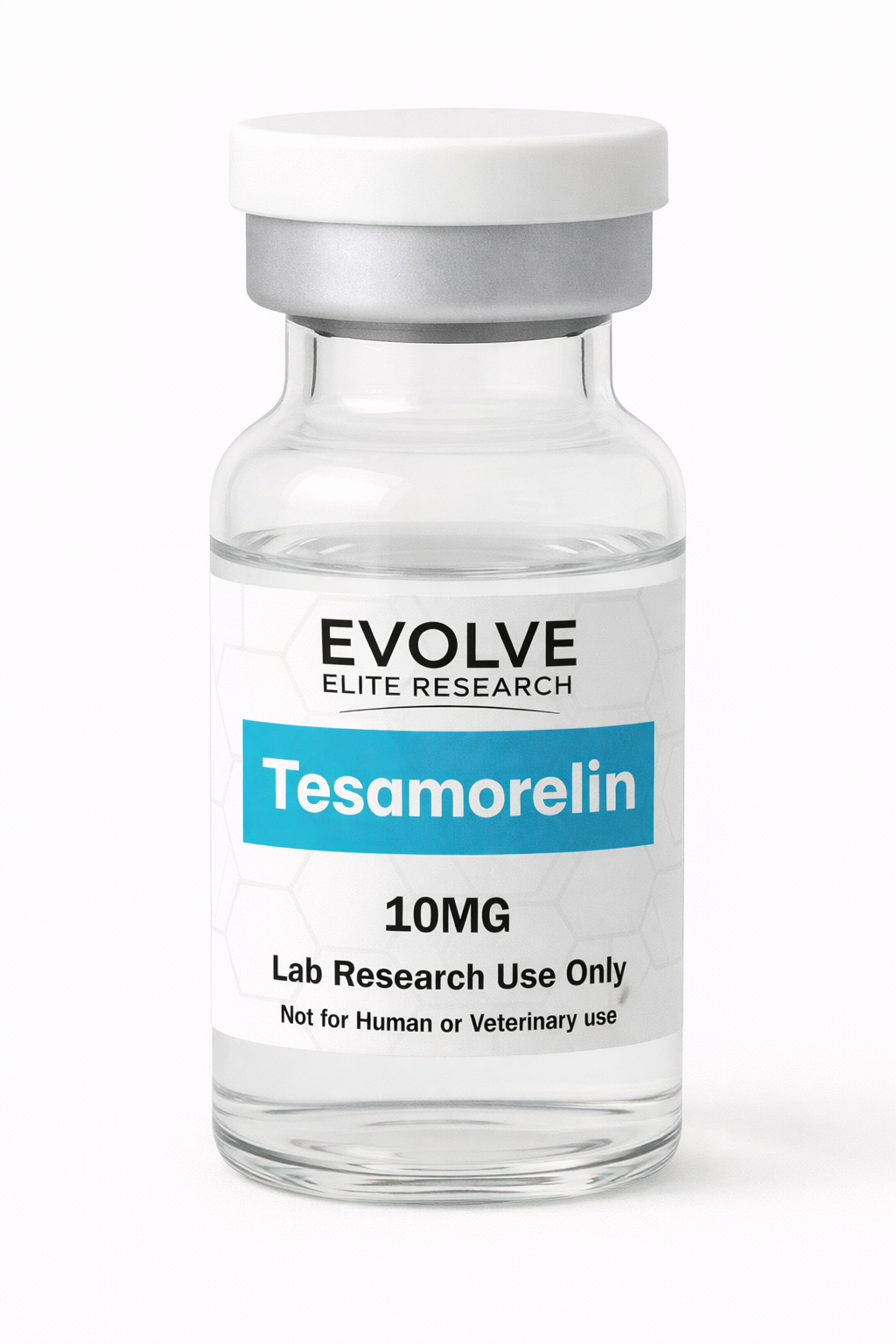
Tesamorelin 10MG
$67.00
Technical Specifications
- Scientific Research Name: Tesamorelin
- Research Description: Synthetic 44-amino-acid growth hormone-releasing hormone analog with a defined hexenoyl modification
- Compound Classification: Synthetic GHRH analog
- Primary Molecular Target: Growth hormone-releasing hormone receptor (GHRHR)
- Primary Research Areas: GHRHR signaling, cAMP pathways, pituitary somatotroph models and GH–IGF-1-axis research
- Research Format: 10MG lyophilized research material
- Intended Use: Laboratory research only
For Laboratory Research Use Only.Not intended for human or veterinary administration.
In stock
🔬 For Laboratory Research Use Only.
Not for human consumption, medical, veterinary, or household use.
By purchasing you agree to our
Terms and
Refund Policy.
Precisely labeled tesamorelin research material in a lyophilized laboratory format
Synthetic growth hormone-releasing hormone analog with a defined hexenoyl modification near the N-terminal region
Used in controlled GHRH-receptor, pituitary signaling, GH-pulse and IGF-1-axis research models
Shipped from our Texas facility with fast U.S. order processing
A defined lyophilized research format containing 10MG of tesamorelin, a synthetic 44-amino-acid growth hormone-releasing hormone analog investigated in controlled laboratory systems involving GHRH-receptor activation, pituitary somatotroph signaling, receptor-associated growth-hormone release and downstream IGF-1-axis measurements.
Tesamorelin 10MG Research Summary
Tesamorelin is a synthetic analog of human growth hormone-releasing hormone, also described as growth hormone-releasing factor or GRF.
The peptide is based on the 44-amino-acid sequence of human GRF and includes a trans-3-hexenoyl moiety attached near the N-terminal region of the molecule.
This lipid-associated modification distinguishes tesamorelin structurally from unmodified human GHRH and shorter GHRH fragments such as GRF 1-29.
Tesamorelin is investigated primarily through its interaction with the growth hormone-releasing hormone receptor, commonly abbreviated GHRHR.
GHRHR is a G-protein-coupled receptor expressed prominently on pituitary somatotroph cells.
Receptor activation stimulates intracellular signaling associated with the synthesis and pulsatile release of endogenous growth hormone.
Growth hormone can subsequently influence hepatic and peripheral production of insulin-like growth factor 1, commonly abbreviated IGF-1.
The resulting GHRH–GH–IGF-1 axis can be investigated through receptor pharmacology, endocrine signaling, feedback regulation, pulse dynamics and downstream biochemical measurements.
Tesamorelin should not be classified as recombinant growth hormone. It is a GHRH-receptor agonist that acts upstream of endogenous growth-hormone production.
Tesamorelin should also be distinguished from ligands that act through the growth hormone secretagogue receptor because those compounds use a different primary receptor system.
Tesamorelin 10MG is supplied exclusively for controlled laboratory research. It is not represented as a finished pharmaceutical product and is not intended for human or veterinary administration.
Technical Specifications
Tesamorelin 10MG
Tesamorelin
Synthetic GHRH analog
10MG per vial
Lyophilized research material
44 amino-acid residues
Trans-3-hexenoyl moiety associated with the N-terminal region
Growth hormone-releasing hormone receptor
GHRHR
Class B G-protein-coupled receptor
Pituitary somatotroph
GHRH–GH–IGF-1 endocrine axis
C221H366N72O67S
Approximately 5,135.9 Da as free-base equivalent
GHRHR signaling, GH secretion, IGF-1 biology and endocrine feedback
HPLC, LC-MS, peptide mapping and stability analysis
Dry lyophilized peptide
Laboratory research only
Tesamorelin may be documented as a free-base-equivalent identity or as acetate-associated material. Molecular-weight and mass calculations should use the molecular form documented for the applicable research lot rather than treating all counterion forms as interchangeable.
Molecular Characteristics of Tesamorelin
Tesamorelin is a comparatively large research peptide containing 44 amino-acid residues.
Its peptide backbone is based on the complete amino-acid sequence of human growth hormone-releasing factor.
A trans-3-hexenoyl group is incorporated near the N-terminal region, creating a structurally modified GHRH analog.
The modification changes the molecular identity and physicochemical behavior of the peptide relative to unmodified endogenous GHRH.
Tesamorelin contains multiple charged and polar amino-acid residues, producing substantial aqueous interactions and potentially complex chromatographic behavior.
Its relatively high molecular mass may produce multiple charge states during electrospray-ionization mass spectrometry.
Analytical interpretation should consider the expected intact peptide, salt-associated species, adducts, oxidized forms, truncated fragments and other potential degradation products.
Tesamorelin is based on the 44-residue human growth hormone-releasing factor sequence.
The molecule incorporates a trans-3-hexenoyl group that distinguishes it from endogenous GHRH.
Its molecular weight is substantially greater than shorter GHRH fragments and many secretagogue peptides.
LC-MS analysis may detect several protonation states for the intact molecule.
Free-base-equivalent mass and acetate-salt mass should be distinguished in quantitative work.
The peptide retains structural features associated with recognition of the human GHRH receptor.
Truncation, oxidation or residue modification may alter receptor interaction and measured activity.
Tesamorelin should not be identified solely by the general label of GHRH analog.
Scientific Background
Growth hormone secretion is regulated by a coordinated hypothalamic and pituitary signaling system.
Growth hormone-releasing hormone provides a stimulatory signal, while somatostatin contributes inhibitory control.
Ghrelin and related growth hormone secretagogues provide another stimulatory pathway through the growth hormone secretagogue receptor.
These signals converge on pituitary somatotroph cells and influence the timing, magnitude and frequency of endogenous growth-hormone pulses.
Growth hormone then acts directly through growth-hormone receptors and indirectly through IGF-1 produced in the liver and peripheral tissues.
Feedback from GH, IGF-1, somatostatin and other endocrine factors regulates continued axis activity.
Tesamorelin provides a synthetic research tool for investigating the stimulatory GHRH-receptor component of this endocrine network.
Because tesamorelin depends on functioning receptor and pituitary systems, its experimental behavior should not be assumed to match direct exposure to recombinant growth hormone.
Growth Hormone-Releasing Hormone Biology
Growth hormone-releasing hormone is a hypothalamic peptide involved in the regulation of pituitary growth-hormone synthesis and secretion.
Endogenous GHRH is released into the hypothalamic–pituitary portal circulation and interacts with receptors on anterior-pituitary somatotroph cells.
GHRHR activation promotes intracellular signaling associated with growth-hormone production and release.
Endogenous GHRH signaling is pulsatile rather than continuously uniform.
Pulse timing is influenced by interactions among GHRH, somatostatin, ghrelin and other regulatory signals within the selected experimental system.
Tesamorelin can be used in controlled models examining how a stabilized synthetic analog interacts with this physiological receptor system.
Experimental interpretation should distinguish receptor activation, GH release, downstream IGF-1 production and final functional responses as separate stages of the axis.
GHRH-Receptor Biology
The growth hormone-releasing hormone receptor is a class B G-protein-coupled receptor.
It is expressed prominently on pituitary somatotroph cells, where it regulates growth-hormone synthesis and secretion.
Ligand binding can promote coupling to stimulatory G proteins and activation of adenylyl cyclase.
Adenylyl-cyclase activation increases intracellular cyclic adenosine monophosphate, commonly abbreviated cAMP.
Increased cAMP can activate protein kinase A and downstream transcriptional or secretory processes.
Calcium-associated signaling and membrane depolarization may also contribute to growth-hormone exocytosis.
Receptor density, desensitization, internalization and recycling may influence the magnitude and duration of experimental responses.
GHRHR expression should be confirmed when tesamorelin is studied outside established pituitary-cell systems.
Tesamorelin interacts with the extracellular ligand-binding region of GHRHR.
Receptor activation may stimulate adenylyl-cyclase activity through Gs-associated signaling.
Increased intracellular cAMP is a central readout in GHRHR signaling research.
PKA-associated signaling may connect cAMP production with transcriptional and secretory responses.
Calcium flux may contribute to vesicle fusion and growth-hormone release.
Repeated stimulation may influence receptor sensitivity, trafficking or downstream responsiveness.
Pituitary Somatotroph Research
Somatotrophs are endocrine cells in the anterior pituitary that synthesize and secrete growth hormone.
These cells integrate stimulatory and inhibitory signals from several neuroendocrine pathways.
GHRHR activation provides a primary stimulatory signal for growth-hormone synthesis and release.
Experimental somatotroph models may evaluate cAMP accumulation, calcium movement, membrane potential, hormone-vesicle release and GH-gene transcription.
Cell-line findings should be interpreted carefully because receptor expression and secretory behavior may differ from primary pituitary cells.
Receptor abundance, culture duration, serum composition and passage number may alter the apparent tesamorelin response.
Growth-hormone release should be measured independently from cell viability because cellular injury may produce nonspecific release of intracellular contents.
Growth-Hormone Release Research
Tesamorelin is investigated as an upstream stimulator of endogenous growth-hormone secretion.
This mechanism differs from direct addition of recombinant growth hormone to an experimental system.
A tesamorelin-associated response depends on receptor expression, intracellular signaling competence and the availability of releasable growth hormone.
Potential endpoints include secreted GH concentration, intracellular GH content, GH messenger RNA and secretory-vesicle dynamics.
Peak response and total integrated hormone exposure provide different information.
A high transient peak may produce a different downstream effect from a lower but prolonged signal with the same total area under the curve.
Baseline growth-hormone secretion can vary substantially and should be characterized before comparing experimental groups.
Pulsatile Growth-Hormone Research
Endogenous growth-hormone secretion occurs in pulses rather than as a constant continuous signal.
Pulse amplitude, frequency, duration and interval may each influence downstream endocrine responses.
Tesamorelin research may examine whether receptor stimulation preserves, amplifies or modifies pulse-associated secretion within a selected model.
High-frequency sample collection may be required to characterize rapid hormone changes accurately.
Infrequent sampling can miss transient peaks and underestimate total secretory activity.
Automated perfusion systems, repeated sampling and mathematical deconvolution may be useful in pulse-analysis research.
Continuous receptor exposure should not automatically be assumed to reproduce physiological pulsatile signaling.
Downstream Growth-Hormone-Receptor Research
Growth hormone released after GHRHR stimulation can interact with growth-hormone receptors on multiple cell types.
The growth-hormone receptor belongs to the cytokine-receptor family and signals through pathways distinct from GHRHR.
Growth-hormone-receptor activation may involve Janus kinase 2, signal transducer and activator of transcription proteins and additional signaling networks.
Tesamorelin does not need to bind the growth-hormone receptor directly to influence downstream GH-receptor-dependent endpoints.
Experimental designs should therefore distinguish direct tesamorelin exposure from indirect responses mediated by released growth hormone.
Conditioned-media transfer, GH-neutralization controls and receptor-blocking approaches may help investigate this distinction.
IGF-1-Axis Research
Growth hormone can stimulate production of insulin-like growth factor 1 in the liver and other tissues.
IGF-1 circulates in association with binding proteins and participates in growth-associated and cellular-signaling systems.
Tesamorelin research may evaluate GH release, IGF-1 production and IGF-binding-protein responses as separate but connected endpoints.
Increased growth hormone does not guarantee an identical IGF-1 response across every model.
Hepatic competence, nutritional conditions, age, receptor sensitivity and binding-protein abundance may influence the relationship.
Total IGF-1, free IGF-1 and IGF-binding-protein measurements provide different information.
Functional IGF-1-receptor signaling should be evaluated independently when downstream cellular activity is the experimental objective.
IGF-Binding-Protein Research
Insulin-like growth factors circulate in association with a family of IGF-binding proteins.
These proteins influence transport, half-life, tissue availability and interaction with IGF receptors.
IGFBP-3 is frequently evaluated alongside IGF-1 in growth-hormone-axis research.
Changes in total IGF-1 should be interpreted with binding-protein measurements when bioavailability is relevant.
Protease activity and matrix interactions may also alter the local availability of IGF-associated species.
Assays should specify whether they measure total, free or bioactive IGF-related material.
Endocrine Feedback Research
The GHRH–GH–IGF-1 axis is regulated by multiple feedback mechanisms.
Growth hormone and IGF-1 can influence hypothalamic and pituitary signaling to limit continued axis stimulation.
Somatostatin provides an inhibitory signal that can reduce growth-hormone secretion.
Repeated GHRHR stimulation may also influence receptor sensitivity or downstream signaling competence.
Feedback research may compare acute exposure with repeated-exposure conditions.
Potential endpoints include GHRHR abundance, cAMP response, GH release, IGF-1 production and somatostatin-associated signaling.
A reduced response after repeated exposure may reflect receptor regulation, hormone depletion, feedback inhibition or peptide degradation.
Receptor Selectivity Considerations
Tesamorelin is designed as an analog of human GHRH and is primarily investigated through GHRHR.
This distinguishes it from growth hormone secretagogues that target the ghrelin receptor, also called GHSR1a.
Tesamorelin should not be assumed to possess the same receptor profile as ligands that primarily target the growth hormone secretagogue receptor.
Receptor-selectivity studies may compare cAMP signaling, calcium responses, receptor internalization and hormone release across defined receptor systems.
Receptor-negative cells and transfected cell lines may help distinguish direct GHRHR-dependent responses from nonspecific effects.
Functional antagonists or genetic suppression of GHRHR can provide additional mechanistic evidence.
Structure–Activity Considerations
Tesamorelin activity depends on the relationship between its 44-amino-acid sequence, terminal regions and trans-3-hexenoyl modification.
Shorter GHRH fragments may retain receptor activity but possess different stability, potency and duration characteristics.
Removal of the lipid-associated modification would create a chemically different GHRH-related molecule.
Truncation, residue substitution, oxidation or terminal modification may alter receptor recognition.
Comparative studies should use molar concentration when the objective is to compare molecule number across peptides with different molecular weights.
Equal-mass comparisons among tesamorelin, sermorelin and modified GRF do not provide equal molecular exposure.
Tesamorelin retains the 44-residue framework of human growth hormone-releasing factor.
The N-terminal-region lipid modification forms part of tesamorelin’s distinct molecular identity.
Shorter GHRH fragments may differ in receptor binding, stability and signaling duration.
Amino-acid changes may alter receptor affinity or resistance to degradation.
Acetate and free-base representations should be distinguished in analytical calculations.
Molecular-weight differences should be accounted for when comparing other GHRH analogs.
Potential Laboratory Research Applications
Investigation of ligand interaction with recombinant or native GHRH receptors.
Measurement of receptor-associated cyclic-AMP production after tesamorelin exposure.
Evaluation of somatotroph signaling, secretory activity and receptor regulation.
Measurement of endogenous GH secretion in receptor-competent experimental systems.
Investigation of secretory amplitude, frequency, duration and integrated exposure.
Evaluation of downstream IGF-1 production and IGF-binding-protein responses.
Study of repeated stimulation, desensitization and negative-feedback pathways.
Analysis of GHRHR internalization, recycling and cell-surface expression.
Evaluation of intracellular calcium responses associated with hormone secretion.
Investigation of stimulatory GHRH signaling under inhibitory endocrine conditions.
Measurement of transcriptional responses within pituitary, hepatic or receptor-expressing cellular models.
Evaluation of receptor-proximal and downstream signaling proteins.
Comparison with sermorelin, GRF 1-29, modified GRF and other analogs.
Monitoring of intact tesamorelin under defined temperature, buffer and time conditions.
Development of chromatographic methods for intact-peptide and degradation-product analysis.
Confirmation of expected molecular species and multiply charged ions.
Evaluation of sequence length, hexenoyl modification and receptor-dependent activity.
Why Researchers May Select Tesamorelin 10MG
Provides a documented quantity for repeat analytical and biological research.
Supports investigation of a 44-residue human GHRH-based analog.
Enables research involving the trans-3-hexenoyl structural modification.
Provides a receptor-directed tool for studying GHRH signaling.
Supports research into endogenous GH release rather than direct GH exposure.
Enables investigation of connected pituitary, hepatic and peripheral signaling stages.
Supports analysis of hormone-release timing and secretory dynamics.
Supports receptor-dependent testing across defined GHRHR and comparator systems.
Provides a complex 44-residue peptide for HPLC, LC-MS and stability workflows.
The 10MG format can support multiple analytical preparations and experimental conditions.
Experimental Design Considerations
Define the Primary Endpoint
Determine whether the study is intended to measure receptor binding, cAMP production, growth-hormone release, IGF-1 production or downstream function.
Confirm GHRHR Expression
Receptor abundance should be verified when using non-pituitary cells or engineered receptor systems.
Use Molar Concentrations
Molar calculations are preferable when comparing tesamorelin with peptides of different molecular weights.
Separate Direct and Indirect Effects
Distinguish direct GHRHR activation from responses mediated by released growth hormone or IGF-1.
Use Multiple Time Points
Receptor signaling, GH release and downstream IGF-1 responses may occur on different timelines.
Characterize Baseline Secretion
Basal GH release should be established before interpreting a stimulated secretory response.
Measure Cell Health
Viability and membrane integrity should be assessed alongside secreted-hormone measurements.
Consider Receptor Desensitization
Acute and repeated-exposure models may produce different signaling and secretory profiles.
Include Pathway Controls
Receptor antagonists, cAMP-pathway inhibitors or receptor-negative models may strengthen mechanistic conclusions.
Measure Peptide Integrity
HPLC or LC-MS may be used to determine whether intact tesamorelin remains detectable during incubation.
Control Matrix Effects
Biological-matrix proteins, enzymes, filters and container surfaces may influence peptide recovery.
Assess Assay Interference
Cell-free controls should determine whether tesamorelin affects fluorescence, absorbance or immunoassay detection directly.
Recommended Experimental Controls
Establishes baseline signaling and hormone release without tesamorelin.
Determines whether the experimental solvent or medium influences the measured endpoint.
Characterizes concentration-dependent receptor and secretory responses.
Distinguishes immediate signaling from delayed endocrine responses.
Helps determine whether a response depends on GHRHR expression.
Supports investigation of receptor-specific activity.
Provides comparison with the unmodified native signaling molecule.
Supports comparison with a shorter GHRH 1-29 research analog.
Enables comparison with an alternative stabilized GHRH-fragment format.
Distinguishes hormone release from nonspecific cellular injury.
Detects leakage that could produce misleading secreted-hormone measurements.
Identifies background from buffers, solvents, columns and instruments.
Determines whether tesamorelin alters detection chemistry directly.
Confirms whether intact tesamorelin remains detectable under assay conditions.
Confirms that the selected receptor or secretory assay can detect activation.
Analytical Characterization
Tesamorelin is a large modified peptide requiring analytical methods capable of distinguishing intact material from truncated, oxidized or otherwise altered molecular species.
Reverse-phase HPLC may be used to evaluate chromatographic composition and retention behavior.
LC-MS may support confirmation of molecular species consistent with the expected tesamorelin mass.
Multiple charge states are expected for a peptide of this molecular size under electrospray-ionization conditions.
Deconvolution software may be used to convert the observed charge-state envelope into an estimated neutral molecular mass.
Additional characterization may include peptide mapping, tandem mass spectrometry, water determination, counterion analysis and recovery testing.
One analytical method should not be expected to establish every quality attribute independently.
Total vial mass, tesamorelin content, chromatographic composition, molecular identity, sequence integrity, salt form and biological activity are separate analytical properties.
HPLC Analysis of Tesamorelin
Reverse-phase high-performance liquid chromatography separates peptide-related species according to their interaction with a hydrophobic stationary phase.
Tesamorelin retention may be influenced by peptide sequence, lipid-associated modification, mobile-phase pH, ion-pairing reagent and column chemistry.
Gradient conditions should provide adequate retention and separation of the intact peptide from earlier- or later-eluting related species.
Secondary peaks may represent truncated peptides, oxidized material, deamidated species, conformational variants or process-related components.
Detection wavelength influences apparent response because peptide absorbance depends on backbone and side-chain characteristics.
Chromatographic peak area should not be interpreted as absolute tesamorelin content without an appropriate validated standard and response model.
Retention time alone does not establish identity. Peak assignment should be supported by mass spectrometry or another orthogonal method.
LC-MS and Molecular Identity
Liquid chromatography–mass spectrometry combines chromatographic separation with mass-to-charge analysis.
Tesamorelin may produce a series of multiply protonated ions because the molecule contains numerous ionizable sites.
The resulting charge-state distribution can be mathematically deconvoluted to estimate intact molecular mass.
Sodium, potassium, acetate or other adduct-associated signals may also appear depending on sample preparation and instrument conditions.
Source conditions that are too energetic may increase in-source fragmentation or reduce detection of the intact peptide.
Mass agreement supports expected molecular composition but does not independently establish complete sequence, concentration or chromatographic purity.
Tandem mass spectrometry and peptide mapping may provide additional evidence supporting sequence identity and modification location.
Receptor-Bioactivity Characterization
Chemical identity does not independently establish functional activity at the GHRH receptor.
Receptor-bioactivity assays may evaluate cAMP accumulation in cells expressing human GHRHR.
Concentration-response curves may be used to estimate potency and maximal response under defined assay conditions.
Results may vary according to receptor density, cell background, incubation time and detection method.
A reference ligand can help normalize assay performance across separate experimental runs.
Functional potency should not be inferred solely from HPLC peak area or intact molecular mass.
Tesamorelin Stability Considerations
Peptide stability may be influenced by temperature, moisture, oxygen, light, pH, enzymes, concentration and container composition.
Tesamorelin’s 44-residue structure provides multiple potential sites for chemical or enzymatic degradation.
Potential changes may include hydrolysis, oxidation, deamidation, isomerization, aggregation and peptide-bond cleavage.
The trans-3-hexenoyl modification should also be considered during structural and stability analysis.
Lyophilization removes a substantial portion of water and may improve storage stability compared with continuous solution conditions.
Once placed into solution, degradation and surface adsorption may occur more readily.
Stability should be demonstrated using analytical measurements rather than inferred from solution appearance alone.
Potential Degradation Pathways
Endopeptidases and exopeptidases may produce shorter tesamorelin-related fragments.
Water-dependent reactions may affect peptide bonds or susceptible side chains.
Oxygen, light and reactive species may modify oxidation-sensitive residues.
Selected side chains may undergo time-, temperature- and pH-dependent change.
Residue rearrangement may create species with altered chromatography or receptor activity.
Modification or loss near the N-terminal region may affect receptor recognition.
Alteration involving the lipid-associated moiety may change molecular identity.
Concentration, ionic strength and temperature may influence molecular association.
Peptide may bind to glass, plastic, filters, tubing or other laboratory materials.
Proteins and other matrix components may change free-peptide recovery.
Related species may overlap with intact tesamorelin during chromatography.
Contamination may alter peptide integrity and invalidate experimental results.
Laboratory Storage
Lyophilized Tesamorelin 10MG should be maintained in a cool, dry and dark laboratory environment protected from excessive heat, moisture and direct light.
Longer-term storage conditions should follow applicable lot documentation and validated institutional procedures.
Repeated temperature cycling should be minimized because it may introduce condensation and variable environmental exposure.
When condensation is possible, sealed material should be allowed to equilibrate under controlled conditions before opening.
Experimental solutions are generally less stable than dry lyophilized material.
Experimental stability depends on pH, buffer composition, protein content, temperature, concentration, container material and study duration.
Storage information is provided solely for laboratory material preservation and experimental stability planning.
Laboratory Handling
Tesamorelin 10MG should be handled only by trained research personnel using procedures appropriate for synthetic peptide materials.
Researchers should document the lot identifier, sample-preparation date, experimental solvent or buffer, calculated concentration, storage history and relevant handling history.
Calibrated balances, pipettes and analytical instruments should be used when quantitative accuracy is required.
Small-volume transfer error, incomplete mixing and surface adsorption may create differences between calculated and recovered concentrations.
Low-binding laboratory materials may be evaluated when peptide adsorption has been demonstrated.
Filtration methods should be tested for recovery because high-molecular-weight peptides may interact with filter materials.
Personal protective equipment, containment procedures and waste disposal should follow institutional requirements and the laboratory’s risk assessment.
Tesamorelin Compared With Related Research Peptides
Tesamorelin is based on the full 44-residue GHRH sequence, while sermorelin is based on the shorter GHRH 1-29 fragment.
Both target GHRHR, but they differ in peptide length, residue modifications and molecular characteristics.
CJC-1295 formats use different structural modifications and may possess substantially different pharmacokinetic behavior.
The 44-residue tesamorelin framework differs from shorter GHRH fragments in size and structural complexity.
Tesamorelin vs. Sermorelin Research
Tesamorelin and sermorelin are both GHRH-receptor-directed research peptides.
Sermorelin corresponds to the biologically active N-terminal 1-29 region of human GHRH.
Tesamorelin is based on the complete 44-amino-acid human GRF sequence and includes a trans-3-hexenoyl modification.
The two peptides therefore differ in molecular weight, sequence length, structural modification and potential stability.
Comparative studies should use equimolar rather than equal-mass concentrations when molecule number is the controlled variable.
Receptor potency, maximal cAMP response, GH release and peptide degradation should be evaluated independently.
Tesamorelin vs. Modified GRF 1-29 Research
Modified GRF 1-29 is a shorter GHRH-fragment analog incorporating selected amino-acid substitutions.
Tesamorelin retains the full 44-residue framework and uses a different stabilizing structural approach.
Both may activate GHRHR, but receptor potency, degradation resistance and signaling duration should not be assumed to be identical.
Comparative analysis may include receptor-binding assays, cAMP response, GH secretion and intact-peptide stability.
Analytical methods may require different gradients and mass-spectrometric settings because the peptides differ substantially in molecular size.
Tesamorelin vs. CJC-1295 Research
CJC-1295 is a GHRH-related analog developed using a structural strategy different from tesamorelin.
Some CJC-1295 research formats include an albumin-binding modification, while other materials marketed under similar naming conventions may not.
Tesamorelin should not be treated as chemically equivalent to either DAC-associated or non-DAC CJC formats.
Comparative studies should verify the exact sequence and modification of every tested peptide.
Receptor potency, protein association in defined biological matrices, degradation and signaling duration may differ.
Related Research Compounds
Scientific Research Resources
Frequently Asked Questions
What is Tesamorelin 10MG?
Tesamorelin 10MG is a lyophilized laboratory research format containing 10MG of the synthetic GHRH analog tesamorelin.
What type of peptide is tesamorelin?
Tesamorelin is a synthetic growth hormone-releasing hormone analog based on the 44-amino-acid human GRF sequence.
How many amino acids are in tesamorelin?
Tesamorelin contains 44 amino-acid residues.
What structural modification does tesamorelin contain?
Tesamorelin includes a trans-3-hexenoyl moiety associated with the N-terminal region of the peptide.
What is tesamorelin’s molecular formula?
The reference peptide formula is commonly represented as C221H366N72O67S; acetate-associated material includes additional counterion content.
What is tesamorelin’s molecular weight?
Its reference molecular weight is approximately 5,135.9 Da when expressed as the free-base equivalent.
What receptor does tesamorelin target?
Tesamorelin primarily interacts with the growth hormone-releasing hormone receptor, abbreviated GHRHR.
Where is GHRHR expressed?
GHRHR is expressed prominently on anterior-pituitary somatotroph cells.
What happens after GHRHR activation?
Receptor activation can stimulate cAMP-associated signaling and promote synthesis and release of endogenous growth hormone.
Is tesamorelin growth hormone?
No. Tesamorelin is a GHRH analog that acts upstream of endogenous growth-hormone release.
How does tesamorelin differ from sermorelin?
Tesamorelin is based on the complete 44-residue GHRH sequence, while sermorelin corresponds to the shorter GHRH 1-29 region.
How does tesamorelin differ from Modified GRF 1-29?
Modified GRF is a shorter substituted GHRH fragment, while tesamorelin uses the full 44-residue framework and a trans-3-hexenoyl modification.
How does tesamorelin differ from CJC-1295?
CJC-1295 products use different peptide structures and modification strategies and should not be treated as chemically equivalent to tesamorelin.
What is the GHRH–GH–IGF-1 axis?
It is an endocrine pathway in which GHRH stimulates pituitary GH release and GH influences IGF-1 production in the liver and peripheral tissues.
Does increased GH always produce the same IGF-1 response?
No. IGF-1 responses may vary with model, hepatic function, nutritional state, receptor sensitivity and binding-protein abundance.
What laboratory endpoints may be studied?
Potential endpoints include receptor binding, cAMP production, calcium signaling, GH release, IGF-1 production, receptor trafficking and gene expression.
Why are multiple time points important?
Receptor activation, GH secretion and downstream IGF-1-associated responses may occur at different times.
Why should baseline GH secretion be measured?
Baseline secretion may vary substantially and influences interpretation of a stimulated response.
Can HPLC confirm tesamorelin identity by itself?
HPLC can evaluate chromatographic composition, but molecular identity should be supported by LC-MS or another orthogonal method.
Why does tesamorelin produce multiple LC-MS signals?
Its large peptide structure can carry several charges, producing a distribution of multiply protonated ions.
Does molecular-mass agreement establish biological activity?
No. Functional activity should be evaluated independently through an appropriate GHRHR bioassay.
Is Tesamorelin 10MG intended for human use?
No. It is strictly for controlled laboratory research and is not intended for human or veterinary administration.
Research-Use Notice
Tesamorelin 10MG is supplied exclusively as laboratory research material. It is not supplied as a drug, finished pharmaceutical product, food, dietary supplement, cosmetic, or consumer product. It is not intended for human consumption, self-administration, medical use, veterinary use, household use, diagnostic use, or therapeutic use.
Scientific information on this page is presented solely in the context of molecular identity, GHRH-receptor signaling, cellular and biochemical models, experimental design, and analytical characterization.
No information on this page should be interpreted as instructions for preparation, administration, dosing, self-experimentation, diagnosis, prevention, or treatment of any condition.
This material should be handled only by qualified research personnel in an appropriately controlled laboratory environment. Researchers are responsible for determining suitability for their experimental design and complying with all applicable institutional, local, state, and federal requirements.
Related products
Research Compounds
Research Compounds
Research Compounds
Research Compounds
Research Compounds
Research Compounds
Research Compounds
Research Compounds