
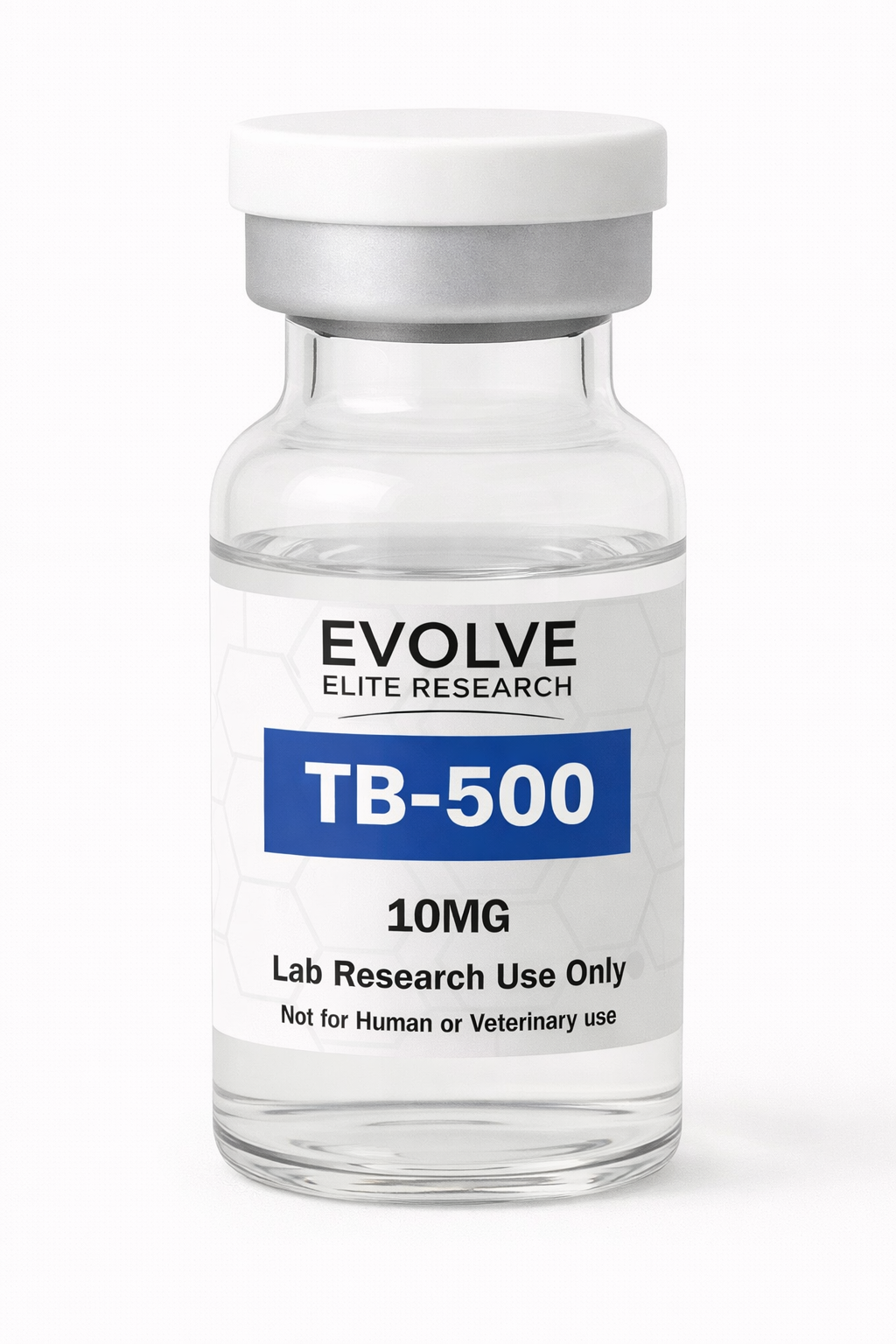
TB-500 10MG


$43.00
Technical Specifications
- Scientific Research Identity: N-Acetylated LKKTETQ (TB-500)
- Research Description: Synthetic thymosin beta-4-derived heptapeptide for actin-associated and cytoskeletal research
- Compound Classification: Synthetic acetylated linear heptapeptide
- Primary Research Areas: Actin-associated systems, cytoskeletal organization, cell-migration assays and peptide analytical characterization
- Research Sequence: Ac-Leu-Lys-Lys-Thr-Glu-Thr-Gln (Ac-LKKTETQ)
- Research Format: 10MG lyophilized research material
- Intended Use: Laboratory research only
For Laboratory Research Use Only.Not intended for human or veterinary administration.
In stock
🔬 For Laboratory Research Use Only.
Not for human consumption, medical, veterinary, or household use.
By purchasing you agree to our
Terms and
Refund Policy.
Expanded quantity for replicate studies, concentration-response testing and analytical allocation
Seven-residue synthetic peptide represented by the sequence Ac-LKKTETQ
Defined Ac-LKKTETQ identity related to the central actin-associated sequence of mature Tβ4
Shipped from our Texas facility with fast U.S. order processing
Lyophilized N-acetylated heptapeptide supplied exclusively for controlled laboratory research involving thymosin beta-4 fragment biology, actin-associated molecular systems, peptide structure–activity relationships, cellular-migration models and analytical characterization.
TB-500 10MG Research Summary
TB-500 is represented on this page as the synthetic N-acetylated heptapeptide Ac-Leu-Lys-Lys-Thr-Glu-Thr-Gln, abbreviated Ac-LKKTETQ. The LKKTETQ sequence corresponds to residues 17–23 of mature human thymosin beta-4; the N-terminal acetyl group is part of the molecular identity described here.
The human TMSB4X gene encodes a 44-residue sequence; mature thymosin beta-4 is commonly described as a 43-residue N-terminally acetylated peptide after initiator-methionine removal. Thymosin beta-4 is studied extensively in relation to globular-actin sequestration and cytoskeletal organization.
TB-500 is not synonymous with full-length thymosin beta-4. It is a shorter synthetic fragment containing one selected region of the parent peptide and lacks the remaining amino-acid sequence, terminal regions and complete structural context of native thymosin beta-4.
The LKKTETQ region has been identified within thymosin beta-4 research as part of its central actin-associated domain. Related peptide research has evaluated this sequence in biochemical and cellular systems involving actin-associated biology, cell migration and cytoskeletal organization.
The N-terminal acetyl group differentiates TB-500 from unmodified LKKTETQ. Acetylation changes the terminal charge, molecular formula, molecular weight, enzymatic recognition and analytical behavior of the peptide.
TB-500 should not be described as functionally identical to full-length thymosin beta-4. A short fragment may reproduce selected sequence-associated observations while lacking other functional regions of the full-length molecule.
Appropriate research may include peptide–actin interaction studies, cytoskeletal assays, cell-migration models, structure–activity comparisons, peptide-metabolism research, HPLC analysis, LC-MS identity testing and controlled stability studies.
The 10MG research format may support biological replicates, concentration-response experiments, time-course analysis, comparative peptide studies and allocation of material for analytical verification.
TB-500 10MG is supplied strictly as a laboratory research material. It is not intended for human or veterinary administration.
Technical Specifications
TB-500 10MG
N-Acetylated thymosin beta-4 fragment 17–23
TB-500
10MG per vial
Lyophilized research material
Synthetic acetylated heptapeptide
7 amino-acid residues
Ac-Leu-Lys-Lys-Thr-Glu-Thr-Gln
Ac-LKKTETQ
LKKTETQ sequence of mature thymosin beta-4 (commonly numbered residues 17–23)
Acetylated
Free carboxyl terminus
62707662
C38H68N10O14
Approximately 889.0 g/mol
Thymosin beta-4 fragment research
Actin and cytoskeletal biology
HPLC and LC-MS research context provided below
Dry lyophilized research material
Laboratory research only
TB-500 is represented here as N-acetylated Ac-LKKTETQ. Unacetylated LKKTETQ is a different molecular form with a different formula and molecular weight. Researchers should use the identity documented for the applicable lot when performing molar calculations or analytical comparisons.
Molecular Characteristics and Peptide Sequence
TB-500 contains seven amino-acid residues arranged in the sequence Leu-Lys-Lys-Thr-Glu-Thr-Gln with an acetyl group attached to the N-terminal leucine.
Ac-Leu-Lys-Lys-Thr-Glu-Thr-Gln
The peptide is linear and does not contain a disulfide bridge, lactam ring or other intramolecular cyclization. Its conformation is influenced by peptide-bond geometry, side-chain charge, hydrogen bonding, solution conditions and interaction with other molecules.
Two adjacent lysine residues contribute positively charged side chains under many experimental conditions. Glutamic acid contributes a negatively charged side chain, while threonine and glutamine contribute polar functional groups capable of participating in hydrogen bonding.
Leucine provides a hydrophobic side chain at the N-terminal region. N-terminal acetylation neutralizes the positive charge ordinarily associated with a free terminal amino group and increases the molecular weight relative to unmodified LKKTETQ.
The C-terminal glutamine retains a conventional free backbone carboxyl group unless the applicable lot documentation identifies another terminal form.
Hydrophobic N-terminal residue carrying the acetyl modification in TB-500.
Two adjacent basic residues that contribute positive charge and potential electrostatic interactions.
Two hydroxyl-bearing polar residues contribute hydrogen-bonding capacity.
Acidic residue that contributes a negatively charged side-chain carboxyl group.
Polar C-terminal residue containing an uncharged side-chain amide.
Alters terminal charge, molecular mass, enzyme recognition and analytical behavior.
TB-500, LKKTETQ and Thymosin Beta-4 Are Distinct
TB-500, unacetylated LKKTETQ and full-length thymosin beta-4 are related but chemically distinct research materials.
The TMSB4X-encoded human sequence contains 44 residues, while mature thymosin beta-4 is commonly described as a 43-residue N-terminally processed peptide. In either reference framework, the full-length parent contains multiple sequence regions that are absent from the seven-residue fragment.
Unacetylated LKKTETQ contains the same seven amino-acid residues but lacks the N-terminal acetyl modification. This changes its terminal charge, formula and molecular weight.
TB-500 is commonly identified analytically as Ac-LKKTETQ. Researchers should not assume that data generated using full-length thymosin beta-4, unmodified LKKTETQ and N-acetylated TB-500 are directly interchangeable.
Synthetic N-acetylated seven-residue peptide represented as Ac-LKKTETQ.
Unacetylated seven-residue peptide with a different molecular formula and mass.
TMSB4X-encoded parent peptide; the canonical sequence is 44 residues and mature Tβ4 is commonly described as 43 residues after N-terminal processing.
Experimental findings should be attributed to the exact molecular material used in the study.
Scientific Background
Thymosin beta-4 was originally isolated during thymic-peptide research and is now recognized as a widely distributed intracellular actin-associated peptide.
The full-length peptide is highly abundant in many mammalian cells and is studied primarily for its interactions with globular actin and its role in maintaining the cellular pool of unpolymerized actin monomers.
Actin is a major cytoskeletal protein that exists as globular monomers and filamentous polymers. Dynamic conversion between these forms supports cell shape, migration, adhesion, intracellular transport and mechanical organization.
Full-length thymosin beta-4 binds globular actin and helps regulate the availability of actin monomers for filament assembly. The complete interaction involves more than one region of the full-length peptide.
The LKKTETQ region has nevertheless been investigated as a short actin-associated sequence in experimental cell-migration and cytoskeletal models.
TB-500 provides a chemically defined fragment for studying selected sequence-associated observations without introducing the complete parent peptide.
Thymosin Beta-4 Parent-Peptide Biology
The human TMSB4X gene encodes a 44-residue sequence; mature thymosin beta-4 is formed after N-terminal processing and is commonly described as a 43-residue acetylated peptide. It belongs to the beta-thymosin family involved in actin-monomer regulation.
Full-length thymosin beta-4 binds globular actin in an approximately one-to-one molecular complex. This interaction can inhibit spontaneous addition of actin monomers to growing filaments.
By maintaining a soluble actin-monomer pool, beta-thymosins contribute to rapid cytoskeletal remodeling when cells receive migratory, mechanical or signaling cues.
Full-length thymosin beta-4 contains regions outside LKKTETQ that contribute to actin binding, cellular response and proteolytic generation of smaller peptides.
TB-500 lacks those additional regions and should therefore be evaluated independently rather than described as complete thymosin beta-4 in miniature.
Research involving full-length thymosin beta-4 provides important scientific context, but its findings should not automatically be attributed to the shorter Ac-LKKTETQ fragment.
Actin and Cytoskeletal Biology
Actin is a highly conserved cellular protein involved in cytoskeletal structure, motility, adhesion, contraction, membrane organization and intracellular transport.
Globular actin, abbreviated G-actin, can polymerize into filamentous actin, abbreviated F-actin. Actin filaments possess structural polarity and undergo continuous assembly and disassembly.
Cells regulate actin dynamics through a large network of monomer-binding proteins, nucleation factors, severing proteins, capping proteins, crosslinkers and motor proteins.
Thymosin beta-4 is one of the major actin-monomer-sequestering proteins. Profilin is another monomer-binding protein but influences actin nucleotide exchange and filament assembly differently.
TB-500 may be included in laboratory experiments examining whether the acetylated LKKTETQ sequence interacts with actin-associated systems or influences downstream cytoskeletal behavior.
Direct interaction with isolated actin should be distinguished from changes in cellular actin organization, which can result from many upstream pathways.
Soluble globular actin monomer capable of joining growing actin filaments.
Polymerized filamentous actin contributing to cytoskeletal structure and force generation.
Binding of monomers in a manner that limits their immediate incorporation into filaments.
Assembly of globular actin subunits into polarized filaments.
Loss of actin subunits from existing filaments during cytoskeletal remodeling.
Coordinated reorganization of actin structures in response to cellular signals.
The LKKTETQ Actin-Associated Region
The LKKTETQ sequence corresponds to residues 17–23 of human thymosin beta-4 and has been identified within research examining the parent peptide’s actin-associated domain.
The sequence contains two lysine residues, giving the fragment a localized basic region, followed by polar and acidic residues.
In full-length thymosin beta-4, actin interaction involves a broader structural context than these seven residues alone. The parent peptide extends along the actin surface and interacts with multiple regions of the monomer.
A short fragment may therefore preserve selected local interactions without reproducing the complete affinity, orientation or functional behavior of the full-length peptide.
Research should measure direct fragment binding rather than assume equivalent affinity based solely on sequence location.
Biophysical methods may include fluorescence polarization, microscale thermophoresis, surface plasmon resonance, calorimetry or competitive binding assays.
Cell-Migration Research
Cell migration requires coordinated actin polymerization, adhesion formation, membrane protrusion, contraction and detachment.
Actin-rich structures at the leading edge help generate protrusive force, while myosin-associated contraction and adhesion turnover contribute to forward movement.
Related LKKTETQ peptide research has included controlled cell-migration models. These findings support assay-level investigation but do not establish one universally accepted molecular mechanism for the Ac-LKKTETQ material described on this page.
Migration assays may include scratch closure, transwell migration, live-cell tracking, three-dimensional matrix invasion and single-cell motility analysis.
Scratch assays require particular caution because apparent gap closure can result from cell proliferation as well as migration.
Researchers may use proliferation inhibitors, direct cell tracking or short assay durations to help separate migration from cell division.
Measures closure of a defined gap while requiring controls for proliferation and cell loss.
Quantifies movement of cells through a porous membrane toward a defined stimulus.
Measures individual cell speed, directionality and displacement over time.
Evaluates movement within defined three-dimensional matrix systems.
Cell-Adhesion and Focal-Adhesion Research
Migrating cells repeatedly form and release adhesive contacts with extracellular surfaces. Integrins connect extracellular matrix proteins to intracellular cytoskeletal and signaling machinery.
Focal adhesions contain structural and regulatory proteins including talin, vinculin, paxillin and focal-adhesion kinase.
Changes in actin organization may influence adhesion number, size, turnover and mechanical force.
TB-500 research may examine adhesion-associated proteins alongside migration and actin endpoints.
An increase in migration does not necessarily indicate reduced adhesion. Efficient movement often requires an intermediate level of dynamic attachment.
Imaging, adhesion-strength assays and phosphoprotein analysis may help characterize these responses.
Cytoskeletal Imaging and Morphology
Fluorescent phalloidin is commonly used to visualize filamentous actin in fixed cells. Live-cell actin reporters may permit dynamic imaging but can alter actin behavior when overexpressed.
Potential TB-500 research endpoints include filament density, stress-fiber organization, cortical actin, lamellipodia, filopodia and cell shape.
Imaging should be performed using standardized exposure, segmentation and normalization procedures.
Changes in fluorescence intensity may reflect cell thickness, staining efficiency or cell number rather than altered actin abundance alone.
Quantitative morphology should be supported by blinded analysis or automated image-processing methods when possible.
Gene-Expression Research
Changes in cytoskeletal organization, adhesion or cell migration may produce downstream transcriptional responses.
Quantitative PCR may be used to examine predefined genes associated with actin regulation, migration, adhesion and cytoskeletal organization.
RNA sequencing may provide broader pathway-level analysis but requires biological replication, batch control and correction for multiple comparisons.
Differential gene expression does not establish direct peptide binding to the encoded protein or gene promoter.
Selected messenger-RNA findings should be validated through protein-level or functional analysis whenever possible.
Protein and Signaling Research
TB-500 research may include analysis of actin, profilin, cofilin, focal-adhesion proteins and cytoskeletal kinases.
Total protein abundance should be distinguished from phosphorylation, intracellular localization and functional activity.
Immunoblotting, immunofluorescence, enzyme assays and targeted proteomics can provide complementary information.
Phosphoprotein changes may occur rapidly, while altered protein abundance generally develops over a longer timeframe.
Multiple sampling intervals may therefore be needed to separate immediate signaling from delayed cellular adaptation.
Peptide Metabolism and Fragment Research
TB-500 is a linear peptide and may be processed by aminopeptidases, carboxypeptidases and endopeptidases under biological conditions.
N-terminal acetylation may reduce susceptibility to some aminopeptidases but does not prevent cleavage at internal peptide bonds or the C-terminus.
Resulting fragments may differ in stability, charge, molecular mass and biological activity from the intact parent peptide.
Time-resolved LC-MS may be used to monitor disappearance of intact Ac-LKKTETQ and appearance of shorter molecular species.
Researchers should determine whether an experimental response is associated with intact TB-500, a generated metabolite or a combination of species.
Structure–Activity Relationships
Structure–activity research can evaluate how N-terminal acetylation, peptide length, residue identity and terminal chemistry influence TB-500-associated observations.
Ac-LKKTETQ may be compared directly with unacetylated LKKTETQ to determine whether terminal acetylation changes stability, binding or cellular response.
Truncated sequences can help identify whether individual residues or smaller sequence regions are required for activity.
Scrambled peptides preserve similar amino-acid composition while changing residue order and can help identify sequence-dependent effects.
Alanine substitution may be used to examine the contribution of individual side chains.
Full-length thymosin beta-4 can serve as a parent-peptide comparator, but differences in molecular size, conformation and functional regions must be considered.
Evaluates the influence of N-terminal charge and modification on peptide behavior.
Distinguishes fragment-associated effects from those requiring the complete parent peptide.
Help identify the minimum sequence required for a measurable response.
Tests whether activity depends on the precise LKKTETQ residue order.
Evaluates the contribution of individual amino-acid side chains.
Examines how acetylation, amidation or free termini affect molecular behavior.
Potential Laboratory Research Applications
Investigation of the acetylated 17–23 sequence independently of full-length Tβ4.
Evaluation of direct or indirect interactions involving globular and filamentous actin systems.
Analysis of stress fibers, cortical actin, protrusions and cell morphology.
Measurement of movement through scratch, transwell, tracking or three-dimensional assays.
Investigation of integrin-associated attachment and focal-adhesion dynamics.
Measurement of transcriptional responses following controlled peptide exposure.
Analysis of cytoskeletal, adhesion and migration-associated proteins.
Identification of intact TB-500 and fragments generated during incubation.
Comparison with LKKTETQ, truncated sequences and full-length thymosin beta-4.
Optimization of chromatographic separation and purity assessment.
Confirmation of molecular mass and analysis of degradation products.
Monitoring of intact peptide under defined temperature, pH and matrix conditions.
Why Researchers May Select the 10MG Format
Material requirements depend on assay volume, concentration range, replicate count, analytical allocation and expected handling loss.
The 10MG format may provide additional flexibility for multi-stage laboratory workflows involving biological and analytical experiments.
Supports independent cell cultures or experimental preparations.
Provides material for multi-point testing rather than one-concentration screening.
Supports rapid, intermediate and delayed sampling schedules.
Allows matched testing against LKKTETQ, full-length Tβ4 or other peptides.
Permits reservation of material for HPLC, LC-MS or stability analysis.
Provides additional material for optimizing preparation and analytical conditions.
Experimental Design Considerations
Confirm the Exact Molecular Identity
Determine whether the research material is N-acetylated TB-500, unacetylated LKKTETQ or another documented molecular form.
Use Molar Calculations
Comparative peptide studies should use molar concentration because TB-500, LKKTETQ and full-length thymosin beta-4 have different molecular weights.
Use a Concentration Series
Multi-point testing can reveal concentration dependence, plateaus, biphasic responses and nonspecific effects at higher concentrations.
Include Biological Replicates
Independent cell cultures or experimental preparations are required for evaluating experimental reproducibility.
Separate Migration From Proliferation
Gap-closure assays should include controls that distinguish cell movement from increased cell division.
Measure Cell Health
Viability, cell count and membrane integrity should be evaluated alongside migration or signaling endpoints.
Assess Peptide Integrity
HPLC or LC-MS can determine whether intact TB-500 remains present during the experimental period.
Control Surface Adsorption
Short peptides may bind to glass, plastic, filters, pipette tips and analytical tubing.
Include Sequence Controls
Unacetylated, scrambled and truncated peptides can help clarify structural requirements.
Use Multiple Endpoints
Molecular interaction, cytoskeletal organization, migration and gene expression should be measured separately.
Predefine Statistical Analysis
Primary endpoints, exclusions, normalization and statistical tests should be selected before final data review.
Recommended Experimental Controls
Establishes baseline behavior without peptide or vehicle exposure.
Determines whether the experimental solvent or medium influences the endpoint.
Identifies concentration dependence and potential nonspecific activity.
Evaluates the influence of N-terminal acetylation.
Provides a parent-peptide comparator for fragment-specific research.
Tests whether activity depends on the exact LKKTETQ sequence.
Helps identify whether the complete seven-residue sequence is required.
Confirms that the selected system can produce a measurable migratory response.
Distinguishes increased cell number from true migration.
Identifies changes caused by altered cell health or cell number.
Provides a defined benchmark for cytoskeletal response where appropriate.
Accounts for incubation duration, handling and environmental changes.
Identifies background from buffers, solvents, columns or instrumentation.
Determines whether the peptide directly alters the detection method.
Confirms peptide integrity under the same conditions used in the experiment.
Analytical Characterization
Analytical characterization supports evaluation of TB-500 molecular identity, chromatographic purity, peptide content, acetylation status and stability.
These properties are related but should not be treated as interchangeable. A dominant chromatographic peak does not independently establish sequence, acetylation, total peptide quantity or absence of non-UV-detectable material.
Reverse-phase HPLC may separate Ac-LKKTETQ from truncated peptides, deletion sequences, unacetylated material and degradation products.
LC-MS can evaluate whether the detected molecular species is consistent with the expected molecular mass of N-acetylated TB-500.
Additional characterization may include tandem mass spectrometry, amino-acid analysis, peptide-content testing, water determination and counterion analysis.
Identity, chromatographic purity, peptide content, N-terminal acetylation and nominal vial quantity are separate analytical properties.
HPLC Analysis
Reverse-phase high-performance liquid chromatography separates peptide components according to their interaction with the stationary phase and changing mobile-phase composition.
TB-500 contains charged and polar residues and may display retention behavior that depends on mobile-phase additives, pH, ion pairing and column chemistry.
Potential secondary peaks may represent unacetylated LKKTETQ, truncated sequences, deletion peptides, synthesis-related impurities or degradation products.
Relative chromatographic purity is commonly estimated using integrated peak areas under a specified analytical method.
Results depend on the column, gradient, temperature, flow rate, detection wavelength, sample concentration and integration parameters.
Retention time alone does not establish molecular identity. Orthogonal analysis such as mass spectrometry provides stronger confirmation.
LC-MS and Molecular Identity
Liquid chromatography–mass spectrometry combines chromatographic separation with mass-to-charge detection.
N-acetylated TB-500 has a molecular formula of C38H68N10O14 and a molecular weight of approximately 889.0 g/mol.
The two lysine residues may support formation of multiply protonated ions depending on ionization and instrument conditions.
Analysts should account for protonation, isotope distribution, sodium or potassium adducts, counterions and calibration tolerance.
The approximately 42-unit mass difference between acetylated and unacetylated forms is analytically relevant when confirming N-terminal modification.
Mass agreement supports expected molecular composition but does not independently confirm full residue order or chromatographic purity.
N-Terminal Acetylation Analysis
N-terminal acetylation is a defining feature of the TB-500 molecular identity described on this page.
Acetylation neutralizes the free terminal amino group and increases the molecular mass relative to unmodified LKKTETQ.
Incomplete acetylation during synthesis may produce unmodified peptide as a detectable related species.
HPLC may separate acetylated and unacetylated forms if the analytical method provides sufficient resolution.
LC-MS can support identification based on the expected molecular-mass difference.
Terminal modification should be evaluated separately from overall chromatographic purity.
Identity, Purity and Peptide Content
Evaluates whether the detected species is consistent with Ac-LKKTETQ.
Estimates relative abundance of detectable components under a defined HPLC method.
Describes peptide quantity relative to water, salts, counterions and other material.
Evaluates whether the intended N-terminal acetyl group is present.
Concerns the presence of the intended seven-residue LKKTETQ sequence.
Represents the assigned research quantity and is not equivalent to HPLC purity.
TB-500 Stability Considerations
Peptide stability may be influenced by temperature, moisture, oxygen, light, pH, enzymes, concentration, container material and microbial contamination.
N-terminal acetylation may reduce susceptibility to selected aminopeptidases but does not prevent internal cleavage, C-terminal processing or chemical degradation.
Lyophilization removes a substantial portion of water and may improve storage stability compared with maintaining the peptide in solution.
Once placed into solution, increased molecular mobility may accelerate hydrolysis, enzymatic cleavage, adsorption and other degradation processes.
Stability in purified buffer may differ substantially from stability in cell-culture media, protein-containing matrices or other defined experimental systems.
Analytical stability should be evaluated under the same conditions and timeframe used in the biological experiment.
Potential Degradation Pathways
Endopeptidases and carboxypeptidases may generate shorter peptide fragments.
Water-dependent reactions may alter peptide bonds or terminal groups over time.
pH, temperature or reactive compounds may alter susceptible amino-acid side chains.
Enzymatic or chemical processes may alter the defining N-terminal modification under some conditions.
Peptide material may bind to glass, plastic, filters, pipette tips or tubing.
Contamination may alter peptide integrity and confound biological measurements.
Laboratory Storage
Lyophilized TB-500 should be maintained in a cool, dry and dark laboratory environment protected from excessive heat, direct light and moisture.
Frozen storage may be appropriate for longer-term preservation according to the applicable lot documentation and validated laboratory procedures.
Repeated temperature cycling should be minimized because it may introduce condensation, moisture and inconsistent environmental exposure.
When condensation is possible, sealed research material should be allowed to equilibrate under appropriate laboratory conditions before opening.
Experimental solutions are generally less stable than dry lyophilized material. Experimental stability depends on pH, buffer composition, concentration, temperature, container material and study duration.
Storage information is provided solely for laboratory material preservation and experimental stability planning.
Laboratory Handling
TB-500 10MG should be handled only by trained research personnel using procedures appropriate for synthetic peptides and the selected experimental system.
Researchers should document the lot identifier, sample-preparation date, experimental solvent or buffer, calculated concentration, storage condition and handling history.
Calibrated balances, pipettes and analytical equipment should be used when quantitative accuracy is required.
Small-volume transfer error, incomplete mixing and surface adsorption may produce meaningful concentration differences.
Personal protective equipment, containment procedures and waste disposal should follow institutional requirements and the laboratory’s risk assessment.
TB-500 Compared With Related Research Peptides
TB-500 is an acetylated seven-residue fragment, while thymosin beta-4 is the much larger parent peptide.
TB-500 contains N-terminal acetylation, while unmodified LKKTETQ retains a free terminal amino group.
TB-500 and Full-Length Thymosin Beta-4 Research Distinction
TB-500 contains only the acetylated LKKTETQ sequence associated with residues 17–23 of thymosin beta-4.
Full-length thymosin beta-4 interacts with actin through a broader molecular surface than the seven-residue fragment alone.
The parent peptide also contains an N-terminal region capable of generating Ac-SDKP and additional sequence regions associated with cellular functions.
TB-500 does not contain those regions and should not be assigned all mechanisms or experimental observations reported for full-length thymosin beta-4.
Comparative research should use independently characterized compounds and molar rather than mass-only matching.
Related Research Compounds
Scientific Research Resources
PubChem: TB-500
Review the molecular formula, molecular weight and chemical identifiers for Ac-LKKTETQ.
UniProt: Human Thymosin Beta-4
Review the sequence and biological annotation of the full-length parent peptide.
Thymosin Beta-4 and Actin
Explore indexed literature involving actin binding and cytoskeletal regulation.
Frequently Asked Questions
What is TB-500?
TB-500 is a synthetic N-acetylated heptapeptide represented by the sequence Ac-LKKTETQ.
What is the amino-acid sequence of TB-500?
The sequence is Ac-Leu-Lys-Lys-Thr-Glu-Thr-Gln.
What is the abbreviated sequence?
The abbreviated sequence is Ac-LKKTETQ.
How many amino-acid residues are in TB-500?
TB-500 contains seven amino-acid residues.
Is TB-500 a linear or cyclic peptide?
TB-500 is a linear peptide.
Is TB-500 acetylated?
Yes. TB-500 is commonly identified as the N-terminally acetylated peptide Ac-LKKTETQ.
What is the molecular formula of TB-500?
The N-acetylated peptide is represented by C38H68N10O14.
What is the molecular weight of TB-500?
The molecular weight of Ac-LKKTETQ is approximately 889.0 g/mol.
Why do some sources list approximately 847 g/mol?
Approximately 847 g/mol corresponds to unacetylated LKKTETQ rather than N-acetylated TB-500.
What is the PubChem CID for TB-500?
PubChem lists TB-500 under CID 62707662.
Is TB-500 the same as thymosin beta-4?
No. TB-500 is a seven-residue fragment, while human thymosin beta-4 contains 44 residues.
Which region of thymosin beta-4 does TB-500 represent?
The LKKTETQ sequence corresponds to residues 17–23 of mature human thymosin beta-4.
What is thymosin beta-4?
Thymosin beta-4 is an actin-associated peptide encoded by TMSB4X; the canonical encoded sequence is 44 residues, while mature Tβ4 is commonly described as 43 residues after initiator-methionine removal.
Is TB-500 the same as LKKTETQ?
TB-500 is commonly identified as N-acetylated LKKTETQ. Unacetylated LKKTETQ is a different molecular form.
What does N-terminal acetylation mean?
It means an acetyl group is attached to the peptide’s terminal amino group.
Why is acetylation important?
Acetylation changes terminal charge, molecular mass, enzyme recognition and analytical behavior.
What is actin?
Actin is a major cytoskeletal protein involved in cell structure, migration and mechanical organization.
What is G-actin?
G-actin is the soluble globular monomeric form of actin.
What is F-actin?
F-actin is the polymerized filamentous form of actin.
What is actin sequestration?
Actin sequestration is binding of globular monomers in a manner that limits their immediate incorporation into filaments.
Does TB-500 reproduce the complete actin-binding behavior of thymosin beta-4?
It should not be assumed to do so because full-length thymosin beta-4 contacts actin through a broader structural region.
Can TB-500 be used in actin-binding research?
Yes. It may be evaluated in controlled biochemical or cellular actin-associated systems.
Can TB-500 be studied in cell-migration models?
Yes. Migration may be evaluated using scratch, transwell, tracking or three-dimensional assays.
Does scratch closure always mean increased migration?
No. Cell proliferation can also contribute to closure of the experimental gap.
How can migration be separated from proliferation?
Researchers may use direct cell tracking, proliferation measurements, appropriate inhibitors or shorter assay durations.
Why use full-length thymosin beta-4 as a comparator?
It helps determine which observations require the complete parent peptide rather than the short fragment.
Why use unacetylated LKKTETQ as a comparator?
It helps determine whether N-terminal acetylation changes stability or experimental activity.
Why use a scrambled peptide control?
It helps determine whether activity depends on the precise LKKTETQ sequence.
Can TB-500 be used in gene-expression research?
Yes. Controlled experiments may evaluate transcriptional responses associated with cytoskeletal or migratory systems.
Does altered gene expression prove direct binding?
No. Gene-expression changes may result from indirect signaling and downstream cellular responses.
Can TB-500 be degraded by enzymes?
Yes. Internal peptide bonds and the C-terminal region may be processed by peptidases.
Does acetylation prevent all degradation?
No. It may reduce selected N-terminal processes but does not prevent internal or C-terminal cleavage.
How can TB-500 degradation be measured?
HPLC and LC-MS can monitor loss of intact peptide and appearance of degradation products.
Why should peptide metabolites be considered?
An experimental response may result from intact TB-500, a generated fragment or a combination of molecular species.
Can TB-500 adsorb to laboratory surfaces?
Yes. Short peptides may adsorb to glass, plastic, filters, pipette tips and tubing.
Why should a concentration-response series be used?
It provides information about concentration dependence, response plateaus and nonspecific effects.
Why should comparative studies use molar concentration?
Molar concentration accounts for differences in molecular weight between research peptides.
Why are biological replicates important?
Biological replicates capture variation among independent cell cultures or experimental preparations.
What is the difference between biological and technical replicates?
Biological replicates are independent samples, while technical replicates repeat measurement of the same sample.
Why should cell viability be measured?
Altered cell health or cell number can confound migration, signaling and matrix-associated endpoints.
What does lyophilized mean?
Lyophilized material has undergone freeze-drying to remove a substantial portion of water.
Why is lyophilized peptide generally more stable than peptide in solution?
Reduced water content limits molecular mobility and may slow several degradation reactions.
Can TB-500 degrade in solution?
Yes. Solution stability depends on pH, temperature, buffer, enzymes, concentration and container material.
Why should repeated temperature cycling be minimized?
Repeated cycling may introduce condensation, moisture and inconsistent environmental exposure.
What does HPLC evaluate for TB-500?
HPLC separates detectable components and estimates relative chromatographic purity under a defined method.
Does HPLC alone prove TB-500 identity?
No. HPLC retention should be supported by mass spectrometry or another orthogonal identity method.
What does LC-MS evaluate?
LC-MS combines chromatographic separation with molecular mass-to-charge detection.
Can LC-MS distinguish acetylated from unacetylated LKKTETQ?
Yes. The molecular forms have different expected masses and may also exhibit different chromatographic retention.
Does matching molecular mass prove the complete sequence?
Not independently. Tandem mass spectrometry or additional methods may be needed for stronger sequence confirmation.
Is HPLC purity the same as peptide content?
No. HPLC purity reflects relative detected peak area, while peptide content accounts for water, counterions and other material.
Why should the lot number match the Certificate of Analysis?
Analytical findings are lot specific and should not automatically be applied to another production lot.
Why might researchers select the 10MG format?
The 10MG format may support replicate studies, concentration curves, comparative experiments and analytical allocation.
Is TB-500 10MG intended for human use?
No. It is supplied strictly for laboratory research and is not intended for human or veterinary administration.
Research-Use Notice
TB-500 10MG is supplied exclusively as laboratory research material. It is not supplied as a drug, finished pharmaceutical product, food, dietary supplement, cosmetic, or consumer product. It is not intended for human consumption, self-administration, medical use, veterinary use, household use, diagnostic use, or therapeutic use.
Scientific information on this page is presented solely in the context of molecular identity, thymosin beta-4 fragment biology, actin and cytoskeletal research, cellular assay systems, experimental design, and analytical characterization.
References to full-length thymosin beta-4 are provided for molecular and parent-peptide context and should not be interpreted as establishing functional equivalence with the Ac-LKKTETQ material described on this page.
No information on this page should be interpreted as instructions for preparation, administration, dosing, self-experimentation, diagnosis, prevention, or treatment of any condition.
This material should be handled only by qualified research personnel in an appropriately controlled laboratory environment. Researchers are responsible for determining suitability for their experimental design and complying with all applicable institutional, local, state, and federal requirements.
Related products
Research Compounds

Research Compounds
Research Compounds

Research Compounds

Research Compounds

Research Compounds

Research Compounds

Research Compounds