
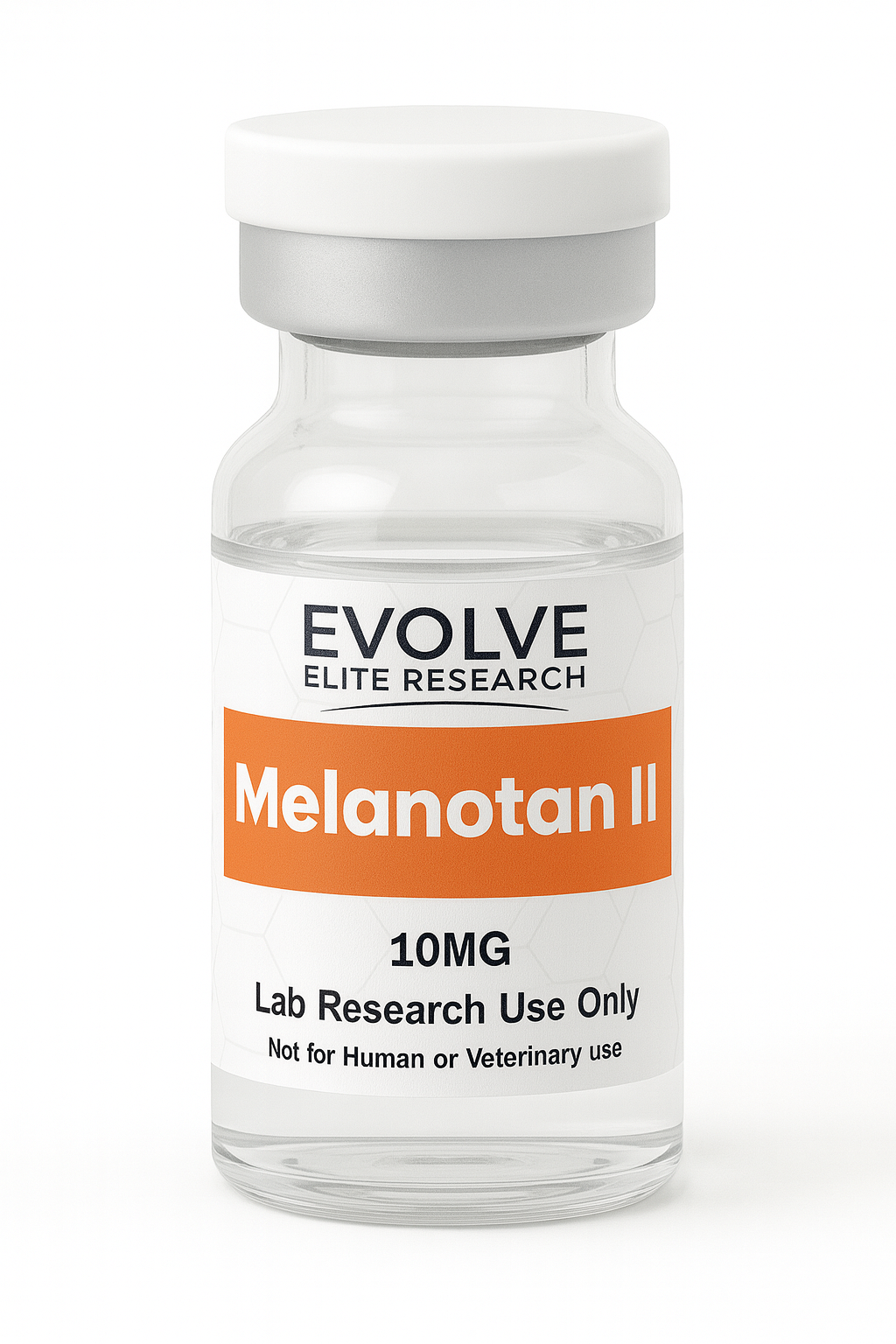
Melanotan ll 10MG


$28.00
Technical Specifications
- Product Name: Melanotan II 10MG
- Common Name: Melanotan II
- Abbreviation: MT-II
- Peptide Classification: Synthetic Cyclic Melanocortin Peptide
- Primary Research Areas: Melanocortin Receptor Signaling, MC1R–MC5R Receptor Pharmacology, Cyclic AMP Signaling, Pigment-Cell Biology, and Peptide Characterization
- Peptide Sequence: Ac-Nle-cyclo[Asp-His-D-Phe-Arg-Trp-Lys]-NH2
- Structural Feature: Asp-to-Lys Side-Chain Lactam Bridge
- Molecular Formula: C50H69N15O9
- Molecular Weight: Approximately 1,024.2 g/mol
- CAS Number: 121062-08-6
- PubChem CID: 92432
- Appearance: White to Off-White Lyophilized Powder
- Research Quantity: 10MG
- Intended Use: Laboratory Research Only
In stock
🔬 For Laboratory Research Use Only.
Not for human consumption, medical, veterinary, or household use.
By purchasing you agree to our
Terms and
Refund Policy.
Expanded research quantity for replicate studies, concentration-response experiments and analytical allocation
Lactam-bridged α-MSH analogue containing the sequence Ac-Nle-cyclo[Asp-His-D-Phe-Arg-Trp-Lys]-NH2
Investigated across MC1R, MC3R, MC4R and MC5R-associated signaling systems
Prepared and shipped from our Texas facility with fast U.S. order processing
Lyophilized synthetic cyclic heptapeptide supplied exclusively for controlled laboratory investigations involving melanocortin receptor pharmacology, receptor subtype signaling, melanogenesis, pigment-cell biology, cyclic peptide structure, ligand selectivity and analytical characterization.
Melanotan II 10MG Research Summary
Melanotan II, commonly abbreviated MT-II, is a synthetic cyclic heptapeptide analogue of alpha-melanocyte-stimulating hormone. It is represented by the sequence Ac-Nle-cyclo[Asp-His-D-Phe-Arg-Trp-Lys]-NH2 and contains a side-chain lactam bridge formed between the aspartic-acid and lysine residues.
The cyclic structure was developed to constrain the peptide into a biologically active conformation while improving resistance to enzymatic degradation compared with less-constrained melanocortin sequences. Melanotan II also incorporates norleucine and D-phenylalanine substitutions that distinguish it from endogenous alpha-MSH.
Melanotan II has been studied as a nonselective melanocortin receptor agonist. Experimental literature has evaluated activity across MC1R, MC3R, MC4R and MC5R-associated systems, with the magnitude and character of the response depending on receptor subtype, species, assay configuration and cellular context.
MC1R-associated research commonly focuses on melanocyte signaling, cyclic adenosine monophosphate, melanogenic gene expression and pigment-associated cellular endpoints. MC3R and MC4R research may involve receptor activation, intracellular signaling, trafficking and subtype-selectivity studies. MC5R studies may examine exocrine, sebaceous, immune-associated and other peripheral receptor systems.
Melanotan II should not be described as selective for a single melanocortin receptor. A response observed in tissue, an animal model or a mixed-cell system does not independently identify the receptor subtype responsible.
Receptor attribution requires controlled assays using defined receptor-expression systems, antagonists, receptor-negative controls, gene editing, knockdown or other subtype-specific methods.
The 10MG research format may support biological replicates, receptor-panel studies, concentration-response analysis, time-course experiments, comparative ligand research and allocation of material for HPLC, LC-MS or stability testing.
Melanotan II 10MG is supplied as a lyophilized laboratory research material. It is not intended for human or veterinary administration.
Technical Specifications
Melanotan II 10MG
MT-II
10MG per vial
Lyophilized powder
Synthetic cyclic heptapeptide
Lactam-bridged melanocortin analogue
7 amino-acid residues
Ac-Nle-cyclo[Asp-His-D-Phe-Arg-Trp-Lys]-NH2
Asp-to-Lys side-chain lactam bridge
Acetylated
Amidated
Norleucine
D-Phenylalanine
121062-08-6
92432
C50H69N15O9
Approximately 1024.2 g/mol
Melanocortin peptide system
Melanocortin receptor pharmacology
MC1R, MC3R, MC4R and MC5R-associated systems
See applicable Certificate of Analysis
Dry lyophilized research material
Laboratory research only
Not supplied as an FDA-approved pharmaceutical product
Formula and molecular-weight calculations should correspond to the exact molecular form identified for the applicable research lot. Counterions, residual water and salt-associated representations may affect total material mass without changing the core peptide sequence.
Molecular Characteristics and Peptide Sequence
Melanotan II is represented by the modified peptide sequence Ac-Nle-cyclo[Asp-His-D-Phe-Arg-Trp-Lys]-NH2. It contains seven residues, an acetylated N-terminus, an amidated C-terminus and a side-chain lactam ring.
Ac-Nle-cyclo[Asp-His-D-Phe-Arg-Trp-Lys]-NH2
The cyclic structure is produced through an amide linkage between the side-chain carboxyl group of aspartic acid and the epsilon-amino group of lysine. This covalent bridge restricts conformational freedom and creates a more rigid molecular scaffold.
Conformational restriction is an important strategy in peptide design because many receptors recognize ligands in only a limited range of three-dimensional arrangements. By reducing the number of accessible conformations, cyclization may improve receptor affinity, functional potency or metabolic persistence.
Melanotan II also contains norleucine, a non-proteinogenic hydrophobic amino acid, in place of the methionine found in native alpha-MSH. This substitution removes the sulfur-containing thioether group of methionine and changes the peptide’s oxidation profile.
D-phenylalanine introduces inverted stereochemistry relative to the naturally occurring L-amino-acid configuration. This substitution can alter receptor recognition, conformational preference and protease susceptibility.
A hydrophobic non-proteinogenic residue used in place of methionine within the modified melanocortin sequence.
Provides the side-chain carboxyl group participating in the intramolecular lactam bridge.
Contains an imidazole side chain capable of pH-dependent protonation and molecular interaction.
Provides aromatic hydrophobic character and stereochemical modification relative to natural melanocortin sequences.
Contributes a strongly basic guanidinium group and influences charge distribution and receptor interaction.
Provides a large aromatic indole side chain relevant to hydrophobic interaction and receptor recognition.
Supplies the epsilon-amino group that forms the side-chain lactam bridge with aspartic acid.
Constrains the peptide backbone and distinguishes Melanotan II from linear alpha-MSH-derived sequences.
Scientific Background
The melanocortin system is a peptide-signaling network derived from the proopiomelanocortin precursor. It includes adrenocorticotropic hormone, alpha-MSH, beta-MSH, gamma-MSH and related processed peptides.
These endogenous ligands signal through five melanocortin receptor subtypes designated MC1R through MC5R. The receptors are members of the G-protein-coupled receptor superfamily but differ in tissue distribution, physiological context, ligand preference and downstream regulation.
Melanotan II was developed as a shortened, conformationally restricted analogue of alpha-MSH. Its cyclic scaffold preserves a core melanocortin pharmacophore while removing several residues present in the endogenous peptide.
The resulting molecule has been used extensively as a research ligand for examining melanocortin receptor activation, receptor selectivity, intracellular signaling and structure-activity relationships.
Because Melanotan II may activate multiple melanocortin receptor subtypes, whole-tissue and organism-level observations often require further experiments before a specific receptor mechanism can be assigned.
Discovery and Development of Melanotan II
Early melanocortin research sought analogues of alpha-MSH with improved potency and greater resistance to enzymatic degradation. Native peptide hormones are often rapidly processed and may adopt many conformations in solution.
Researchers identified a central melanocortin sequence containing His-Phe-Arg-Trp as an important region for receptor activity. Peptide modifications were then introduced to stabilize favorable conformations and improve experimental activity.
Replacement of methionine with norleucine reduced susceptibility to methionine-associated oxidation. Introduction of D-phenylalanine altered stereochemistry and improved activity in several melanocortin models.
Cyclization through the aspartic-acid and lysine side chains created the compact lactam-bridged structure now identified as Melanotan II.
The compound subsequently became an important reference ligand in melanocortin receptor pharmacology and in the development of more receptor-selective analogues.
Melanotan II itself is not highly receptor selective. Its value in laboratory research includes both its strong melanocortin activity and its usefulness as a comparator for more selective agonists and antagonists.
Relationship to Alpha-Melanocyte-Stimulating Hormone
Alpha-MSH is an endogenous 13-residue peptide generated from proopiomelanocortin. Its sequence contains the conserved melanocortin pharmacophore His-Phe-Arg-Trp.
Melanotan II retains a modified form of this core region but is shorter, cyclic and chemically modified at both termini.
The native methionine residue is replaced with norleucine, and phenylalanine is present in the D-configuration. These changes influence stability, conformation and receptor pharmacology.
Alpha-MSH is linear and possesses greater conformational flexibility. Melanotan II is constrained by its Asp-to-Lys lactam bridge.
Findings associated with endogenous alpha-MSH should not automatically be assigned to Melanotan II, and observations involving Melanotan II should not be interpreted as complete equivalents of native alpha-MSH biology.
Endogenous linear 13-residue proopiomelanocortin-derived peptide.
Synthetic cyclic seven-residue analogue containing non-native structural modifications.
Both contain the melanocortin receptor-recognition region centered on His-Phe-Arg-Trp.
Melanotan II is conformationally constrained and contains norleucine and D-phenylalanine substitutions.
Melanocortin Receptor System
Five melanocortin receptor subtypes have been identified: MC1R, MC2R, MC3R, MC4R and MC5R. Each subtype has a distinct expression pattern and biological research context.
MC1R is strongly associated with melanocyte signaling and pigment-cell biology. MC2R is the classical adrenocorticotropic hormone receptor and has distinct accessory-protein requirements. MC3R and MC4R are widely studied in central and peripheral receptor-signaling systems. MC5R has been investigated in exocrine, sebaceous, immune and other tissue-specific pathways.
Melanotan II is commonly used as an agonist in MC1R, MC3R, MC4R and MC5R research systems. It should not be assumed to reproduce the specialized ACTH-dependent pharmacology of MC2R.
Receptor subtype activity can vary between species and assay platforms. Binding affinity, cyclic AMP production, beta-arrestin recruitment and downstream gene expression represent different pharmacological endpoints.
Commonly studied in melanocytes, pigment synthesis, cyclic AMP signaling and melanogenic gene regulation.
Classical ACTH receptor with distinctive ligand and accessory-protein requirements.
Investigated in receptor signaling, immune-associated biology and tissue-specific pathways.
Extensively studied in central nervous-system receptor signaling, pathway-selectivity and autonomic research.
Investigated in exocrine, sebaceous, immune, glandular and other peripheral systems.
Melanotan II may activate several receptor subtypes and therefore requires subtype-specific controls.
MC1R and Melanocyte Research
Melanocortin 1 receptor is a G-protein-coupled receptor expressed prominently in melanocytes. Its activation is commonly associated with stimulation of adenylate cyclase and increased intracellular cyclic AMP.
Cyclic AMP can activate protein kinase A and influence transcription factors involved in melanocyte differentiation and pigment-associated gene expression.
Melanotan II is frequently used in MC1R research because it can produce strong receptor-associated signaling in appropriate experimental systems.
Potential laboratory endpoints include cyclic AMP accumulation, receptor internalization, transcription-factor activity, tyrosinase expression, pigment-associated proteins and melanin content.
Changes in pigment-associated endpoints within a biological model should not be treated as a direct measurement of receptor binding. Receptor-negative controls and subtype-selective antagonists can help establish MC1R dependence.
Melanogenesis Research
Melanogenesis is the biochemical process through which melanocytes produce melanin pigments. The pathway occurs within specialized organelles known as melanosomes.
Tyrosinase catalyzes key early reactions involving tyrosine and related intermediates. Tyrosinase-related proteins and multiple transport, structural and regulatory factors contribute to subsequent pigment formation.
MC1R-associated cyclic AMP signaling can influence microphthalmia-associated transcription factor, a major regulator of melanocyte gene expression.
Melanotan II research may evaluate transcription of MITF, TYR, TYRP1, DCT and other melanocyte-associated genes in controlled laboratory systems.
Pigment measurements may use spectrophotometry, microscopy, biochemical extraction, gene-expression analysis or protein-level assays.
Cellular pigment production depends on receptor expression, genetic background, culture conditions, differentiation state and experimental duration.
Transcriptional regulator involved in melanocyte identity and pigment-associated gene expression.
Copper-dependent enzyme responsible for key reactions in melanin biosynthesis.
Melanocyte-associated protein examined in pigment synthesis and melanosome biology.
Dopachrome tautomerase involved in downstream melanogenic chemistry.
Specialized organelles in which melanin synthesis, maturation and storage occur.
May involve spectrophotometric, chromatographic, biochemical or imaging-based methods.
Eumelanin and Pheomelanin Research
Mammalian pigmentation involves multiple melanin forms, including eumelanin and pheomelanin. These pigments differ in chemical composition, optical properties and biosynthetic context.
MC1R signaling is commonly studied in relation to the balance between eumelanin-associated and pheomelanin-associated pathways.
Melanotan II may be used experimentally to evaluate how melanocortin signaling influences pigment-associated cellular endpoints in receptor-expressing cells.
Total pigment measurements do not independently identify pigment composition. Chemical degradation methods, chromatography or mass spectrometry may be required to distinguish pigment species.
Genetic variation in MC1R and other melanocyte-associated genes can substantially influence experimental response.
Cyclic AMP and Protein Kinase A Signaling
MC1R, MC3R, MC4R and MC5R are commonly associated with Gs-protein-mediated activation of adenylate cyclase. This process increases intracellular cyclic AMP.
Cyclic AMP can activate protein kinase A, regulate ion channels and influence transcription through cyclic AMP-responsive proteins.
Melanotan II receptor assays frequently use cyclic AMP accumulation as a functional endpoint.
A cyclic AMP response provides evidence of receptor-associated functional signaling but does not independently identify the specific receptor unless the expression system is controlled.
Time-resolved analysis can distinguish rapid second-messenger production from delayed transcriptional responses.
Researchers should consider receptor desensitization, phosphodiesterase activity, assay sensitivity and basal cyclic AMP when interpreting results.
MC3R Research
Melanocortin 3 receptor is expressed in central and peripheral experimental systems and is investigated in receptor-signaling, immune-associated and tissue-specific research.
Melanotan II may activate MC3R in recombinant receptor systems, making it useful as a reference ligand in receptor-screening experiments.
Potential laboratory endpoints include cyclic AMP accumulation, receptor trafficking, gene expression, ligand competition and interaction with endogenous melanocortin ligands.
Responses observed in mixed tissues or organism-level models should not automatically be attributed to MC3R because Melanotan II may concurrently interact with other melanocortin receptor subtypes.
Receptor knockout models, subtype-selective antagonists and controlled expression systems can strengthen mechanistic attribution.
MC4R Research
Melanocortin 4 receptor is a widely studied central melanocortin receptor used in receptor-pharmacology and intracellular-signaling research.
Melanotan II is frequently used as a reference ligand in MC4R experimental systems because of its measurable activity in receptor-expressing models.
Potential laboratory endpoints include cyclic AMP accumulation, calcium-associated signaling, beta-arrestin recruitment, receptor internalization and transcriptional responses.
Ligand efficacy may differ among signaling pathways. A compound may display different functional profiles across assays depending on receptor density, cell background and pathway readout.
Receptor mutations, expression level and accessory proteins may alter measured Melanotan II activity.
A response observed after Melanotan II exposure does not independently establish MC4R dependence. Receptor-specific controls are required.
MC5R Research
Melanocortin 5 receptor is expressed in multiple peripheral tissues and has been studied in exocrine, sebaceous, glandular, immune-associated and metabolic systems.
Melanotan II can serve as a research agonist in recombinant MC5R assays.
Potential endpoints include cyclic AMP, secretion-associated biology, receptor trafficking and gene expression.
MC5R expression varies by tissue and species. Results should therefore be interpreted within the defined experimental model.
Responses in mixed tissues may involve other melanocortin receptor subtypes or indirect signaling networks.
Melanocortin Receptor Pharmacology
Receptor pharmacology separates several related but distinct concepts, including binding affinity, functional potency, efficacy, selectivity, desensitization and signaling bias.
Binding affinity describes the tendency of a ligand to associate with a receptor under defined conditions. Functional potency describes the concentration required to produce a measured response.
Efficacy describes the magnitude of response relative to the assay system and comparator ligand. Selectivity describes preference among receptor subtypes.
Melanotan II is commonly treated as a potent but nonselective melanocortin agonist. Apparent potency values can differ substantially between receptor-expression systems and functional endpoints.
Researchers should not compare numerical values from different publications without considering species, receptor construct, cell type, assay duration and calculation method.
Measures ligand-receptor association under specified experimental conditions.
Describes the concentration associated with a defined fraction of the measured response.
Describes the maximum response produced within the selected assay.
Compares ligand activity across multiple receptor subtypes under matched conditions.
Reduced signaling following sustained or repeated receptor activation.
Preferential activation of one intracellular pathway over another through the same receptor.
G-Protein-Coupled Receptor Signaling
Melanocortin receptors are seven-transmembrane G-protein-coupled receptors. Ligand binding can alter receptor conformation and promote interaction with intracellular signaling proteins.
The best-characterized melanocortin pathway involves Gs proteins, adenylate cyclase and cyclic AMP. However, receptor signaling may also be influenced by calcium pathways, extracellular signal-regulated kinases, receptor kinases and beta-arrestins.
Melanotan II can be evaluated using second-messenger assays, reporter systems, phosphoprotein measurements and receptor-trafficking methods.
The same receptor may produce different signaling profiles depending on cell type, receptor density and assay duration.
Overexpression systems are useful for receptor screening but may exaggerate responses relative to native tissues.
Receptor Desensitization and Beta-Arrestin Research
Sustained G-protein-coupled receptor activation may promote receptor phosphorylation, beta-arrestin recruitment and receptor internalization.
These processes can reduce surface receptor availability and alter subsequent signaling.
Melanotan II may be used to study the timing and magnitude of melanocortin receptor desensitization in controlled expression systems.
Researchers may measure surface receptor abundance, beta-arrestin recruitment, endosomal localization and recovery after ligand removal.
A decline in cyclic AMP during prolonged exposure may reflect receptor desensitization, ligand degradation, phosphodiesterase activity or cellular adaptation.
Structure-Activity Relationships
Structure-activity relationship research examines how molecular modifications alter receptor affinity, potency, efficacy, selectivity and stability.
Melanotan II incorporates several design features that influence its experimental profile: a shortened melanocortin sequence, N-terminal acetylation, C-terminal amidation, norleucine substitution, D-phenylalanine and lactam cyclization.
The His-D-Phe-Arg-Trp region is central to melanocortin receptor recognition. Changes within this sequence can substantially alter receptor-subtype activity.
Ring size and bridge placement influence the orientation of key side chains. Even small structural changes may shift preference among MC1R, MC3R, MC4R and MC5R.
Melanotan II is therefore useful as both a research ligand and a structural reference for newer melanocortin analogues.
Restricts peptide conformation and may improve receptor recognition and metabolic resistance.
Alters stereochemical orientation and resistance to selected proteolytic enzymes.
Replaces methionine and removes a sulfur-containing oxidation-sensitive side chain.
Alters terminal charge and may influence molecular recognition and enzymatic processing.
Removes the terminal carboxylate charge and may affect receptor interaction and stability.
Cyclization influences spatial presentation of the His-D-Phe-Arg-Trp recognition region.
Comparative Melanocortin Ligand Research
Melanotan II may be compared with endogenous melanocortins, synthetic analogues, selective receptor agonists and melanocortin antagonists.
Alpha-MSH provides an endogenous linear-peptide comparison. NDP-alpha-MSH, also known as afamelanotide, provides a longer linear analogue containing norleucine and D-phenylalanine modifications.
PT-141 is a closely related cyclic melanocortin peptide with a different terminal structure and receptor-research profile.
Receptor-selective ligands can help identify which subtype contributes to a Melanotan II-associated response.
Comparisons should be performed under matched assay conditions because receptor density, incubation time and detection platform strongly influence apparent potency.
Pigment-Cell and Melanocyte Models
Melanocyte research may use primary cells, immortalized cell lines, reconstructed tissue models or animal-derived pigment cells.
Primary melanocytes can preserve native receptor and pigment biology but may exhibit donor-dependent variability.
Immortalized cell lines provide greater reproducibility but may differ from primary cells in receptor expression, differentiation state and signaling regulation.
Experimental endpoints may include cyclic AMP, melanin-associated measurements, tyrosinase activity, melanogenic gene expression, dendritic morphology and melanosome transfer.
Cell number and viability should be measured because changes in total pigment may result from altered cell abundance rather than pigment production per cell.
Melanocyte-Keratinocyte Interaction Research
Pigment-cell biology includes communication between melanocytes and keratinocytes. Melanocytes synthesize melanin within melanosomes and transfer pigment-containing organelles to surrounding keratinocytes.
Co-culture systems can be used to examine pigment transfer, dendrite formation, paracrine signaling and cellular organization.
Melanotan II may influence pigment-associated endpoints through direct melanocyte receptor activation, but tissue-level effects may also involve interactions with neighboring cells.
Reconstructed tissue models can provide additional architectural context but remain laboratory systems with defined limitations.
Gene-Expression Research
Melanotan II-associated receptor activation may influence transcription through cyclic AMP-responsive signaling pathways.
Quantitative PCR may be used to evaluate predefined genes associated with melanogenesis, receptor regulation, cellular differentiation and signaling.
RNA sequencing or microarray analysis can identify broader transcriptional changes but requires biological replication and correction for multiple comparisons.
Changes in messenger RNA do not independently establish corresponding changes in protein abundance, enzyme activity or pigment production.
Selected transcriptional findings should be validated through protein-level or functional measurements where possible.
Protein and Enzyme Research
Protein-level analysis may include melanocortin receptors, MITF, tyrosinase, TYRP1, DCT, signaling kinases and receptor-trafficking proteins.
Immunoblotting, immunoassays, microscopy and targeted proteomic methods can provide complementary information.
Protein abundance should be distinguished from enzyme activity and intracellular localization.
Tyrosinase activity assays may be influenced by substrate conditions, cell number, copper availability and sample preparation.
Receptor expression may also change after prolonged agonist exposure and should be measured when desensitization is under investigation.
Potential Laboratory Research Applications
Evaluation of melanocyte receptor signaling, cyclic AMP and pigment-cell pathways.
Study of receptor activation in central, immune-associated and recombinant systems.
Investigation of central melanocortin signaling, receptor pharmacology and pathway bias.
Evaluation of peripheral, exocrine, sebaceous and immune-associated receptor systems.
Analysis of melanin-associated endpoints and melanogenic gene regulation in pigment-cell models.
Measurement of pigment-associated enzyme expression and activity.
Investigation of melanocyte transcriptional regulation following receptor activation.
Functional measurement of Gs-associated melanocortin receptor signaling.
Comparison of Melanotan II interaction with defined melanocortin receptor subtypes.
Analysis of internalization, recycling and surface-receptor availability.
Evaluation of receptor desensitization and noncanonical signaling pathways.
Comparison with linear, cyclic, selective and stereochemically modified melanocortin ligands.
Receptor-panel experiments comparing activity across MC1R, MC3R, MC4R and MC5R.
Comparison of cyclic AMP, beta-arrestin, kinase and transcriptional responses.
Evaluation of intact peptide and degradation products under defined conditions.
Assessment of molecular identity, chromatographic purity, mass and stability.
Why Researchers May Select the 10MG Format
Research-material requirements depend on assay volume, concentration range, replicate count, receptor-panel size, analytical allocation and expected handling loss.
The 10MG format may provide additional flexibility for extended laboratory workflows involving several experimental stages.
Supports independent cell cultures, tissue preparations or experimental groups.
Provides material for multi-point testing rather than single-concentration screening.
Supports parallel evaluation across multiple melanocortin receptor subtypes.
Allows assessment of rapid signaling, receptor desensitization and delayed gene expression.
Supports matched analysis against alpha-MSH, PT-141 or receptor-selective compounds.
Allows research material to be reserved for HPLC, LC-MS or stability verification.
Experimental Design Considerations
Define the Receptor Question
Determine whether the experiment is intended to evaluate one defined receptor subtype, a receptor panel or a complex tissue response.
Use Controlled Expression Systems
Recombinant cells expressing one melanocortin receptor subtype provide stronger receptor attribution than mixed tissues containing several receptors.
Include a Concentration Series
Multi-point testing allows calculation of concentration-response relationships and helps identify plateaus, biphasic behavior or nonspecific effects.
Use Molar Calculations
Comparative ligand studies should use molar concentration rather than equal mass when molecular weights differ.
Include Biological Replicates
Independent cultures or biological samples are necessary for evaluating reproducibility.
Separate Binding From Function
Binding assays measure ligand-receptor association, while cyclic AMP and other assays measure functional signaling.
Measure Multiple Pathways
Cyclic AMP, beta-arrestin, receptor trafficking and kinase activation can reveal different aspects of receptor pharmacology.
Control Receptor Expression
Receptor density can alter apparent potency and efficacy. Expression levels should be measured or standardized.
Include Viability Measurements
Cellular health should be evaluated when prolonged exposure or high concentrations are used.
Assess Peptide Stability
Analytical testing can determine whether intact Melanotan II remains present throughout the experiment.
Control Surface Adsorption
Peptide loss to glass, plastic, filters and tubing may affect low-concentration studies.
Predefine Statistical Analysis
Endpoints, exclusions, curve-fitting methods and statistical tests should be established before final data review whenever possible.
Recommended Experimental Controls
Establishes baseline behavior without peptide or preparation vehicle.
Determines whether the preparation medium influences the endpoint.
Identifies potency, response plateaus and nonspecific high-concentration effects.
Provides an endogenous melanocortin ligand comparison.
Supports comparison with a related cyclic melanocortin peptide.
Provides a receptor-specific functional benchmark when available.
Helps determine whether a measured response depends on a selected receptor subtype.
Identify receptor-independent or nonspecific cellular responses.
Strengthens attribution of a response to a specific receptor or pathway.
Confirms that the selected functional assay can detect pathway activation.
Distinguishes signaling changes from altered cell health or cell number.
Accounts for incubation duration, handling and environmental effects.
Identifies background signals from solvents, buffers, columns or instrumentation.
Confirms peptide integrity under the same conditions used in the biological experiment.
Helps distinguish sequence-dependent signaling from nonspecific peptide exposure.
Important when inflammatory, immune-associated or cytokine endpoints are measured.
Analytical Characterization
Analytical characterization supports evaluation of Melanotan II identity, chromatographic purity, molecular mass, peptide content and stability.
These properties are related but not interchangeable. A dominant HPLC peak does not independently establish sequence, stereochemistry, total peptide content or absence of non-UV-detectable material.
Reverse-phase HPLC may separate the principal peptide from linear precursors, incomplete cyclization products, deletion sequences and degradation products.
Mass spectrometry can evaluate whether the detected molecular species is consistent with the expected mass of Melanotan II.
Additional characterization may include tandem mass spectrometry, amino-acid analysis, water determination, counterion analysis and peptide-content testing.
Molecular identity, chromatographic purity, peptide content, net vial quantity and biological activity are separate properties and should be evaluated independently.
HPLC Analysis
Reverse-phase high-performance liquid chromatography separates peptide components according to hydrophobic interaction with the stationary phase and changing mobile-phase composition.
Melanotan II contains several hydrophobic residues, including norleucine, D-phenylalanine and tryptophan, which contribute to reverse-phase retention.
Potential secondary peaks may represent truncated peptides, deletion sequences, linear precursors, incomplete cyclization products, epimers or degradation products.
Relative chromatographic purity is commonly calculated from integrated peak areas under a specified method.
Results depend on column chemistry, gradient, temperature, mobile-phase additives, flow rate, wavelength, sample concentration and integration settings.
Retention time alone does not definitively identify Melanotan II. An orthogonal identity method should be used when molecular confirmation is required.
LC-MS and Mass-Spectrometric Analysis
Liquid chromatography-mass spectrometry combines chromatographic separation with mass-to-charge detection.
Melanotan II may generate singly or multiply protonated ions depending on ionization conditions and instrument configuration.
Deconvolution can be used to estimate a neutral molecular mass consistent with approximately 1024.2 g/mol for the core molecular entity.
Analysts should account for protonation, isotope distribution, sodium or potassium adducts, counterions and calibration tolerance.
Mass agreement supports expected molecular identity but does not independently confirm the exact cyclization site, complete sequence or stereochemistry.
Tandem mass spectrometry, peptide mapping or comparison with a qualified reference standard may provide additional structural support.
Cyclization and Structural Confirmation
Melanotan II contains a side-chain lactam bridge between aspartic acid and lysine. Confirmation of molecular mass alone may not fully establish correct ring formation.
A linear precursor and correctly cyclized peptide may differ by the mass associated with condensation, but positional isomers or alternative structures can require additional analysis.
Chromatographic comparison, tandem mass spectrometry, nuclear magnetic resonance or targeted chemical methods may support structural confirmation.
Correct cyclization is important because ring geometry influences receptor recognition and structure-activity relationships.
Identity, Purity and Peptide Content
Evaluates whether the detected species is consistent with expected Melanotan II mass and structure.
Estimates the relative abundance of detectable sample components under a defined HPLC method.
Describes peptide quantity relative to water, salts, counterions and other non-peptide material.
Represents the assigned research quantity and is not equivalent to HPLC peak-area purity.
Evaluates whether the intended Asp-to-Lys lactam structure is present.
Concerns correct residue configuration, including the intended D-phenylalanine.
Melanotan II Stability Considerations
Peptide stability may be influenced by temperature, moisture, oxygen, light, pH, enzymes, concentration, container material and microbial contamination.
Cyclization can improve resistance to selected proteolytic pathways but does not make Melanotan II chemically or enzymatically indestructible.
Lyophilization removes a substantial portion of water and may improve storage stability compared with maintaining the peptide in solution.
Once placed into solution, increased molecular mobility may accelerate hydrolysis, side-chain modification and other degradation processes.
Stability in purified buffer may differ substantially from stability in culture media, plasma, serum or tissue homogenate.
Analytical stability claims should be based on measurements conducted under the same conditions used in the research workflow.
Potential Degradation Pathways
Water-dependent reactions may affect peptide bonds, terminal groups or the lactam structure over time.
Enzymes may process exposed peptide bonds despite the conformational restriction created by cyclization.
The indole-containing residue may be susceptible to oxidation or light-associated reactions under some conditions.
Reactive compounds, pH and temperature may influence susceptible amino-acid side chains.
Peptide material may bind to glass, plastic, filters, pipette tips or analytical tubing.
Contamination may alter peptide integrity and confound biological experiments.
Laboratory Storage
Lyophilized Melanotan II should be maintained in a cool, dry and dark laboratory environment protected from excessive heat, direct light and moisture.
Frozen storage may be appropriate for longer-term preservation according to the applicable lot documentation and the research facility’s validated procedures.
Repeated temperature cycling should be minimized because it may introduce condensation, moisture and inconsistent environmental exposure.
When condensation is possible, a sealed vial should be allowed to equilibrate under appropriate laboratory conditions before opening.
Prepared solutions are generally less stable than dry lyophilized material. Solution stability depends on buffer, pH, temperature, concentration, container and experimental duration.
Storage information is provided solely for preservation of laboratory research material and is not a preparation, dosing or administration protocol.
Laboratory Handling
Melanotan II 10MG should be handled only by trained research personnel using procedures appropriate for synthetic peptides and the selected experimental model.
Researchers should document the lot identifier, preparation date, buffer or solvent, calculated concentration, storage condition and handling history.
Calibrated balances, pipettes and analytical equipment should be used when quantitative accuracy is required.
Small-volume transfer error, incomplete mixing and surface adsorption may produce meaningful concentration differences.
Personal protective equipment, containment procedures and waste disposal should follow institutional requirements and the laboratory’s risk assessment.
Melanotan II Compared With Related Research Peptides
Alpha-MSH is an endogenous linear 13-residue peptide. Melanotan II is a synthetic cyclic seven-residue analogue.
Melanotan I is a longer linear alpha-MSH analogue, while Melanotan II is shorter and lactam-cyclized.
Both are related cyclic melanocortin peptides, but they differ in terminal structure, molecular formula and research profile.
Melanotan II is a cyclic melanocortin receptor agonist. Semax is a linear ACTH-derived heptapeptide studied broadly in neurotrophic research.
Selank is a linear tuftsin-derived heptapeptide with a distinct sequence and research context.
Melanotan II has broad melanocortin activity, while newer ligands may be designed for greater receptor-subtype selectivity.
Melanotan II and PT-141 Research Distinction
Melanotan II and PT-141 are closely related synthetic cyclic melanocortin peptides. Both contain the central His-D-Phe-Arg-Trp sequence and a lactam bridge involving aspartic acid and lysine.
Despite their structural relationship, the compounds should be treated as distinct molecular entities. Differences in terminal structure influence molecular formula, mass, receptor pharmacology, enzymatic processing and analytical behavior.
Melanotan II is N-terminally acetylated and contains norleucine. PT-141 is commonly represented as the deacetylated cyclic metabolite-like analogue lacking the same N-terminal acetyl-norleucine region.
Comparative research should verify the exact molecular form of each compound and use molar rather than mass-only matching.
Similarity within the melanocortin pharmacophore does not establish identical receptor potency, selectivity or functional behavior.
Related Research Compounds
PT-141 10MG
Explore a related cyclic melanocortin peptide for receptor and signaling research.
Semax 10MG
Explore a linear ACTH-derived heptapeptide for neurotrophic and transcriptomic research.
Selank 10MG
Explore a tuftsin-derived heptapeptide for neuropeptide and neuroimmune research.
Selank 5MG / Semax 5MG
Explore a dual-peptide format for comparative neuropeptide research.
Research Compound Collection
Browse additional synthetic peptides and laboratory research materials.
Scientific Research Resources
Frequently Asked Questions
What is Melanotan II?
Melanotan II is a synthetic cyclic heptapeptide analogue of alpha-melanocyte-stimulating hormone.
What is Melanotan II commonly abbreviated as?
Melanotan II is commonly abbreviated MT-II.
What is the peptide sequence of Melanotan II?
The sequence is Ac-Nle-cyclo[Asp-His-D-Phe-Arg-Trp-Lys]-NH2.
How many amino-acid residues are in Melanotan II?
Melanotan II contains seven amino-acid residues.
Is Melanotan II a linear or cyclic peptide?
It is a cyclic peptide containing a side-chain lactam bridge.
How is the Melanotan II ring formed?
The ring is formed through an amide bond between the aspartic-acid side chain and the lysine side chain.
What is a lactam bridge?
A lactam bridge is an intramolecular amide linkage that creates a cyclic peptide structure.
Why is Melanotan II cyclized?
Cyclization constrains peptide conformation and may influence receptor affinity, functional activity and resistance to enzymatic degradation.
What is the CAS number for Melanotan II?
The commonly listed CAS number is 121062-08-6.
What is the PubChem CID for Melanotan II?
PubChem identifies Melanotan II under CID 92432.
What is the molecular formula of Melanotan II?
The molecular formula is commonly represented as C50H69N15O9.
What is the molecular weight of Melanotan II?
The molecular weight is approximately 1024.2 g/mol.
Why might molecular-weight values differ between sources?
Differences may reflect counterions, hydration, salt-associated material or a different molecular representation.
What is norleucine?
Norleucine is a non-proteinogenic hydrophobic amino acid incorporated into the Melanotan II sequence.
Why does Melanotan II contain norleucine?
Norleucine replaces methionine within the modified melanocortin sequence and changes the peptide’s oxidation and structural profile.
What is D-phenylalanine?
D-phenylalanine is the stereochemical mirror configuration of naturally occurring L-phenylalanine.
Why is D-phenylalanine included in Melanotan II?
The stereochemical substitution influences conformation, receptor recognition and resistance to selected proteolytic pathways.
Is the N-terminus of Melanotan II modified?
Yes. The N-terminus is acetylated.
Is the C-terminus of Melanotan II modified?
Yes. The C-terminus is amidated.
Is Melanotan II related to alpha-MSH?
Yes. It is a shortened, modified and cyclic analogue of alpha-melanocyte-stimulating hormone.
Is Melanotan II identical to alpha-MSH?
No. Alpha-MSH is an endogenous linear 13-residue peptide, while Melanotan II is a synthetic cyclic heptapeptide.
What is the melanocortin pharmacophore?
The His-Phe-Arg-Trp region is a central receptor-recognition motif within many melanocortin peptides.
Which receptors are studied with Melanotan II?
Melanotan II is commonly investigated in MC1R, MC3R, MC4R and MC5R-associated systems.
Is Melanotan II selective for MC1R?
No. It is generally treated as a nonselective melanocortin receptor agonist.
What is MC1R?
MC1R is a melanocortin receptor strongly associated with melanocyte signaling and pigment-cell biology.
What is MC2R?
MC2R is the classical adrenocorticotropic hormone receptor and has specialized ligand and accessory-protein requirements.
What is MC3R?
MC3R is a melanocortin receptor investigated in central, metabolic, inflammatory and tissue-specific signaling.
What is MC4R?
MC4R is a central melanocortin receptor studied in neural, autonomic and energy-regulatory signaling.
What is MC5R?
MC5R is a melanocortin receptor studied in exocrine, sebaceous, immune-associated and peripheral systems.
Does Melanotan II activate MC2R in the same way as ACTH?
Melanotan II should not be assumed to reproduce the specialized MC2R pharmacology of full-length ACTH.
What does nonselective receptor activity mean?
It means a ligand may produce functional activity at more than one receptor subtype.
How can researchers identify the responsible receptor subtype?
Defined receptor-expression systems, antagonists, receptor-negative cells, knockdown and knockout models can support receptor attribution.
What is melanogenesis?
Melanogenesis is the biochemical process through which melanocytes produce melanin pigments.
What are melanocytes?
Melanocytes are pigment-producing cells that synthesize melanin within specialized organelles called melanosomes.
What are melanosomes?
Melanosomes are intracellular organelles in which melanin is synthesized, matured and stored.
What is tyrosinase?
Tyrosinase is a copper-dependent enzyme that catalyzes key early reactions in melanin biosynthesis.
What is MITF?
MITF is a transcriptional regulator involved in melanocyte differentiation and pigment-associated gene expression.
Can Melanotan II be studied through tyrosinase assays?
Yes. Researchers may evaluate tyrosinase expression or activity in controlled pigment-cell models.
Does increased tyrosinase expression prove increased pigment?
No. Enzyme abundance, enzyme activity, substrate availability and pigment accumulation are separate endpoints.
What is cyclic AMP?
Cyclic AMP is an intracellular second messenger commonly generated following Gs-associated melanocortin receptor activation.
Why is cyclic AMP measured in Melanotan II research?
It provides a functional measure of melanocortin receptor-associated signaling.
Does a cyclic AMP response identify a specific receptor?
Not in a mixed system. Receptor identity must be controlled or established through additional experiments.
What is protein kinase A?
Protein kinase A is a cyclic AMP-regulated kinase involved in downstream cellular signaling and transcription.
Can Melanotan II be studied in gene-expression experiments?
Yes. Quantitative PCR, RNA sequencing and related methods may be used to evaluate downstream transcriptional responses.
Does altered messenger RNA prove altered protein?
No. Messenger RNA abundance, protein expression and functional activity are separately regulated.
What is receptor internalization?
Receptor internalization is the movement of activated surface receptors into intracellular compartments.
Can Melanotan II cause receptor desensitization in research systems?
Sustained receptor activation may produce phosphorylation, beta-arrestin recruitment and reduced surface signaling.
What is beta-arrestin?
Beta-arrestins are regulatory proteins involved in G-protein-coupled receptor desensitization, trafficking and signaling.
What is signaling bias?
Signaling bias is preferential activation of one intracellular pathway over another through the same receptor.
Can Melanotan II be used in signaling-bias research?
Yes. Cyclic AMP, beta-arrestin, receptor trafficking and kinase responses may be compared.
What is binding affinity?
Binding affinity describes how strongly a ligand associates with a receptor under defined conditions.
What is functional potency?
Functional potency describes the concentration associated with a defined level of biological response.
Is binding affinity the same as potency?
No. Binding and functional signaling are related but distinct pharmacological measurements.
What is receptor efficacy?
Efficacy describes the maximum response a ligand produces within a particular assay system.
Why can potency values differ between studies?
Receptor species, cell type, receptor density, assay method and incubation time can all affect apparent potency.
Can Melanotan II be studied in primary melanocytes?
Yes. Primary melanocytes may be used when donor variability, receptor expression and culture conditions are appropriately controlled.
Can Melanotan II be studied in recombinant cells?
Yes. Recombinant receptor-expression systems are useful for subtype-specific pharmacology.
Why include receptor-negative cells?
They help identify receptor-independent or nonspecific responses.
Why use a receptor antagonist?
An antagonist can help determine whether a measured response depends on a selected melanocortin receptor.
Why use alpha-MSH as a comparator?
Alpha-MSH provides an endogenous linear melanocortin ligand comparison.
Is Melanotan II the same as Melanotan I?
No. Melanotan I is a longer linear alpha-MSH analogue, while Melanotan II is a shorter cyclic peptide.
Is Melanotan II the same as PT-141?
No. They are structurally related cyclic melanocortin peptides but are distinct molecular entities.
How does Melanotan II differ from PT-141?
They differ in terminal structure, molecular composition and associated receptor-research profiles.
Is Melanotan II the same as Semax?
No. Semax is a linear ACTH-derived heptapeptide with a distinct sequence and research profile.
Can Melanotan II adsorb to laboratory surfaces?
Yes. Peptides may adsorb to glass, plastic, filters, pipette tips and analytical tubing.
Why should peptide integrity be checked during experiments?
A declining parent-peptide concentration may alter the actual exposure and interpretation of results.
What does lyophilized mean?
Lyophilized material has undergone freeze-drying to remove a substantial portion of water.
Why is lyophilized material generally more stable than material in solution?
Reduced water content limits molecular mobility and may slow several degradation pathways.
What does HPLC evaluate for Melanotan II?
HPLC separates detectable sample components and can estimate relative chromatographic purity under a defined method.
Does HPLC alone prove the sample is Melanotan II?
No. HPLC evaluates chromatographic behavior. Mass spectrometry or another orthogonal method provides stronger identity support.
What does LC-MS evaluate?
LC-MS combines chromatographic separation with molecular mass-to-charge detection.
Does matching molecular mass prove correct cyclization?
Not independently. Additional structural methods may be required to establish the intended ring configuration.
What impurities may appear in Melanotan II analysis?
Potential impurities include truncated peptides, deletion sequences, linear precursors, incomplete cyclization products and degradation species.
Is HPLC purity the same as peptide content?
No. HPLC purity reflects relative detected peak area, while peptide content accounts for water, salts, counterions and other non-peptide material.
Why should the lot number match the Certificate of Analysis?
Analytical results are lot specific and should not automatically be transferred between production lots.
Why might researchers select the 10MG format?
The 10MG format may support replicate studies, receptor panels, concentration-response experiments and analytical allocation.
Does the 10MG designation represent a recommended dose?
No. The 10MG designation identifies nominal laboratory research quantity only and does not represent a recommended amount, dosage, schedule or administration instruction.
Is Melanotan II 10MG intended for human use?
No. This product is supplied strictly for laboratory research and is not intended for human or veterinary administration.
Is Melanotan II an FDA-approved drug?
This research product is not supplied or represented as an FDA-approved pharmaceutical product.
Does this page provide administration instructions?
No. This page provides molecular and laboratory-research information only.
Is this page providing medical advice?
No. The information is intended solely for educational, analytical and laboratory-research purposes.
Research-Use Notice
Melanotan II 10MG is supplied exclusively as laboratory research material. It is not a drug, food, dietary supplement, cosmetic, tanning product or consumer product. It is not intended for human consumption, self-administration, medical use, veterinary use, household use, diagnostic use, topical application or therapeutic use.
Product information is provided solely for educational, analytical and laboratory-research purposes. References to melanocortin receptors, MC1R, MC3R, MC4R, MC5R, melanocytes, melanogenesis, pigment-associated endpoints, cyclic AMP, receptor signaling, gene expression, comparative ligands or published experimental findings are provided only to describe biochemical, cellular, receptor and analytical research contexts.
These references do not constitute medical claims, cosmetic claims, treatment recommendations or representations regarding safety or effectiveness in humans.
Findings from biochemical, receptor-expression, cellular, ex vivo or animal models do not establish equivalent human outcomes, safety, efficacy, dosing, bioavailability or suitability for administration.
No information on this page should be interpreted as instructions for reconstitution, dosing, administration, injection, self-experimentation, tanning, body modification, cosmetic use or treatment of any disease or condition.
The 10MG designation identifies nominal laboratory research quantity only. It does not represent a recommended amount, dosage, schedule or administration instruction.
This material should be handled only by qualified research personnel in an appropriately controlled laboratory environment. Researchers are responsible for confirming molecular identity, reviewing available lot-specific analytical documentation, selecting appropriate analytical methods, determining suitability for their experimental design and complying with all applicable institutional, local, state and federal requirements.
Related products
Research Compounds
Research Compounds
Research Compounds
Research Compounds

Research Compounds
Research Compounds
Research Compounds
Research Compounds