
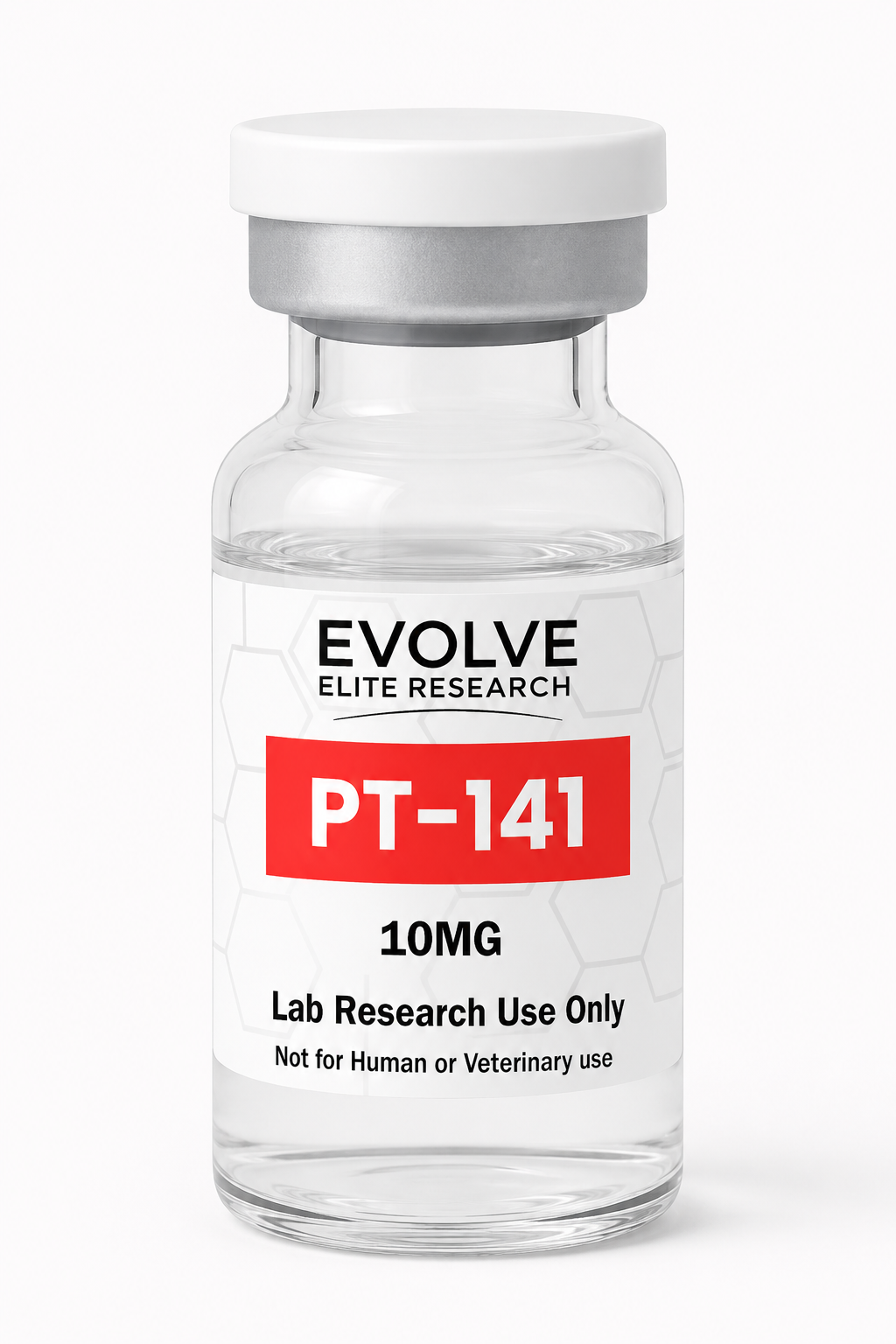
PT-141 10MG

$34.00
Technical Specifications
- Scientific Research Name: Bremelanotide (PT-141)
- Research Description: Synthetic cyclic melanocortin peptide used in receptor-pharmacology research
- Compound Classification: Synthetic cyclic heptapeptide
- Primary Research Areas: Melanocortin receptor signaling, GPCR pharmacology, cyclic-AMP pathways and receptor-selectivity research
- Research Structure: Ac-Nle-cyclo[Asp-His-D-Phe-Arg-Trp-Lys]-OH
- Research Format: 10MG lyophilized research material
- Intended Use: Laboratory research only
For Laboratory Research Use Only.Not intended for human or veterinary administration.
In stock
🔬 For Laboratory Research Use Only.
Not for human consumption, medical, veterinary, or household use.
By purchasing you agree to our
Terms and
Refund Policy.
Expanded quantity for receptor assays, replicate testing and comparative research workflows
Seven-residue melanocortin analogue commonly identified as bremelanotide
Studied in MC1R, MC3R, MC4R, MC5R and downstream GPCR signaling models
Shipped from our Texas facility with fast U.S. order processing
Lyophilized cyclic heptapeptide supplied for controlled laboratory research involving melanocortin-receptor pharmacology, G-protein-coupled receptor signaling, ligand–receptor interactions and analytical characterization.
PT-141 10MG Research Summary
PT-141 is a research-development identifier associated with bremelanotide, a synthetic cyclic heptapeptide investigated in melanocortin-receptor research. It is structurally related to alpha-melanocyte-stimulating hormone-derived analogues and was developed through structure–activity research involving Melanotan II and other cyclic melanocortin ligands.
Experimental literature has examined PT-141 across melanocortin receptor systems including MC1R, MC3R, MC4R and MC5R. Receptor-level studies may compare ligand binding, cyclic-AMP signaling, response magnitude, receptor selectivity and pathway-dependent effects under controlled assay conditions.
Melanocortin receptors belong to the class A family of G-protein-coupled receptors. Ligand-associated activation can influence intracellular second-messenger systems, including adenylyl cyclase and cyclic adenosine monophosphate signaling. The resulting response may vary according to receptor subtype, ligand concentration, receptor density, cell background, coupling efficiency, assay duration and the presence of endogenous regulatory proteins.
PT-141 may be evaluated through receptor-binding assays, functional GPCR assays, cyclic AMP measurements, calcium-flux systems, reporter-gene platforms, receptor-selectivity studies, structure–activity comparisons and analytical peptide-characterization workflows.
This 10MG format provides additional material for concentration-response testing, replicate experiments, receptor-panel comparisons, time-course studies, method development and analytical allocation. The product is supplied as a lyophilized research material and is not intended for human or veterinary administration.
Technical Specifications
PT-141 10MG
Bremelanotide
10MG per vial
Lyophilized powder
Cyclic heptapeptide
7 amino-acid residues
189691-06-3
9941379
C50H68N14O10
Approximately 1025.2 g/mol
Melanocortin receptor research
Laboratory research only
Published molecular formulas and molecular weights may differ according to whether PT-141 is represented as bremelanotide free base or bremelanotide acetate. The free-base identity is commonly listed as C50H68N14O10 with an approximate molecular weight of 1025.2 g/mol. Researchers should use the molecular form documented for the applicable research lot when quantitative calculations depend on counterion or salt form.
Molecular Characteristics and Peptide Sequence
PT-141 is a conformationally constrained melanocortin peptide. Its cyclic structure is produced through an intramolecular lactam linkage involving side-chain functional groups within the peptide sequence. Cyclization restricts the range of conformations available to the molecule compared with a fully linear peptide.
This structural constraint is scientifically important because the three-dimensional presentation of key residues can influence receptor affinity, receptor-subtype preference, metabolic stability and functional signaling. Researchers examining PT-141 should therefore consider the complete cyclic structure rather than interpreting it solely as a linear amino-acid sequence.
Ac-Nle-cyclo[Asp-His-D-Phe-Arg-Trp-Lys]-OH
The sequence contains an N-terminal acetyl group, norleucine, aspartic acid, histidine, D-phenylalanine, arginine, tryptophan and lysine. The use of D-phenylalanine and the cyclic lactam framework distinguish the molecule from endogenous linear melanocortin peptides.
Acetylation changes the chemical properties of the peptide terminus and contributes to the defined molecular identity of PT-141.
Norleucine is a non-proteinogenic hydrophobic amino-acid analogue used in melanocortin structure–activity research.
Incorporation of a D-configured residue can influence conformation, receptor interaction and susceptibility to enzymatic cleavage.
The intramolecular linkage restricts peptide flexibility and helps maintain a receptor-active conformation.
Arginine and lysine introduce positively charged functional groups that can contribute to receptor-facing interactions.
Histidine, D-phenylalanine and tryptophan provide aromatic features relevant to melanocortin ligand recognition.
Scientific Background
The melanocortin system consists of endogenous peptide ligands, five melanocortin receptor subtypes, accessory proteins and downstream signaling networks. Endogenous melanocortin peptides are generated through processing of the larger precursor protein proopiomelanocortin.
Proopiomelanocortin-derived peptides include adrenocorticotropic hormone and several melanocyte-stimulating hormones. These endogenous ligands interact with melanocortin receptors in receptor- and tissue-dependent patterns and provide reference systems for comparative signaling research.
Synthetic melanocortin analogues were developed to investigate how peptide sequence, residue stereochemistry, cyclization and terminal modifications influence receptor binding and biological response. These studies produced compounds with greater conformational stability and altered receptor pharmacology compared with endogenous linear peptides.
PT-141 emerged from this research lineage as a deaminated cyclic derivative associated with Melanotan II. Removal or alteration of terminal structural features changed the compound’s profile while preserving activity at multiple melanocortin receptor subtypes.
PT-141 can serve as a research ligand for examining receptor selectivity, GPCR activation, ligand bias, receptor desensitization, structure–activity relationships and peptide stability.
Development From Melanocortin Analogue Research
Early melanocortin research sought to identify the minimum structural features required for receptor activation. Investigators compared fragments of alpha-melanocyte-stimulating hormone, substituted individual residues and introduced cyclic constraints to evaluate changes in potency, selectivity and stability.
The central His-Phe-Arg-Trp sequence found within melanocortin peptides became a major focus of structure–activity studies. Synthetic modifications around this pharmacophore demonstrated that residue orientation and peptide conformation strongly influence receptor recognition.
Melanotan II incorporated a cyclic lactam structure and D-phenylalanine substitution. PT-141 is structurally related to this analogue but lacks the same C-terminal amide configuration. This difference illustrates how terminal chemistry can alter the pharmacological and analytical properties of otherwise closely related peptides.
Researchers comparing PT-141 with Melanotan II should use independently verified material and avoid assuming equal receptor affinity, functional potency or stability. Closely related peptide analogues may generate different concentration-response curves and receptor-subtype profiles.
Melanocortin System Overview
The melanocortin receptor family contains five recognized subtypes: MC1R, MC2R, MC3R, MC4R and MC5R. All are seven-transmembrane-domain G-protein-coupled receptors, but they differ in ligand preference, tissue distribution, accessory-protein requirements and biological function.
Most melanocortin receptors can respond to more than one endogenous melanocortin ligand. MC2R is a notable exception because its functional expression and ligand recognition are more specialized and depend on melanocortin receptor accessory proteins.
Synthetic ligands such as PT-141 provide tools for studying receptor activation outside the full endogenous peptide-processing system. Researchers may express individual receptor subtypes in recombinant cells to compare binding and downstream signaling under standardized conditions.
Receptor behavior observed in an engineered cell line may vary with cellular background. Different systems contain distinct G proteins, arrestins, ion channels, scaffolding proteins, enzymes and regulatory factors that can reshape the measured response.
MC1R–MC5R Receptor Biology
MC1R is widely studied in ligand-binding, cyclic-AMP signaling and receptor-selectivity research.
MC2R is the classical adrenocorticotropic hormone receptor and has specialized accessory-protein requirements that distinguish it from other melanocortin receptors.
MC3R is investigated in ligand selectivity, cyclic-AMP signaling and comparative melanocortin-receptor models.
MC4R is extensively studied in ligand binding, cyclic-AMP signaling, receptor regulation and comparative pharmacology models.
MC5R is examined in ligand-binding, cyclic-AMP signaling and receptor-selectivity research.
PT-141 is not treated as an exclusively selective ligand for one receptor subtype and should be evaluated across an appropriate receptor panel when selectivity matters.
MC4R Signaling Research
MC4R is one of the most extensively studied melanocortin receptors and is commonly included in PT-141 receptor-pharmacology research. Controlled systems can be used to compare PT-141 binding and functional signaling at MC4R with other melanocortin receptor subtypes.
Researchers may use PT-141 to investigate MC4R ligand recognition, receptor activation, second-messenger generation, receptor trafficking, desensitization and downstream transcriptional responses.
MC4R is often described as coupling to stimulatory G proteins that activate adenylyl cyclase and increase intracellular cyclic AMP. However, receptor signaling can be more complex than a single linear pathway. Experimental context may reveal interactions with additional G proteins, arrestin-associated processes, ion channels and other signaling modules.
Functional potency should not be inferred from binding affinity alone. A ligand may bind strongly while producing partial activation, pathway-selective signaling or different receptor-internalization behavior.
PT-141-associated activity in a biological model should not automatically be attributed exclusively to MC4R unless receptor-selective controls, genetic methods or pathway-blocking experiments support that conclusion.
G-Protein-Coupled Receptor Signaling
G-protein-coupled receptors transmit extracellular ligand-binding events across the cell membrane. When an agonist stabilizes an active receptor conformation, the receptor can promote nucleotide exchange within an associated heterotrimeric G protein.
Activated G-protein subunits then regulate downstream effectors such as adenylyl cyclases, phospholipases, ion channels and protein kinases. The specific response depends on the receptor, cellular environment and complement of signaling proteins.
Melanocortin receptors are commonly associated with Gs-mediated activation of adenylyl cyclase. This increases conversion of ATP to cyclic AMP, which can activate protein kinase A and other cyclic-AMP-responsive pathways.
Protein kinase A may phosphorylate enzymes, ion channels, transcription factors and regulatory proteins. One frequently studied transcriptional endpoint is activation of cyclic-AMP-response-element-associated gene expression.
Signaling is regulated by receptor phosphorylation, G-protein-coupled receptor kinases, arrestins, phosphodiesterases, protein phosphatases, receptor internalization and recycling. These mechanisms can reduce or reshape the response after sustained or repeated ligand exposure.
Cyclic AMP and Second-Messenger Research
Cyclic AMP is a widely measured functional endpoint in melanocortin receptor assays. Recombinant cell systems can be engineered to express a selected receptor subtype and produce a measurable cyclic AMP response after ligand exposure.
Common analytical formats include luminescent assays, fluorescence-based assays, competitive immunoassays and biosensors that track cyclic AMP in living cells.
Researchers should optimize cell density, receptor-expression level, incubation time, phosphodiesterase inhibition, ligand concentration range and assay sensitivity. Excessive receptor overexpression can produce artificial receptor reserve and alter apparent potency.
A complete concentration-response curve can be used to estimate parameters such as half-maximal effective concentration and maximum response. These values are assay dependent and should not be presented as universal constants.
Establishes the second-messenger level observed without experimental ligand exposure.
Confirms receptor responsiveness and permits comparison with a characterized melanocortin ligand.
Supports estimation of apparent potency, response magnitude and concentration dependence.
Help identify activity that occurs independently of the expressed melanocortin receptor.
Ligand–Receptor Binding Research
Binding assays examine the interaction between a ligand and receptor without necessarily measuring downstream function. Competitive binding formats may use a labeled reference ligand and determine whether PT-141 displaces it from a selected melanocortin receptor.
Binding affinity can be expressed through assay-specific values such as an inhibitory concentration or equilibrium dissociation estimate. These measurements depend on receptor preparation, tracer properties, temperature, incubation time and analytical model.
Functional potency and binding affinity are related but distinct. Receptor density, signal amplification and cellular coupling can allow a ligand to produce a strong functional response even when not all receptors are occupied.
Researchers should avoid combining affinity values from unrelated assay systems without accounting for methodological differences. Comparative receptor studies are strongest when all subtypes are evaluated under harmonized conditions.
Receptor Selectivity and Functional Profiling
PT-141 interacts with multiple melanocortin receptor subtypes. The magnitude of activity reported at each receptor can differ across binding assays, cyclic AMP systems, cellular backgrounds and other experimental conditions.
A receptor-selectivity study may compare PT-141 across cells expressing MC1R, MC3R, MC4R and MC5R. MC2R generally requires separate consideration because of its specialized ligand and accessory-protein biology.
Researchers may compare binding affinity, cyclic AMP response, maximum efficacy, receptor internalization and arrestin recruitment. A ligand can display one selectivity pattern in a binding assay and another in a functional system.
Selectivity should therefore be described in relation to the endpoint measured. Statements that PT-141 is exclusively selective for MC4R would oversimplify its broader melanocortin receptor pharmacology.
Biased Agonism and Pathway-Selective Signaling
GPCR ligands can stabilize different receptor conformations. These conformations may preferentially engage certain G proteins, arrestins or downstream effectors, producing pathway-selective signaling sometimes described as biased agonism.
PT-141 may be included in comparative studies that measure more than one signaling output from the same receptor. For example, researchers could compare cyclic AMP production with receptor internalization, arrestin recruitment or kinase phosphorylation.
Demonstrating ligand bias requires careful normalization to a reference agonist and consideration of system amplification. Differences between assays do not automatically establish true molecular bias because receptor density and signal sensitivity may vary.
Operational pharmacology models may be useful when sufficient concentration-response data are available across matched experimental systems.
Receptor Desensitization, Internalization and Recycling
Repeated or prolonged agonist exposure can reduce receptor responsiveness. This may occur through receptor phosphorylation, arrestin recruitment, uncoupling from G proteins, internalization or changes in receptor expression.
Researchers may expose receptor-expressing cells to PT-141 for defined intervals and then measure the response to a subsequent challenge. Reduced second-messenger production can indicate desensitization, although ligand depletion, cell stress and assay saturation should also be excluded.
Microscopy, flow cytometry, tagged-receptor imaging and surface-expression assays may be used to examine receptor trafficking. Washout experiments can help determine whether receptor responsiveness recovers over time.
These studies may be relevant when comparing cyclic melanocortin ligands with different residence times or internalization profiles.
Structure–Activity Relationships
Structure–activity relationship research investigates how molecular modifications alter receptor interaction and functional response. PT-141 contains several engineered features that make it useful for this type of comparison.
Cyclization reduces conformational freedom and may favor a receptor-compatible geometry. D-phenylalanine alters stereochemistry and can improve resistance to some proteolytic processes. Norleucine changes hydrophobic properties relative to naturally occurring methionine-containing sequences.
N-terminal acetylation and the absence of the C-terminal amide found in Melanotan II further distinguish PT-141. Each change may influence molecular mass, charge distribution, receptor affinity, functional potency and enzymatic stability.
Restricts peptide flexibility and helps preserve a conformationally organized pharmacophore.
D-amino-acid substitution changes side-chain orientation and can affect receptor recognition.
Acetylation and carboxyl-terminal structure influence charge, molecular identity and analogue behavior.
Norleucine contributes hydrophobic character without the sulfur-containing side chain of methionine.
Histidine, phenylalanine and tryptophan support receptor-facing aromatic interactions.
Aspartate, arginine and lysine contribute electrostatic features and enable lactam-ring formation.
Cellular Receptor Research Models
PT-141 can be evaluated in controlled cellular systems designed to characterize melanocortin-receptor binding, activation, selectivity and downstream signaling. The experimental model should match the receptor subtype and endpoint being studied.
Permit controlled expression of an individual melanocortin receptor subtype and standardized functional measurements.
Convert receptor activation into measurable luminescent, fluorescent or transcriptional output.
Help identify responses that occur independently of the receptor being investigated.
Allow receptor-subtype comparisons under harmonized expression and assay conditions.
Provide assay benchmarks for relative signaling response and receptor-system performance.
Allow PT-141 to be evaluated alongside endogenous melanocortins and related synthetic analogues.
Experimental Pharmacology Research
Experimental pharmacology characterizes the relationship between ligand concentration, receptor occupancy and functional response. PT-141 may be studied as an agonist across multiple melanocortin receptor systems.
Researchers may calculate apparent potency, maximum efficacy, Hill slope, binding affinity or antagonist-sensitive response. Each parameter answers a different scientific question.
Potency describes the concentration required to produce a defined effect under the selected conditions. Efficacy describes the magnitude of response produced by the ligand relative to the system’s available response capacity.
A ligand can be highly potent but produce a lower maximum response than a full reference agonist. Conversely, a less potent ligand may produce a similar maximum response at sufficiently high concentrations.
Pharmacological values should be reported with the assay system, receptor subtype, cellular background, incubation conditions and data-fitting method.
Potential Research Applications
Comparative evaluation of PT-141 across MC1R, MC3R, MC4R and MC5R systems.
Investigation of ligand-dependent receptor activation and downstream signaling.
Quantification of second-messenger production after receptor stimulation.
Analysis of competitive displacement, affinity and receptor interaction.
Evaluation of receptor responsiveness after sustained or repeated agonist exposure.
Study of receptor internalization, recycling and surface-expression changes.
Comparison with alpha-MSH fragments, Melanotan II and other cyclic melanocortin analogues.
Comparison of G-protein, arrestin, internalization and transcriptional endpoints.
Evaluation of downstream transcriptional changes associated with receptor activation.
Assessment of peptide identity, purity, molecular mass and degradation behavior.
Controlled comparison of related melanocortin ligands under matched assay conditions.
Why Researchers May Select the 10MG Format
Material requirements depend on assay volume, concentration range, number of receptor subtypes, replicate count, analytical allocation and expected sample-handling loss.
The 10MG format may support broader experimental designs than smaller research quantities, particularly when PT-141 is being evaluated across several receptor systems or concentration ranges.
Supports comparative assays involving multiple melanocortin receptor subtypes.
Provides material for multi-point response curves rather than single-concentration screening.
Allows independent experiments to be repeated across multiple cultures or model systems.
Accommodates sample collection at several intervals after experimental exposure.
Enables a portion of material to be reserved for chromatographic or mass-based analysis.
Provides additional material for optimizing sample-preparation and assay conditions.
Experimental Design Considerations
Confirm the Molecular Form
Researchers should determine whether the applicable material is represented as the free base, acetate-associated form or another documented molecular form. Counterion status may affect molecular-weight calculations and quantitative interpretation.
Use a Concentration Series
A multi-point series provides more information than one concentration and permits estimation of apparent potency, response maximum and curve shape.
Verify Receptor Expression
Receptor messenger RNA alone does not prove functional surface expression. Protein detection, ligand binding or a receptor-dependent functional response provides stronger support.
Control Receptor Density
Artificially high receptor expression may amplify signaling and change apparent ligand potency. Comparative studies should use matched expression conditions whenever possible.
Measure Cell Viability
Viability should be assessed alongside signaling endpoints to distinguish receptor-associated changes from nonspecific effects on cell health.
Include Time-Matched Controls
Cellular signaling can change with incubation duration, media conditions and cell density. All comparison groups should be processed on the same schedule.
Account for Adsorption
Peptides may adsorb to containers, pipette tips, filters and tubing. This can be particularly important in low-concentration experiments.
Evaluate Assay Interference
Fluorescent or luminescent assays should include controls that determine whether the peptide, experimental vehicle or medium affects the detection chemistry.
Recommended Experimental Controls
Establishes baseline assay response in the absence of peptide and experimental vehicle.
Determines whether the experimental solvent or medium affects the assay endpoint.
Confirms receptor responsiveness and supports relative efficacy comparison.
Helps determine whether the observed response depends on melanocortin receptor activation.
Identify effects that occur independently of the receptor being investigated.
Distinguishes concentration-dependent responses from isolated or nonspecific findings.
Determines whether changes in signal result from altered cell health or cell number.
Important when immune or inflammatory endpoints could be affected by trace contaminants.
Analytical Characterization
Analytical characterization supports evaluation of peptide identity, chromatographic purity, molecular mass and stability. No single method provides a complete description of a peptide sample.
Reverse-phase high-performance liquid chromatography can separate the principal peptide component from detectable related species under a defined method. Mass spectrometry can determine whether the observed molecular species is consistent with the expected mass.
Additional analyses may be used to evaluate peptide content, water, residual solvents, counterions or microbial contaminants according to the requirements of the research program.
Identity, chromatographic purity, peptide content and nominal vial quantity are separate measurements. A high relative HPLC peak area does not independently establish net peptide content or molecular identity.
HPLC Analysis
Reverse-phase HPLC is commonly used for peptide-purity assessment. The sample is separated according to its interaction with a hydrophobic stationary phase while the mobile-phase composition changes over time.
A PT-141 chromatogram may contain a dominant principal peak and smaller peaks associated with synthesis-related impurities, truncated sequences, incompletely cyclized material, oxidation products or other degradation species.
Relative purity is generally calculated from integrated peak areas under a specified method. Results can vary with column chemistry, gradient, temperature, wavelength, sample concentration and integration settings.
Retention time alone does not establish identity. A reference standard or orthogonal method is required when definitive molecular confirmation is necessary.
LC-MS and Mass-Spectrometric Analysis
Liquid chromatography–mass spectrometry combines chromatographic separation with detection according to mass-to-charge ratio. Peptides frequently produce several charge states, which may be deconvoluted to estimate neutral molecular mass.
For bremelanotide free base, a measured molecular species consistent with approximately 1025.2 g/mol supports the expected identity. Researchers should account for protonation, adduct formation, isotope distribution, counterions and instrument calibration.
The acetate-associated representation has a different formula and aggregate molecular weight. Analytical reports should clearly identify how the reported value was calculated.
Mass agreement supports molecular identity but does not independently prove complete sequence or correct cyclization. Tandem mass spectrometry, peptide mapping or additional structural methods may be appropriate when detailed confirmation is required.
Purity, Identity and Peptide Content
Evaluates whether the detected compound is consistent with the expected chemical structure or molecular mass.
Estimates the relative abundance of detected components under a defined separation method.
Describes the quantity of peptide relative to water, salts, counterions and other non-peptide components.
Represents the assigned amount of research material and should not be confused with relative HPLC purity.
PT-141 Stability Considerations
Peptide stability can be influenced by temperature, moisture, oxygen, light, pH, concentration, container surface, microbial contamination and repeated handling.
Cyclization and D-amino-acid incorporation may improve resistance to certain degradation pathways compared with related linear peptides. These structural features do not make the material universally stable under all conditions.
Lyophilization removes a substantial portion of water and can improve storage stability. Environmental exposure should still be minimized because dry peptides may absorb moisture and undergo chemical change.
Once placed into an experimental solution, the peptide has greater molecular mobility and may become more susceptible to hydrolysis, oxidation, adsorption and contamination. Stability should be evaluated under the exact conditions used in the research protocol.
Potential Degradation Pathways
Aromatic residues and other susceptible groups may be altered by oxygen, reactive species, light or trace metals.
Water-dependent reactions may affect peptide bonds or other chemically sensitive features.
Incompletely cyclized or altered cyclic species may produce chromatographically distinct peaks.
Peptide molecules may associate depending on concentration, ionic strength, pH and temperature.
Material may bind to glass, plastic, filters, pipette tips or analytical tubing.
Biological matrices may contain enzymes capable of cleaving accessible peptide bonds.
Laboratory Storage
Lyophilized PT-141 should be maintained in a cool, dry and dark laboratory environment protected from excessive heat, direct light and moisture.
Frozen laboratory storage may be appropriate for longer-term preservation according to the research facility’s validated procedures and the applicable product documentation.
Unnecessary temperature cycling should be minimized. When condensation is possible, a sealed vial should be allowed to equilibrate appropriately before opening.
Experimental solutions are generally less stable than dry lyophilized material. Experimental stability depends on buffer composition, concentration, pH, temperature, container and study duration.
Storage information is provided solely for laboratory material preservation and experimental stability planning.
Laboratory Handling
PT-141 10MG should be handled only by trained research personnel using procedures appropriate for synthetic peptides.
Researchers should document the lot identifier, sample-preparation date, experimental solvent or buffer, calculated concentration, storage condition and relevant handling history.
Calibrated balances, pipettes and analytical equipment should be used when quantitative accuracy is required. Low-volume transfer and surface adsorption can introduce meaningful error.
Personal protective equipment, containment procedures and waste disposal should follow the laboratory’s risk assessment and institutional requirements.
PT-141 Compared With Related Research Peptides
Both are cyclic melanocortin analogues, but they differ in terminal structure, molecular identity and reported receptor-associated profiles.
Alpha-MSH is an endogenous linear melanocortin peptide, while PT-141 is a shorter synthetic cyclic analogue containing modified residues.
ACTH is a larger proopiomelanocortin-derived peptide with specialized MC2R activity. PT-141 is studied primarily across other melanocortin receptor systems.
Related Research Compounds
Scientific Research Resources
Frequently Asked Questions
What is PT-141?
PT-141, commonly known as bremelanotide, is a synthetic cyclic heptapeptide studied primarily as a melanocortin receptor agonist in receptor-pharmacology, GPCR-signaling and neurobiology research.
Is PT-141 the same compound as bremelanotide?
PT-141 is the research-development identifier commonly associated with bremelanotide. Researchers should still verify the documented molecular form and counterion for the specific material being evaluated.
How many amino-acid residues are in PT-141?
PT-141 is commonly described as a seven-residue cyclic peptide, or cyclic heptapeptide.
What is the PT-141 sequence?
A common structural representation is Ac-Nle-cyclo[Asp-His-D-Phe-Arg-Trp-Lys]-OH. The brackets indicate the cyclic portion of the molecule.
Why is PT-141 described as cyclic?
PT-141 contains an intramolecular lactam linkage that forms a ring within the peptide. This restricts conformational flexibility compared with a linear peptide.
What does heptapeptide mean?
A heptapeptide contains seven amino-acid residues.
What is the CAS number for bremelanotide?
The commonly listed CAS number for bremelanotide free base is 189691-06-3.
What is the PubChem CID for bremelanotide?
The PubChem Compound Identifier for bremelanotide free base is 9941379.
What is the molecular formula of PT-141?
Bremelanotide free base is commonly listed as C50H68N14O10. The formula differs when the material is represented as an acetate-associated form.
What is the molecular weight of PT-141?
The molecular weight of bremelanotide free base is approximately 1025.2 g/mol. The acetate-associated representation has a different aggregate molecular weight.
Why do some sources show a different molecular weight?
Differences may result from representation as bremelanotide free base, bremelanotide acetate or another counterion-associated form. Researchers should use the value corresponding to the documented material.
What receptor family does PT-141 interact with?
PT-141 is studied within the melanocortin receptor family, a group of class A G-protein-coupled receptors.
Which melanocortin receptors are relevant to PT-141 research?
Research commonly evaluates activity involving MC1R, MC3R, MC4R and MC5R. Reported activity and selectivity depend on the assay system.
Is PT-141 exclusively selective for MC4R?
No. MC4R is a major focus of PT-141 research, but the peptide is not generally treated as an exclusively MC4R-selective ligand.
What is MC4R?
MC4R is melanocortin receptor 4, a G-protein-coupled receptor studied in ligand-binding, cyclic-AMP signaling and receptor-regulation models.
What is MC1R?
MC1R is melanocortin receptor 1, a receptor widely investigated in melanocyte, pigment-associated, inflammatory and cellular-stress models.
What is MC3R?
MC3R is melanocortin receptor 3, which is studied in ligand-selectivity, cyclic-AMP signaling and comparative receptor models.
What is MC5R?
MC5R is melanocortin receptor 5, which is examined in exocrine, peripheral-tissue and immune-cell research.
Why is MC2R different from the other melanocortin receptors?
MC2R is the classical ACTH receptor and requires specialized accessory-protein interactions for functional expression and ligand responsiveness.
What is a GPCR?
A G-protein-coupled receptor is a membrane protein that converts extracellular ligand binding into intracellular signaling through G proteins and related regulatory systems.
Does PT-141 influence cyclic AMP in research models?
Melanocortin receptors commonly signal through Gs, adenylyl cyclase and cyclic AMP. PT-141 can therefore be evaluated in cyclic-AMP functional assays.
What is a cyclic AMP assay?
A cyclic AMP assay measures changes in the intracellular second messenger cyclic adenosine monophosphate after receptor activation or inhibition.
What is the difference between binding affinity and functional potency?
Binding affinity describes ligand–receptor interaction, while functional potency describes the concentration required to produce a measured cellular response under defined assay conditions.
What does receptor agonist mean?
A receptor agonist binds to a receptor and stabilizes a conformation capable of producing downstream signaling.
What is receptor desensitization?
Receptor desensitization is a reduction in responsiveness after sustained or repeated stimulation. It may involve phosphorylation, arrestin recruitment, uncoupling or internalization.
What is receptor internalization?
Internalization is the movement of receptors from the cell surface into intracellular compartments following activation or other regulatory signals.
What is biased agonism?
Biased agonism describes the ability of different ligands to favor certain signaling pathways or receptor conformations over others.
Is PT-141 the same as Melanotan II?
No. PT-141 and Melanotan II are closely related cyclic melanocortin analogues, but they differ in terminal structure and molecular identity.
How is PT-141 related to alpha-MSH?
PT-141 is structurally derived from melanocortin analogue research based on pharmacophore elements present in alpha-melanocyte-stimulating hormone.
Why does PT-141 contain D-phenylalanine?
D-phenylalanine changes residue stereochemistry and can influence peptide conformation, receptor recognition and susceptibility to enzymatic degradation.
What is norleucine?
Norleucine is a non-proteinogenic hydrophobic amino-acid analogue used in several synthetic peptide designs.
Why is peptide cyclization important?
Cyclization restricts conformational flexibility and may influence receptor affinity, functional potency and resistance to certain degradation pathways.
Can PT-141 be used in receptor-binding assays?
PT-141 may be evaluated in controlled binding assays designed to measure interaction with selected melanocortin receptor subtypes.
What does lyophilized mean?
Lyophilized material has undergone freeze-drying to remove a substantial portion of water and produce a dry research material.
Why is lyophilized material generally more stable than a solution?
Reduced water content limits molecular mobility and can slow several chemical degradation pathways.
Can PT-141 degrade in solution?
Yes. Solution stability can be affected by pH, temperature, oxygen, light, concentration, container material and microbial contamination.
Why should repeated temperature cycling be minimized?
Repeated changes can introduce condensation, moisture and inconsistent environmental exposure.
What does HPLC evaluate?
HPLC separates detectable sample components and can estimate relative chromatographic purity under a defined method.
Does HPLC prove the peptide is PT-141?
Not independently. HPLC evaluates chromatographic behavior. Mass spectrometry or another orthogonal method is needed to provide stronger identity support.
What does mass spectrometry evaluate?
Mass spectrometry measures ion mass-to-charge values and can determine whether a detected molecular species is consistent with the expected mass.
Does the expected molecular mass prove correct cyclization?
Not necessarily. A matching mass supports identity but may not independently establish the exact bond arrangement or complete structural configuration.
Is HPLC purity the same as peptide content?
No. HPLC purity is generally based on relative detected peak area, while peptide content accounts for the peptide relative to water, salts, counterions and other components.
Why should researchers use a concentration-response curve?
A concentration-response curve provides information about apparent potency, response magnitude, curve shape and concentration dependence.
Why are receptor-negative cells useful?
They help determine whether a measured response depends on the receptor being investigated or occurs through an unrelated mechanism.
Why is a reference agonist useful?
A reference agonist confirms that the receptor system is functional and provides a benchmark for relative potency and efficacy.
Why should viability be measured?
Viability testing helps distinguish receptor-associated signaling from apparent changes caused by reduced cell health or cell number.
Why might researchers select a 10MG vial?
A 10MG research format may support receptor-panel testing, multi-point concentration curves, replicate studies, analytical allocation and extended workflows.
Is PT-141 10MG intended for human use?
No. This product is supplied strictly for laboratory research use only and is not intended for human or veterinary administration.
Research-Use Notice
PT-141 10MG is supplied exclusively as laboratory research material. It is not supplied as a drug, finished pharmaceutical product, food, dietary supplement, cosmetic, or consumer product. It is not intended for human consumption, self-administration, medical use, veterinary use, household use, diagnostic use, or therapeutic use.
Scientific information on this page is presented solely in the context of molecular identity, melanocortin-receptor pharmacology, cellular assay systems, experimental design, and analytical characterization.
No information on this page should be interpreted as instructions for preparation, administration, dosing, self-experimentation, diagnosis, prevention, or treatment of any condition.
This material should be handled only by qualified research personnel in an appropriately controlled laboratory environment. Researchers are responsible for determining suitability for their experimental design and complying with all applicable institutional, local, state, and federal requirements.
Related products
Research Compounds
Research Compounds

Research Compounds
Research Compounds
Research Compounds
Research Compounds
Research Compounds
Research Compounds