
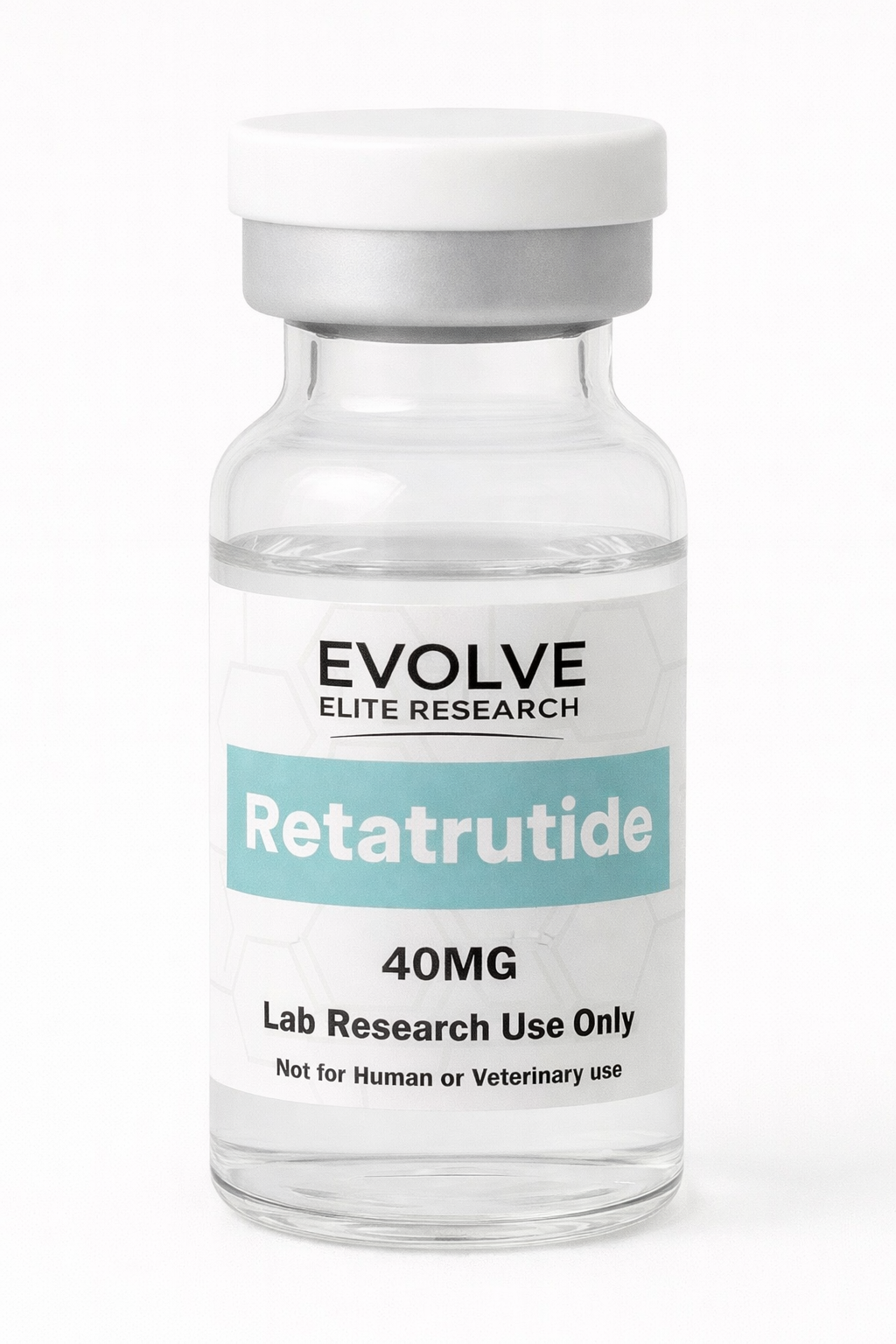
XxRetaxX 40MG


$140.00
Technical Specifications
- Scientific Research Name: Retatrutide
- Development Identifier: LY3437943
- Research Description: Triple GIP, GLP-1 and glucagon receptor agonist
- Compound Classification: Synthetic modified peptide
- Primary Receptor Targets: GIPR, GLP-1R and GCGR
- Research Format: 40MG lyophilized research material
- Research Status: Investigational compound
For Laboratory Research Use Only. Not intended for human or veterinary administration.
In stock
🔬 For Laboratory Research Use Only.
Not for human consumption, medical, veterinary, or household use.
By purchasing you agree to our
Terms and
Refund Policy.
High-capacity format for extended studies, larger replicate sets and multi-stage analytical workflows
Designed for experimental investigation of GIP, GLP-1 and glucagon receptor signaling
Suitable for receptor pharmacology, albumin-association and modified-peptide stability research
Prepared and shipped from our Texas facility with fast U.S. order processing
High-capacity lyophilized retatrutide research material supplied exclusively for controlled laboratory investigations involving glucose-dependent insulinotropic polypeptide receptor, glucagon-like peptide-1 receptor and glucagon receptor pharmacology, multi-receptor signaling, modified-peptide structure, albumin association and analytical characterization.
XxRetaxX 40MG Research Summary
XxRetaxX 40MG contains retatrutide research material, also identified in scientific literature by the development identifier LY3437943. Retatrutide is an investigational, single-molecule peptide agonist engineered to activate three related class B G-protein-coupled receptors: the glucose-dependent insulinotropic polypeptide receptor, glucagon-like peptide-1 receptor and glucagon receptor.
These receptors are commonly abbreviated GIPR, GLP-1R and GCGR. Although they share structural and signaling characteristics, each receptor has a distinct endogenous ligand, tissue-expression profile and biological role.
Retatrutide is not a physical blend of three separate compounds. It is one sequence-engineered and chemically modified peptide designed to interact with all three receptor systems.
Its molecular design incorporates amino-acid substitutions, terminal engineering and a fatty-acid-containing modification intended to influence receptor activity, proteolytic stability, hydrophobicity, albumin association and duration of exposure in investigational systems.
Retatrutide research may include receptor-binding assays, cyclic adenosine monophosphate measurements, beta-arrestin recruitment, receptor internalization, pancreatic-cell signaling, hepatocyte research, adipocyte models, gene-expression analysis and peptide-stability testing.
The 40MG format provides an expanded quantity for larger experimental programs involving multiple receptor systems, broad concentration-response curves, increased biological replication, parallel cell models, extended stability studies and reservation of material for orthogonal analytical verification.
This format may be appropriate when one research program requires receptor screening, downstream functional investigation and analytical confirmation from a consistent material source.
XxRetaxX 40MG is supplied strictly as a laboratory research material. Retatrutide remains investigational and is not intended for human or veterinary administration.
Technical Specifications
XxRetaxX 40MG
Retatrutide
LY3437943
Triple GIP, GLP-1 and glucagon receptor agonist
Synthetic modified peptide
40MG per vial
Lyophilized research material
GIPR, GLP-1R and GCGR
Class B G-protein-coupled receptors
Gs protein, adenylyl cyclase and cAMP
Sequence-engineered and lipid-modified peptide
Albumin association through fatty-acid modification
Investigational compound
Dry lyophilized material
HPLC, LC-MS and modified-peptide stability research
Laboratory research only
Retatrutide is a chemically modified peptide containing a peptide backbone, nonstandard structural elements, linker chemistry and a fatty-acid-containing modification. Molecular formula and molecular-weight values may differ between references depending on the represented molecular form, salt state, counterions and associated material. Quantitative calculations should use the identity documented for the applicable research lot.
Molecular Characteristics
Retatrutide is a single sequence-engineered peptide designed to combine agonist activity at GIPR, GLP-1R and GCGR within one modified molecular structure.
GIP, GLP-1 and glucagon are members of the secretin–glucagon peptide family. Their related receptors share class B GPCR architecture but recognize different combinations of peptide side chains and conformational features.
Engineering a multi-receptor agonist requires balancing potency and efficacy across several receptor targets. A substitution that increases activity at one receptor may reduce activity at another or alter peptide stability.
Retatrutide includes a fatty-acid-containing modification that increases hydrophobic character relative to the unmodified peptide backbone. This molecular feature is relevant to albumin-association research, analytical retention, surface adsorption and experimental exposure modeling.
Modified residues may also influence recognition by proteolytic enzymes and alter the rate at which the peptide is processed in biological matrices.
A simple amino-acid sequence does not completely describe retatrutide. Analytical interpretation must include the peptide sequence, modified residues, attachment site, linker and lipid component.
One modified peptide is designed to activate three related receptor systems.
Amino-acid substitutions help balance receptor activity, stability and molecular behavior.
A fatty-acid-containing feature increases hydrophobicity and supports albumin-association research.
Lipidation and sequence modifications are investigated for their influence on peptide persistence.
Retatrutide is investigated at GIPR, GLP-1R and GCGR.
Characterization requires consideration of the complete peptide, linker and lipid structure.
Scientific Background
Metabolic regulation depends on coordinated communication among the gastrointestinal tract, pancreas, liver, adipose tissue, nervous system and other organs.
Peptide hormones transmit information by binding to cell-surface receptors and initiating intracellular signaling pathways.
GIP and GLP-1 are commonly described as incretin hormones because both may enhance glucose-dependent insulin-secretory responses under appropriate experimental conditions.
Glucagon is produced primarily by pancreatic alpha cells and is associated with hepatic glucose production, amino-acid metabolism and energy-substrate mobilization.
GLP-1 and glucagon are both derived from the proglucagon precursor, but tissue-specific processing produces different peptide hormones. GIP is produced from a separate precursor.
GIPR, GLP-1R and GCGR share related receptor architecture and frequently couple to Gs proteins. Their physiological effects nevertheless differ because of receptor distribution, ligand selectivity and tissue context.
Retatrutide provides a research platform for examining how simultaneous activation of these three receptor systems differs from selective GLP-1 receptor agonism or dual GIP and GLP-1 receptor agonism.
Triple-Receptor Agonist Biology
A triple-receptor agonist is one molecular ligand capable of activating three receptor targets. Retatrutide is investigated as an agonist of GIPR, GLP-1R and GCGR.
Triple agonism does not mean that each receptor is activated with identical potency, efficacy or signaling kinetics.
Receptor balance is a major structure–activity consideration. A peptide with greater potency at GIPR than GCGR may produce a different experimental profile from a molecule with more evenly distributed receptor activity.
Receptor abundance also affects observed responses. A cell model expressing high levels of GLP-1R and little GCGR may primarily display GLP-1R-associated signaling even when the compound is capable of activating all three receptors.
Mechanistic research should therefore begin with receptor-specific systems before moving into more complex models that express multiple receptor types.
Selective antagonists, receptor knockdown, knockout models and reference agonists may help identify the contribution of each receptor.
Supports investigation of glucose-dependent pancreatic signaling, adipocyte biology and related pathways.
Supports research involving pancreatic, neuronal, gastrointestinal and metabolic signaling.
Supports investigation of hepatic glucose production, amino-acid metabolism and energy mobilization.
Combined receptor activation may generate effects not predicted by studying one receptor independently.
GIP Receptor Research
GIPR is a class B GPCR activated by glucose-dependent insulinotropic polypeptide.
GIPR is commonly investigated in pancreatic beta cells and has also been studied in adipose tissue, bone, nervous-system models and additional tissues.
Receptor activation frequently stimulates Gs proteins, adenylyl cyclase and intracellular cAMP production.
In pancreatic beta-cell models, GIPR signaling may enhance glucose-dependent pathways involved in insulin-granule exocytosis.
GIPR research may also examine receptor phosphorylation, desensitization, internalization, beta-arrestin recruitment and interaction with insulin-associated signaling.
Retatrutide activity at GIPR should be measured in receptor-specific assays when the research objective requires direct attribution to this receptor.
GLP-1 Receptor Research
GLP-1R is a class B GPCR activated by endogenous glucagon-like peptide-1.
The receptor is investigated in pancreatic beta-cell signaling, regulated secretion, neuronal pathways, gastrointestinal systems and metabolic research.
GLP-1R commonly activates Gs proteins and increases cAMP. Downstream signaling may involve protein kinase A, EPAC proteins, calcium channels and secretory-vesicle machinery.
Receptor activation may also produce phosphorylation, beta-arrestin recruitment, internalization and intracellular trafficking.
Different peptide agonists can produce different signaling kinetics even when they activate the same receptor.
Retatrutide may therefore be investigated for potency, efficacy, signaling duration, pathway preference and receptor-recycling behavior.
Glucagon Receptor Research
GCGR is a class B GPCR activated by the peptide hormone glucagon and is prominently expressed in hepatic systems.
GCGR activation commonly increases cAMP through Gs-dependent signaling.
Depending on the experimental model, downstream responses may influence glycogen metabolism, gluconeogenic transcription, amino-acid processing, lipid metabolism and receptor signaling.
GCGR activity is a major molecular distinction between retatrutide and selective GLP-1 receptor agonists.
Hepatocyte-associated endpoints may include cAMP production, glucose output, glycogen concentration, enzyme phosphorylation and metabolic-gene expression.
Because GCGR signaling may increase hepatic glucose output in some systems, retatrutide research should evaluate integrated signaling rather than assuming that all receptor components drive identical downstream responses.
Gs Protein and cAMP Signaling
GIPR, GLP-1R and GCGR commonly interact with heterotrimeric Gs proteins following agonist binding.
Activated Gs alpha subunits stimulate adenylyl cyclase, which converts adenosine triphosphate into cyclic adenosine monophosphate.
cAMP acts as a second messenger and may activate protein kinase A, EPAC proteins and additional downstream effectors.
cAMP responses depend on ligand concentration, receptor abundance, coupling efficiency, phosphodiesterase activity and assay timing.
End-point measurements may obscure differences in signal onset or duration. Kinetic assays can provide additional information about response development and decay.
A stronger cAMP response does not necessarily indicate greater activity across every downstream pathway because receptor trafficking, cellular amplification and pathway cross-talk may alter the relationship.
Beta-Arrestin and Signaling-Bias Research
Activated GPCRs may be phosphorylated by receptor kinases and recruit beta-arrestin proteins.
Beta-arrestins may reduce further G-protein signaling, promote receptor internalization and organize selected intracellular signaling pathways.
Different ligands can produce different relative levels of G-protein activation and beta-arrestin recruitment.
This behavior is often examined within biased-agonism research.
Retatrutide may be compared with native GIP, GLP-1, glucagon or other modified agonists using matched cAMP and beta-arrestin assays.
Apparent bias depends on receptor expression, assay amplification and the reference agonist selected for comparison.
Receptor Internalization and Recycling
After ligand activation, class B GPCRs may move from the plasma membrane into intracellular compartments.
Internalized receptors may recycle back to the cell surface, remain within endosomal structures or enter degradation pathways.
Receptor trafficking can affect signaling duration, desensitization and responsiveness to repeated ligand exposure.
Fluorescence microscopy, flow cytometry, tagged-receptor assays and cell-surface protein measurements may be used to study internalization.
Tags and labels may affect receptor behavior and should be validated against unmodified receptor systems.
Because retatrutide interacts with three targets, trafficking should be evaluated independently for GIPR, GLP-1R and GCGR.
Molecular Design and Lipidation
Long-acting peptide research compounds often incorporate amino-acid substitutions and lipid modifications intended to reduce enzymatic degradation and extend molecular exposure.
Retatrutide includes a fatty-acid-containing structural modification connected to the peptide through specialized linker chemistry.
Lipidation increases hydrophobic character and may promote reversible association with albumin.
Albumin association may reduce rapid filtration and limit immediate exposure to selected proteolytic enzymes.
Lipidation also changes analytical properties. Modified peptides may demonstrate increased reverse-phase retention, surface adsorption and analytical carryover.
The attachment position and linker structure can influence receptor potency by changing steric access to receptor-binding regions.
Structure–activity research should therefore evaluate receptor activity, albumin association and stability as separate molecular properties.
Albumin-Association Research
Albumin is an abundant circulating protein with several binding regions for fatty acids and hydrophobic molecules.
Lipid-modified peptides may associate reversibly with albumin through noncovalent hydrophobic interactions.
Albumin-bound and unbound peptide fractions may differ in receptor accessibility, degradation rate and analytical recovery.
Albumin association may be measured using equilibrium dialysis, ultrafiltration, chromatography, surface plasmon resonance or similar biophysical methods.
Human, bovine and rodent albumin may not bind a modified peptide identically.
Serum-containing culture media can therefore change the freely available concentration of retatrutide compared with serum-free systems.
Total retatrutide concentration may differ from the freely available concentration in albumin- or serum-containing systems. Experimental interpretation should identify which measurement is relevant to the assay.
Modified-Peptide Stability and Exposure Research
Retatrutide’s sequence-engineered and lipid-modified structure is investigated for its effects on molecular stability, albumin association and persistence under defined experimental conditions.
Albumin concentration, matrix composition, protease activity, temperature, pH and incubation duration may influence the amount of intact and freely available peptide measured in laboratory systems.
Protein-bound and unbound fractions should be distinguished where they are relevant to receptor-assay interpretation, analytical recovery or comparative stability studies.
Experimental exposure should be characterized using validated analytical methods rather than inferred solely from the nominal amount of material introduced into an assay system.
In vitro stability data may differ among purified buffers, serum-containing media, plasma, tissue homogenates and other research matrices.
Where comparative exposure is part of the research question, investigators should control matrix composition, incubation time, temperature and analytical recovery across conditions.
Pancreatic-Cell Research
Pancreatic islets contain insulin-producing beta cells, glucagon-producing alpha cells, somatostatin-producing delta cells and other endocrine-cell populations.
GIPR and GLP-1R are commonly investigated in beta-cell signaling and glucose-dependent secretory responses.
Receptor activation can increase cAMP and interact with ion-channel, calcium and secretory-vesicle pathways.
Retatrutide may be studied in recombinant receptor systems, insulinoma-derived cell lines, isolated pancreatic islets or primary beta-cell preparations.
Secretory experiments should include controlled glucose conditions because incretin-associated responses may depend strongly on extracellular glucose concentration.
Intracellular insulin content, extracellular secretion, cell viability and receptor expression should be measured as distinct endpoints.
Hepatic Research Models
The liver contributes to glucose storage, glucose production, lipid processing, amino-acid metabolism and regulation of circulating energy substrates.
GCGR is prominently investigated in hepatocyte-associated models.
Receptor activation may increase cAMP and alter phosphorylation or transcription of metabolic regulators.
Potential research endpoints include glucose output, glycogen concentration, gene expression, fatty-acid oxidation and cellular lipid accumulation.
Hepatic responses may depend on insulin concentration, glucocorticoids, amino acids, fatty acids and culture duration.
Primary hepatocytes may lose metabolic characteristics during extended culture, while immortalized cell lines may not fully reproduce primary liver-cell physiology.
Adipocyte and Lipid-Metabolism Research
Adipose tissue stores energy, releases fatty acids and produces signaling molecules that influence systemic metabolism.
GIPR is investigated in adipocyte biology, although receptor expression and function vary among species, tissue depots and experimental models.
Retatrutide-associated studies may examine lipolysis, lipid storage, adipocyte differentiation, insulin signaling, mitochondrial activity and transcriptional responses.
Extracellular glycerol or fatty-acid measurements should be normalized to cell number, total protein or lipid content when appropriate.
Increased substrate release may result from regulated lipolysis, reduced re-esterification, cellular stress or membrane damage.
Viability and membrane-integrity controls are therefore essential.
Gene-Expression Research
Activation of GIPR, GLP-1R and GCGR may produce immediate second-messenger responses followed by delayed transcriptional changes.
Quantitative PCR may be used to examine predefined genes associated with receptor signaling, glucose metabolism, lipid handling, mitochondrial function and cellular adaptation.
RNA sequencing may identify broader pathway-level changes but requires biological replication, batch control and correction for multiple comparisons.
Messenger-RNA changes do not automatically indicate corresponding changes in protein abundance or activity.
Selected findings should therefore be evaluated through immunoblotting, proteomics, enzyme assays or functional measurements.
Receptor-selective antagonists or genetically modified models can help identify which receptor contributes to a transcriptional response.
Structure–Activity Relationships
Structure–activity research examines how molecular changes influence receptor potency, efficacy, selectivity, stability, hydrophobicity and protein binding.
Retatrutide may be compared with native GIP, GLP-1 and glucagon as well as selective agonists, dual agonists and other modified peptides.
Individual amino-acid substitutions may alter interaction with receptor extracellular domains or transmembrane binding regions.
Lipid attachment can affect albumin association and molecular exposure while also changing receptor accessibility.
Linker length and composition influence spacing between the peptide backbone and lipid group.
Terminal modifications may influence charge, degradation and analytical behavior.
Comparative experiments should use molar concentrations because related peptides have different molecular weights.
Measures the concentration required to produce a defined response at each receptor.
Measures the maximum response produced relative to a reference agonist.
Compares relative activity at GIPR, GLP-1R and GCGR.
Examines effects on hydrophobicity, albumin binding and receptor access.
Evaluates stability of the intact modified peptide in defined matrices.
Compares G-protein signaling, beta-arrestin recruitment and receptor trafficking.
Potential Laboratory Research Applications
Evaluation of retatrutide activity at GIPR, GLP-1R and GCGR.
Independent characterization of each target receptor using recombinant systems.
Measurement of potency, efficacy, curve slope and response plateau.
Evaluation of Gs-dependent second-messenger activity.
Investigation of receptor regulation and signaling-pathway preference.
Analysis of ligand-dependent receptor trafficking.
Measurement of reversible association between lipidated retatrutide and albumin.
Monitoring of intact compound under defined temperature, pH and matrix conditions.
Evaluation of degradation in purified enzyme and biological-matrix systems.
Investigation of receptor signaling and regulated secretion under controlled conditions.
Analysis of GCGR-associated cAMP, glucose-output and gene-expression endpoints.
Evaluation of lipid handling, differentiation and cellular signaling.
Measurement of cellular respiration and substrate utilization.
Examination of transcriptional responses following receptor activation.
Matched analysis with single-, dual- and triple-receptor compounds.
HPLC, LC-MS and degradation-product analysis of the modified peptide.
Why Researchers May Select the 40MG Format
Research-material requirements depend on assay scale, receptor count, concentration range, biological replicate design, analytical allocation, study duration and expected handling loss.
The 40MG format provides the highest-capacity XxRetaxX option for extended experimental programs requiring greater material continuity across multiple assays and research stages.
Supports independent and parallel characterization of GIPR, GLP-1R and GCGR activity.
May support receptor screening, mechanistic investigation and downstream functional analysis within one research program.
Provides additional material for technical replication, biological replication and independent experimental runs.
Supports comparison across receptor-specific recombinant cells and more complex cellular models.
Accommodates broad multi-point concentration ranges across three receptor systems and multiple assay endpoints.
Supports matched investigation alongside semaglutide, tirzepatide, native hormones or other receptor agonists.
Allows material to be reserved for HPLC, LC-MS, recovery studies and identity confirmation.
Provides additional capacity for multiple temperatures, matrices, time points and storage-condition comparisons.
Supports complementary cAMP, beta-arrestin, receptor-trafficking and functional readouts.
May reduce variability caused by changing source material during a larger experimental workflow.
Provides material for assay-development runs before initiating final comparative experiments.
Offers additional research material for repeat testing, unexpected sample loss or method refinement.
Experimental Design Considerations
Define the Receptor Objective
Determine whether the experiment is intended to measure GIPR, GLP-1R or GCGR independently or evaluate integrated signaling from multiple receptors.
Begin With Receptor-Specific Systems
Recombinant cells expressing one target receptor help establish receptor-specific potency and efficacy.
Generate Complete Concentration-Response Curves
Multi-point curves provide estimates of potency, maximum efficacy, curve slope and response plateau.
Use Molar Concentrations
Retatrutide and comparator peptides should be matched by molecular concentration rather than equal mass.
Confirm Receptor Expression
Messenger RNA, protein measurements or validated functional controls can establish whether the selected model expresses the intended receptor.
Measure Signaling Kinetics
Multiple time points can distinguish immediate second-messenger responses from receptor desensitization and delayed transcriptional effects.
Control Serum and Albumin Content
Albumin-containing media may change the freely available concentration of lipidated retatrutide.
Verify Peptide Integrity
HPLC or LC-MS can determine whether intact retatrutide remains present throughout the experimental period.
Measure Cell Health
Viability, metabolic activity and membrane integrity should be measured alongside functional endpoints.
Use Orthogonal Readouts
cAMP, beta-arrestin, receptor internalization and downstream cellular measurements provide complementary evidence.
Assess Assay Interference
Retatrutide should be tested for direct effects on fluorescent, luminescent, enzymatic and antibody-based detection methods.
Predefine Statistical Analysis
Curve-fitting models, exclusions, replicate structure and planned comparisons should be selected before final analysis.
Recommended Experimental Controls
Establishes baseline behavior without peptide or preparation vehicle.
Determines whether the preparation medium influences the endpoint.
Identifies potency, efficacy, response plateaus and nonspecific high-concentration effects.
Provides a reference agonist for GIPR assays.
Provides a reference agonist for GLP-1R assays.
Provides a reference agonist for GCGR assays.
Help identify receptor-independent or nonspecific responses.
Supports attribution of a response to an individual receptor.
Provides genetic evidence for receptor involvement.
Controls for protein-binding effects on free peptide concentration.
Distinguishes receptor signaling from reduced cell health or cell number.
Detects nonspecific cellular leakage or membrane disruption.
Accounts for incubation duration and handling conditions.
Identifies background from buffers, solvents, columns and instrumentation.
Determines whether retatrutide directly alters the detection chemistry.
Confirms peptide integrity under the same conditions used in the biological assay.
Analytical Characterization
Analytical characterization supports evaluation of retatrutide molecular identity, chromatographic composition, modification integrity and stability.
Retatrutide contains a peptide backbone, nonstandard structural features, linker chemistry and a lipid-containing modification.
Reverse-phase HPLC may separate the principal compound from truncated peptides, deletion sequences, incompletely modified material and degradation products.
LC-MS can evaluate whether detected molecular species are consistent with the expected complete modified peptide.
Tandem mass spectrometry may provide information about peptide-backbone fragments, modification-associated ions and potential degradation sites.
Additional methods may include peptide mapping, amino-acid analysis, water determination, counterion analysis and assessment of lipid-linker integrity.
Molecular identity, chromatographic composition, peptide content, modification integrity, counterion status and assigned vial quantity are separate analytical properties.
HPLC Analysis
Reverse-phase high-performance liquid chromatography separates peptide components according to their interaction with a hydrophobic stationary phase and changing mobile-phase conditions.
Retatrutide’s fatty-acid-containing modification may increase chromatographic retention compared with related unmodified peptides.
Potential secondary peaks may represent deletion sequences, truncated material, incompletely lipidated peptide, oxidized species or other degradation products.
Relative chromatographic composition is commonly calculated using integrated peak areas under a defined analytical method.
Results depend on column chemistry, gradient, temperature, flow rate, sample concentration, mobile-phase additives and integration parameters.
Lipid-modified peptides may demonstrate system adsorption or analytical carryover. Wash procedures and system-suitability controls may therefore be necessary.
Retention time alone does not establish molecular identity. Mass spectrometry or another orthogonal technique provides stronger confirmation.
LC-MS and Molecular Identity
Liquid chromatography–mass spectrometry combines chromatographic separation with mass-to-charge analysis.
Modified peptides commonly produce multiple charge states during electrospray ionization.
A mass spectrum may therefore contain several ion envelopes corresponding to the same molecular compound.
Analysts should consider isotope distribution, protonation, sodium or potassium adducts, counterions and calibration tolerance.
The lipid group and linker must be included in the expected molecular-mass calculation.
In-source fragmentation and adduct formation may complicate interpretation. Deconvolution software may be used to estimate neutral molecular mass.
Mass agreement supports expected molecular composition but does not independently prove the complete sequence, attachment position or absence of isomeric material.
Retatrutide Stability Considerations
Modified-peptide stability may be influenced by temperature, moisture, oxygen, light, pH, enzymes, concentration, container material and microbial contamination.
Sequence engineering and lipidation may improve resistance to selected degradation pathways but do not make retatrutide chemically or enzymatically inert.
Lyophilization removes a substantial portion of water and may improve stability compared with maintaining the compound in solution.
Once placed into solution, increased molecular mobility may promote hydrolysis, oxidation, aggregation, adsorption and proteolytic processing.
The lipid modification may increase association with glass, plastic, filters, pipette tips or analytical tubing.
Stability in purified buffer may differ significantly from stability in serum, plasma, culture medium or tissue homogenate.
Analytical stability should be evaluated under the same conditions and timeframe used in the corresponding functional experiment.
Potential Degradation Pathways
Endopeptidases and exopeptidases may generate shorter peptide fragments.
Water-dependent reactions may affect peptide bonds, side chains or linker components.
Oxygen, light, reactive species and trace metals may alter susceptible molecular regions.
Selected residues may undergo time-, temperature- and pH-dependent changes.
Chemical or enzymatic processes may alter the fatty-acid-containing modification.
Hydrophobic molecular regions may bind to laboratory surfaces and fluid pathways.
Concentration, ionic strength, pH and temperature may influence peptide self-association.
Contamination may alter peptide integrity and confound experimental measurements.
Laboratory Storage
Lyophilized XxRetaxX 40MG should be maintained in a cool, dry and dark laboratory environment protected from excessive heat, direct light and moisture.
Frozen storage may be appropriate for longer-term preservation according to applicable lot documentation and validated laboratory procedures.
Repeated temperature cycling should be minimized because it may introduce condensation, moisture and inconsistent environmental exposure.
When condensation is possible, sealed research material should be allowed to equilibrate under appropriate laboratory conditions before opening.
Experimental solutions of modified peptides may exhibit different stability characteristics than dry lyophilized research material. Stability depends on pH, buffer composition, protein content, temperature, concentration, container material and experimental duration.
Storage information is provided solely for preservation of laboratory research material and is not an administration protocol.
Laboratory Handling
XxRetaxX 40MG should be handled only by trained research personnel using procedures appropriate for modified peptides and the selected experimental system.
Researchers should document the lot identifier, sample-preparation date, experimental buffer or solvent, calculated concentration, storage conditions and handling history.
Calibrated balances, pipettes and analytical instruments should be used when quantitative accuracy is required.
Small-volume transfer error, incomplete mixing and surface adsorption may produce meaningful differences between calculated and recovered concentration.
Low-binding laboratory materials may be considered when adsorption has been demonstrated through recovery experiments.
Personal protective equipment, containment procedures and waste disposal should follow institutional requirements and the laboratory’s risk assessment.
Retatrutide Compared With Related Research Peptides
Retatrutide is investigated at GIPR, GLP-1R and GCGR, while semaglutide is designed primarily for GLP-1R agonism.
Retatrutide includes glucagon-receptor activity in addition to GIP and GLP-1 receptor agonism.
Endogenous GLP-1 is rapidly processed, while retatrutide contains modifications intended to alter stability and exposure.
Native GIP primarily activates GIPR, while retatrutide is designed for activity at three receptors.
Glucagon primarily activates GCGR, while retatrutide combines GCGR activity with incretin-receptor agonism.
Triple agonism adds a third receptor component and creates a different integrated signaling profile.
Retatrutide vs. Tirzepatide Research
Retatrutide and tirzepatide are both modified peptides investigated in multi-receptor metabolic research.
Tirzepatide is designed as a dual agonist of GIPR and GLP-1R. Retatrutide is designed to activate those receptors while adding GCGR agonism.
The compounds have different amino-acid sequences, chemical modifications, molecular structures and receptor-potency profiles.
Comparative research should characterize each receptor separately before evaluating integrated responses in complex biological models.
Equal-mass testing is not equivalent to equal-molar testing because the compounds have different molecular weights.
A greater response in one assay does not establish universal superiority because receptor expression and endpoint selection influence the result.
Retatrutide vs. Semaglutide Research
Semaglutide is a modified peptide designed primarily for GLP-1 receptor agonism.
Retatrutide is investigated at GIPR, GLP-1R and GCGR.
Responses observed with retatrutide may therefore include GIPR- or GCGR-associated components not expected from a selective GLP-1 receptor agonist.
Comparative assays should use cells with characterized receptor expression and include receptor-selective controls.
Albumin association, receptor potency, receptor efficacy and proteolytic stability should be evaluated separately.
Longer molecular exposure does not automatically indicate stronger receptor activation, and stronger receptor potency does not automatically indicate greater stability.
Related Research Compounds
XxTirzXx 60MG
Explore a high-capacity dual GIP and GLP-1 receptor research format.
XxTirzXx 30MG
Explore a dual GIP and GLP-1 receptor research peptide.
Research Compound Catalog
Browse additional synthetic peptides and laboratory research materials.
Research Calculator
Access a laboratory tool for concentration and volume calculations.
Scientific Research Resources
Frequently Asked Questions
What is XxRetaxX 40MG?
XxRetaxX 40MG contains retatrutide research material supplied in a high-capacity 40MG laboratory format.
What is retatrutide?
Retatrutide is an investigational modified peptide designed to activate GIP, GLP-1 and glucagon receptors.
What is LY3437943?
LY3437943 is the development identifier used for retatrutide in scientific research.
Why is retatrutide described as a triple agonist?
It is designed to activate GIPR, GLP-1R and GCGR within one molecular structure.
Is retatrutide a blend of three separate compounds?
No. It is one sequence-engineered and chemically modified peptide.
What receptor family does retatrutide target?
GIPR, GLP-1R and GCGR are class B G-protein-coupled receptors.
What is the primary signaling pathway?
These receptors commonly activate Gs proteins, adenylyl cyclase and intracellular cAMP production.
Does retatrutide activate all three receptors equally?
Equal activation should not be assumed. Potency and efficacy can differ among the three receptors.
What is GIPR?
GIPR is the receptor for glucose-dependent insulinotropic polypeptide.
What is GLP-1R?
GLP-1R is the receptor for glucagon-like peptide-1.
What is GCGR?
GCGR is the glucagon receptor and is prominently investigated in hepatic metabolic research.
Why is retatrutide lipid modified?
Lipid modification is investigated for its influence on albumin association, stability and molecular exposure.
What is albumin association?
It is reversible noncovalent interaction between the lipid-modified peptide and albumin.
Can albumin influence receptor-assay results?
Yes. Albumin may reduce the freely available peptide concentration relative to the total concentration.
How can retatrutide receptor activity be measured?
Researchers may use cAMP, beta-arrestin, receptor-internalization and downstream functional assays.
How does retatrutide differ from tirzepatide?
Tirzepatide is a dual GIP and GLP-1 receptor agonist, while retatrutide adds glucagon-receptor activity.
How does retatrutide differ from semaglutide?
Semaglutide is designed primarily for GLP-1 receptor agonism, while retatrutide targets three receptors.
Why might researchers select the 40MG format?
The 40MG format may support larger replicate sets, multi-stage studies, parallel receptor testing, extended stability research and analytical reserve allocation.
Is retatrutide an approved pharmaceutical product?
No. Retatrutide remains an investigational compound.
Is XxRetaxX 40MG intended for human use?
No. It is supplied strictly for laboratory research and is not intended for human or veterinary administration.
Research-Use Notice
XxRetaxX 40MG is supplied exclusively as a laboratory research material. It is not a drug, food, dietary supplement, cosmetic or consumer product. It is not intended for human consumption, self-administration, medical use, veterinary use, household use, diagnostic use or therapeutic use.
Retatrutide is an investigational compound and is not an approved pharmaceutical product. Product information is provided solely for educational, analytical and laboratory-research purposes.
References to GIP receptors, GLP-1 receptors, glucagon receptors, glucose signaling, insulin secretion, hepatic metabolism, lipid metabolism or published scientific findings do not constitute medical claims, treatment recommendations or representations of safety or effectiveness.
Research observations from biochemical, recombinant-protein, cellular, ex vivo, animal or clinical-investigation settings should not be interpreted as instructions for personal use or as evidence supporting use of this research material in humans.
No information on this page should be interpreted as instructions for preparation, administration, dosing, self-experimentation or treatment of any condition.
This material should be handled only by qualified research personnel in an appropriately controlled laboratory environment. Researchers are responsible for determining whether the material is suitable for their experimental design and for complying with all applicable institutional, local, state and federal requirements.
Related products

Research Compounds
Research Compounds

Research Compounds

Research Compounds

Research Compounds
Research Compounds
Research Compounds

Research Compounds