
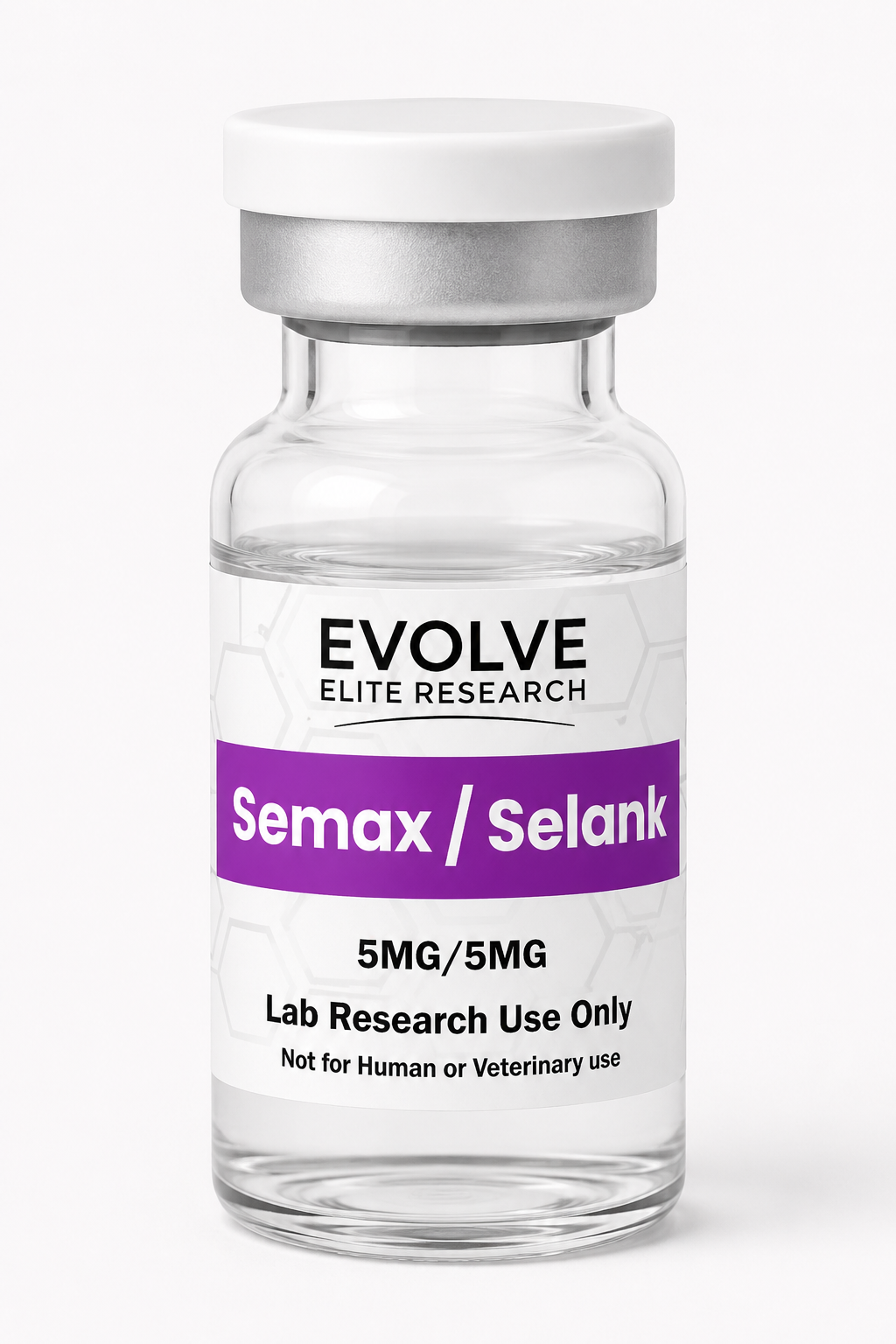
Selank 5MG / Semax 5MG

$32.00
Technical Specifications
- Scientific Research Names: Selank and Semax
- Research Description: Dual synthetic heptapeptide blend for comparative neuropeptide research
- Compound Classification: Synthetic peptide blend
- Primary Research Areas: GABA-associated signaling, neurotrophic-factor pathways, gene-expression models and neuroimmune research
- Research Components: Selank 5MG + Semax 5MG
- Research Format: 10MG total lyophilized research material
- Intended Use: Laboratory research only
For Laboratory Research Use Only.Not intended for human or veterinary administration.
In stock
🔬 For Laboratory Research Use Only.
Not for human consumption, medical, veterinary, or household use.
By purchasing you agree to our
Terms and
Refund Policy.
Contains 5MG Selank and 5MG Semax for comparative, combination and multi-endpoint laboratory workflows
Two distinct synthetic heptapeptides combined within one lyophilized research material
Designed for studies involving neuropeptide signaling, gene expression, neurotrophic pathways and neuroimmune communication
Shipped from our Texas facility with fast U.S. order processing
Dual-peptide lyophilized research material containing Selank and Semax for controlled laboratory investigations involving comparative peptide biology, neuropeptide signaling, neurotrophic-factor pathways, gene-expression analysis, neuroimmune communication, peptide metabolism and analytical characterization.
Selank 5MG / Semax 5MG Research Summary
The Selank 5MG / Semax 5MG blend contains two structurally distinct synthetic heptapeptides within a single lyophilized laboratory research format. Selank is represented by the sequence Thr-Lys-Pro-Arg-Pro-Gly-Pro, while Semax is represented by the sequence Met-Glu-His-Phe-Pro-Gly-Pro.
Both compounds contain seven amino-acid residues and share the same C-terminal Pro-Gly-Pro tripeptide. Their N-terminal four-residue regions differ substantially in sequence, charge distribution, structural origin and reported experimental research profile.
Selank is derived structurally from the naturally occurring tetrapeptide tuftsin. Semax contains a sequence corresponding to the 4-7 region of adrenocorticotropic hormone followed by a Pro-Gly-Pro extension. These distinct origins allow the blend to be studied within comparative neuropeptide, transcriptomic, neurochemical and neuroimmune research frameworks.
Published research involving the individual peptides has examined GABA-associated systems, monoamine metabolism, neurotrophic-factor expression, cytokine-associated signaling, peptidase activity, neuronal biology, glial responses and experimental stress pathways.
A combined research material introduces experimental complexity beyond either single compound. An observed response may result from Selank, Semax, a shared structural motif, generated peptide fragments, additive activity, opposing effects or a genuine interaction between the two compounds.
For that reason, rigorous combination research should include corresponding single-peptide groups whenever possible. Testing the blend without independent Selank and Semax comparators limits the ability to identify which component contributes to the measured endpoint.
The dual 5MG format may support combination studies, concentration-response experiments, time-course analysis, multi-endpoint workflows and analytical allocation for HPLC, LC-MS or stability testing.
Selank 5MG / Semax 5MG is supplied exclusively as a laboratory research material. It is not intended for human or veterinary administration.
Technical Specifications
Selank 5MG / Semax 5MG
Dual-peptide blend
5MG per vial
5MG per vial
10MG per vial
Lyophilized powder
2 synthetic research peptides
Linear synthetic heptapeptide blend
Thr-Lys-Pro-Arg-Pro-Gly-Pro
TKPRPGP
Met-Glu-His-Phe-Pro-Gly-Pro
MEHFPGP
Pro-Gly-Pro
Tuftsin-derived peptide
ACTH(4-7)-derived peptide
C33H57N11O9
C37H51N9O10S
Approximately 751.9 g/mol
Approximately 813.9 g/mol
Comparative neuropeptide research
HPLC and LC-MS research context provided below
Laboratory research only
Selank and Semax have different molecular weights. Equal mass does not represent an identical molar quantity. Comparative calculations should account for each peptide independently and use the molecular form documented for the applicable research lot.
Molecular Characteristics of the Dual-Peptide Blend
Selank and Semax are both linear seven-residue peptides, but they should not be treated as molecularly interchangeable. Each peptide contains a different N-terminal sequence and therefore possesses a distinct molecular formula, mass, charge distribution, hydrophobic profile and potential enzyme-recognition pattern.
Thr-Lys-Pro-Arg-Pro-Gly-Pro is a tuftsin-derived heptapeptide containing two strongly basic residues and three proline residues.
Met-Glu-His-Phe-Pro-Gly-Pro is an ACTH-derived heptapeptide containing acidic, aromatic, sulfur-bearing and pH-sensitive residues.
Both peptides terminate in Pro-Gly-Pro, creating a common structural motif that may influence conformation and proteolytic processing.
Selank contains Thr-Lys-Pro-Arg, while Semax contains Met-Glu-His-Phe.
Selank contains lysine and arginine, which contribute positive charge under many laboratory conditions. Semax contains glutamic acid, which contributes negative charge, histidine, which can change protonation state near physiological pH, and phenylalanine, which adds aromatic hydrophobic character.
Semax also contains an N-terminal methionine residue that may be susceptible to oxidation. Selank does not contain methionine, creating a component-specific stability variable within the combined research material.
Because the peptides differ in ionization behavior and hydrophobicity, they may exhibit different retention times under reverse-phase HPLC and different ion intensities during mass-spectrometric analysis.
Component Peptide Overview
A synthetic tuftsin-derived heptapeptide studied in neuropeptide, GABA-associated, monoamine, gene-expression and neuroimmune research models.
A synthetic ACTH-derived heptapeptide studied in neurotrophic, transcriptomic, neuronal, glial and neurochemical research models.
A C-terminal tripeptide present in both compounds and relevant to comparative fragment and peptide-metabolism research.
Enables investigation of a fixed-mass two-peptide research material while requiring appropriate single-component controls.
Scientific Background
Short regulatory peptides can influence biological research systems through receptor interactions, enzyme modulation, altered peptide processing, transcriptional changes and indirect effects on cellular signaling.
Small differences in amino-acid sequence can substantially change peptide behavior. Charge, aromaticity, conformational restriction, protease susceptibility and terminal structure all contribute to molecular recognition.
Selank and Semax are particularly useful for comparative research because both are seven-residue peptides with the same C-terminal Pro-Gly-Pro sequence but different N-terminal biological origins.
This partially shared architecture creates an opportunity to evaluate whether a response is associated with the common tripeptide region, one of the distinct N-terminal sequences or the interaction of both intact peptides.
Combination experiments are inherently more difficult to interpret than single-compound studies. A result observed with the blend cannot automatically be assigned equally to Selank and Semax.
Selank Component Biology
Selank is composed of Thr-Lys-Pro-Arg-Pro-Gly-Pro. Its first four residues correspond to tuftsin, a naturally occurring tetrapeptide studied in immune-associated signaling and phagocytic-cell biology.
Addition of Pro-Gly-Pro produces a synthetic seven-residue analogue with altered molecular weight, conformation and enzyme-processing behavior.
Selank research has included GABA-associated systems, monoamine metabolism, neurotrophic-factor expression, cytokine signaling, transcriptional responses and peptidase-associated models.
These observations do not establish a single universally accepted molecular target. Direct receptor binding should be distinguished from indirect pathway modulation and downstream gene-expression changes.
The N-terminal Thr-Lys-Pro-Arg sequence corresponds to the tuftsin tetrapeptide.
Selank has been investigated in models involving GABA receptor-related expression and neurochemical signaling.
Its tuftsin-derived structure has supported investigations involving communication between neural and immune-associated pathways.
Selank may be studied as an enzyme substrate, peptide-processing modulator or source of shorter fragments.
Semax Component Biology
Semax is composed of Met-Glu-His-Phe-Pro-Gly-Pro. Its first four residues correspond to the ACTH(4-7) sequence, while its C-terminal region consists of Pro-Gly-Pro.
Semax has been investigated in neurotrophic-factor research, transcriptomic analysis, neuronal and glial models, monoamine-associated systems, oxidative-stress pathways and controlled tissue-response models.
BDNF- and NGF-associated gene expression are among the frequently examined Semax research endpoints. Messenger-RNA changes should be distinguished from protein abundance, secretion and receptor activation.
Semax should not be interpreted as a shortened equivalent of full-length ACTH. Sequence truncation and the Pro-Gly-Pro extension create a distinct research compound with different molecular properties.
The Met-Glu-His-Phe region corresponds to residues 4 through 7 of adrenocorticotropic hormone.
Semax has been evaluated in experimental models involving BDNF, NGF and related signaling pathways.
Broad and targeted gene-expression methods have been used to examine Semax-associated molecular responses.
The N-terminal methionine residue creates a component-specific stability variable for analytical study.
Comparative Structural Biology
The principal structural similarity between Selank and Semax is the shared C-terminal Pro-Gly-Pro motif. Their first four residues differ completely.
Selank’s N-terminal region includes two basic residues, lysine and arginine. Semax instead contains glutamic acid, histidine, methionine and phenylalanine, producing a different balance of charge, aromaticity and oxidation sensitivity.
These differences can influence solubility, chromatographic separation, surface adsorption, enzyme cleavage and interaction with cellular components.
Comparative structure-activity research may include intact Selank, intact Semax, Pro-Gly-Pro, tuftsin, ACTH(4-7), scrambled sequences and truncated fragments.
Such designs can clarify whether a response requires the full sequence, the shared C-terminal region or one of the two distinct N-terminal motifs.
Combination and Interaction Research
A dual-peptide blend can produce several possible experimental response patterns. Understanding these patterns requires comparison against both individual peptides.
The combined response is consistent with the sum of the independent Selank and Semax responses.
The combined response exceeds the expected result based on the individual peptide groups.
The blend produces a smaller response than predicted from the individual components.
One peptide may reduce, mask or reverse an endpoint associated with the other peptide.
Each peptide may affect a different pathway without producing a measurable interaction.
Proteolysis may generate shared or distinct fragments that contribute to the observed activity.
Claims of synergy require formal experimental support. A blend producing a measurable result does not independently establish a synergistic interaction.
Factorial study designs, response-surface analysis or concentration matrices can provide stronger evidence than comparison of a single blend concentration against an untreated control.
Shared Pro-Gly-Pro Motif Research
Pro-Gly-Pro forms the final three residues of both Selank and Semax. This shared motif is useful for investigating whether the peptides produce overlapping effects through a common structural region.
Proline restricts local backbone movement, while glycine contributes flexibility. The sequence may influence conformation, protease recognition and the identity of metabolites generated during incubation.
The complete peptides may be processed into fragments that retain Pro-Gly-Pro. Researchers should therefore distinguish responses caused by intact Selank or Semax from responses associated with a shared metabolite.
A Pro-Gly-Pro comparator can help determine whether the common terminal region is sufficient to reproduce part of the blend’s measured response.
A similar endpoint produced by Selank and Semax does not prove that Pro-Gly-Pro is responsible. Direct fragment comparison and analytical confirmation are required.
Neuropeptide Signaling Research
Neuropeptides can influence neuronal communication, cellular excitability, synaptic regulation, neuroendocrine signaling and interactions between nervous and immune systems.
Selank and Semax are used as synthetic molecular probes in research involving these systems. Their effects may be evaluated through receptor assays, gene expression, second messengers, neurotransmitter measurements or downstream protein signaling.
Neither compound should be assigned a single mechanism solely from a downstream endpoint. Changes in transcription, neurotransmitter concentration or cell behavior may result from direct or indirect pathways.
Combination research should account for the possibility that each peptide influences a different signaling system while converging on a shared downstream endpoint.
GABA-Associated Research
Gamma-aminobutyric acid is a major inhibitory neurotransmitter in the mammalian central nervous system. GABA-associated signaling occurs through ionotropic GABAA receptors and metabotropic GABAB receptors.
Selank has been studied in experimental systems involving GABA receptor-associated expression and neurochemical regulation.
Semax is not generally treated as an equivalent GABA-associated peptide, but it may alter downstream neural systems that interact with inhibitory signaling.
Blend studies can evaluate whether Semax changes, enhances or does not affect a Selank-associated GABA endpoint.
Direct receptor binding, receptor-expression changes and indirect modulation should be treated as separate mechanisms requiring different assays.
Neurotrophic-Factor Research
Neurotrophic factors regulate neuronal development, cellular maintenance, synaptic biology and adaptive responses. BDNF and NGF are among the most frequently studied members of this group.
Semax research has prominently included BDNF- and NGF-associated transcription. Selank has also appeared in neurotrophic and gene-expression research, although the depth and model distribution of the published literature differ.
A blend study may examine whether the combined research material changes neurotrophin messenger RNA, protein abundance, secretion, receptor phosphorylation or downstream kinase activity.
Messenger RNA alone does not establish functional pathway activation. Protein-level and receptor-level measurements strengthen interpretation.
Measures transcriptional response but does not independently establish increased protein.
May be quantified by immunoassay, immunoblotting or targeted proteomic analysis.
Can be evaluated through messenger RNA, protein and TrkA-associated pathway measurements.
Phosphorylation and downstream kinase analysis can provide evidence of functional neurotrophin signaling.
Monoamine and Neurochemical Research
Monoamine neurotransmitters include dopamine, serotonin and norepinephrine. Their concentrations depend on synthesis, vesicular storage, release, receptor activity, transporter function and enzymatic metabolism.
Both Selank and Semax have appeared in experimental neurochemical research involving monoamine-associated endpoints.
A dual-peptide study may evaluate parent neurotransmitters, metabolites, receptor-expression markers or pathway-associated enzymes.
Changes in neurotransmitter concentration do not independently identify the molecular mechanism. Multiple upstream processes can produce the same measured result.
HPLC with electrochemical detection or LC-MS may be used for quantitative neurochemical profiling.
Gene-Expression and Transcriptomic Research
Selank and Semax have each been studied through targeted and broad gene-expression methods. A combined research format allows investigation of whether the peptides produce overlapping, independent or interaction-dependent transcriptional responses.
Quantitative polymerase chain reaction may be used for predefined genes. RNA sequencing or microarray analysis can evaluate broader transcriptomic patterns.
A factorial design containing untreated, Selank-only, Semax-only and blend groups is especially valuable for combination transcriptomics.
Differential-expression analysis should include biological replication, batch control, quality thresholds and correction for multiple comparisons.
Selected transcripts should be validated using an independent method and, where relevant, followed by protein-level analysis.
May include GABA-related, neuroimmune, cytokine or neurotrophic-associated genes.
May include neurotrophin, neuronal, vascular, inflammatory and stress-response genes.
Pathway analysis may identify networks influenced by both peptides despite different upstream mechanisms.
Statistical interaction analysis can test whether the blend differs from the expected independent component effects.
Neuroimmune Communication Research
Nervous and immune systems communicate through cytokines, neurotransmitters, neuropeptides, hormones and cellular receptors.
Selank’s structural relationship to tuftsin makes neuroimmune signaling a particularly relevant area of study. Semax-associated transcriptomic research has also included immune and inflammatory pathways.
The combined research material may therefore be evaluated in neuronal, glial, immune-cell or co-culture systems.
Cytokine responses are highly dependent on cell type, activation state, experimental stimulus and contaminant control.
Endotoxin testing is essential when inflammatory or immune-cell endpoints are measured, because trace contamination can produce substantial confounding responses.
Cytokine and Inflammatory-Signaling Models
Cytokines coordinate immune-cell communication, inflammatory signaling and tissue responses. They may be evaluated at the messenger-RNA, intracellular-protein or secreted-protein level.
Selank and Semax may influence cytokine-associated endpoints differently depending on the model. A blend result should not be attributed equally to both compounds without single-peptide controls.
Multiplex bead arrays, enzyme-linked immunosorbent assays, quantitative PCR and targeted proteomics can provide complementary information.
Secreted cytokine concentration should be distinguished from transcription because translation, processing and release are independently regulated.
Neuronal and Glial Research Models
Neurons and glial cells respond through overlapping but distinct signaling systems. Semax has been studied in glial and neuronal models, while Selank has been investigated across neural and neuroimmune systems.
Primary neurons preserve native cellular machinery but introduce variability. Recombinant cell lines provide stronger control over receptor expression but may not reproduce native signaling.
Glial cultures should be characterized for astrocyte, microglial and precursor-cell composition. Mixed cultures may produce results that reflect changing cell proportions rather than direct peptide activity.
Potential endpoints include cell viability, neurite morphology, neurotrophin expression, cytokine secretion, calcium signaling, mitochondrial activity and synaptic proteins.
Cellular and Experimental Stress Models
Cellular-stress research may involve oxidative conditions, metabolic restriction, inflammatory stimulation or reduced oxygen and glucose availability.
Semax has been investigated in controlled experimental models involving oxidative stress, metabolic restriction, and reduced oxygen or glucose availability. Selank research has also included stress-related neurochemical and gene-expression endpoints.
Blend studies may evaluate whether the two peptides influence separate stages of a stress response or converge on a shared survival-associated pathway.
Cell-health measurements should use more than one method whenever possible. Metabolic assays, membrane integrity, direct imaging and cell counts can provide complementary information.
Findings should be described specifically according to the experimental model and should not be generalized beyond the conditions studied.
Peptide Metabolism and Fragment Research
Selank and Semax are linear peptides that may be processed by aminopeptidases, carboxypeptidases and endopeptidases.
Because both terminate in Pro-Gly-Pro, degradation may generate shared or closely related C-terminal fragments.
Other fragments will differ because the N-terminal sequences are distinct. Analytical separation is therefore needed to determine which parent peptide or fragment remains present during an experiment.
LC-MS can monitor disappearance of intact Selank and Semax and appearance of degradation products over time.
Researchers should consider whether apparent combination activity is caused by the intact blend or by metabolites generated under the selected experimental conditions.
Potential Laboratory Research Applications
Evaluation of two distinct heptapeptides within a matched experimental system.
Investigation of additive, sub-additive, opposing or interaction-dependent responses.
Analysis of BDNF, NGF, Trk receptors and downstream pathways.
Evaluation of Selank-associated inhibitory signaling in the presence of Semax.
Measurement of dopamine, serotonin, norepinephrine and related metabolites.
Comparison of single-peptide and blend-associated transcriptional responses.
Investigation of signaling between neuronal, glial and immune-associated systems.
Quantification of cytokine messenger RNA and secreted protein under defined conditions.
Analysis of trophic, inflammatory and metabolic responses in characterized glial cultures.
Study of cellular signaling, viability and neural-associated molecular endpoints.
Evaluation of molecular responses under controlled oxidative, inflammatory or metabolic challenge.
Investigation of component-specific and shared peptide-processing pathways.
LC-MS analysis of intact peptides and fragments generated during incubation.
Comparison of the blend with tuftsin, ACTH(4-7), Pro-Gly-Pro and sequence controls.
Assessment of dual-component identity, purity, mass and stability.
Analysis of rapid, intermediate and delayed responses to the combined research material.
Why Researchers May Select the Dual 5MG Format
Research-material requirements depend on assay scale, replicate count, concentration range, analytical allocation and expected handling loss.
The dual 5MG format provides an equal-mass blend while preserving distinct molar contributions from each component.
Provides a consistent combined research material for repeated experimental workflows.
Supports independent cultures, biological sources or experimental groups.
Provides material for multi-point blend-response studies.
Supports sampling at several intervals after controlled exposure.
Allows parallel molecular, biochemical and analytical measurements.
Permits reservation of material for HPLC, LC-MS or stability verification.
Comparative Experimental Design
Include All Four Core Groups
A rigorous combination study should generally include untreated or vehicle control, Selank-only, Semax-only and Selank/Semax blend groups.
Match Exposure Appropriately
Researchers should determine whether single-component groups are matched by mass, molarity or the amount present within the blend. The chosen comparison should be stated clearly.
Use a Concentration Matrix
A matrix of Selank and Semax concentrations provides more information than one fixed blend ratio and can support formal interaction analysis.
Account for Different Molecular Weights
Equal mass quantities do not produce identical molar quantities. Calculations should treat Selank and Semax separately.
Use Biological Replicates
Independent cultures, biological sources or model systems are required for evaluating reproducibility.
Use Multiple Time Points
The peptides may have different stability profiles and response timing. Early and delayed measurements can reveal distinct patterns.
Measure Peptide Integrity
Analytical verification can determine whether both parent peptides remain present during the biological experiment.
Evaluate Cell Health
Changes in transcription or signaling should be interpreted alongside viability, cell number or metabolic activity.
Control for Endotoxin
Endotoxin testing is especially important for cytokine, immune-cell and neuroinflammatory research.
Predefine Interaction Analysis
Claims of additive or greater-than-additive activity should be based on a predefined statistical framework rather than visual comparison alone.
Recommended Experimental Controls
Establishes baseline behavior without peptide or vehicle exposure.
Determines whether the experimental solvent or medium affects the measured endpoint.
Identifies responses associated with the Selank component independently.
Identifies responses associated with the Semax component independently.
Measures the response produced by the combined research material.
Reveals concentration dependence, plateaus and potential nonspecific responses.
Tests whether the shared C-terminal motif contributes independently.
Supports structural comparison with the parent tetrapeptide region of Selank.
Supports structural comparison with the N-terminal region of Semax.
Helps determine whether responses depend on precise amino-acid order.
Confirms that the assay can detect the intended pathway-associated response.
Helps evaluate whether a selected receptor, kinase or transcriptional pathway contributes.
Distinguishes signaling changes from altered cell health or cell number.
Important for inflammatory, cytokine and immune-associated experiments.
Accounts for handling, incubation duration and environmental changes.
Identifies background signals from buffers, solvents, columns or instrumentation.
Analytical Characterization of the Blend
A dual-peptide research material requires component-specific analytical characterization. Detecting one expected peptide does not independently confirm the presence or quantity of the other.
HPLC may separate Selank and Semax according to differences in hydrophobicity and ionization. Method development should confirm that the two principal components are adequately resolved.
LC-MS can support component identity by detecting molecular species consistent with the expected masses of Selank and Semax.
Analytical interpretation may also include component ratio, chromatographic purity, peptide content, degradation products and stability under defined conditions.
Total chromatographic purity does not independently establish the correct Selank-to-Semax ratio. Component identity and relative or absolute quantity should be evaluated separately.
HPLC Analysis
Reverse-phase HPLC can separate Selank, Semax and detectable impurities according to interaction with the stationary phase and mobile-phase gradient.
Semax contains methionine, glutamic acid, histidine and phenylalanine, while Selank contains threonine, lysine and arginine. These sequence differences may produce distinct chromatographic retention.
A suitable method should demonstrate resolution between the principal Selank and Semax peaks and should distinguish them from major degradation products.
Relative peak area can estimate chromatographic composition under a defined method, but differences in detector response may affect direct ratio calculations.
Reference standards or validated response factors may be required for accurate component quantification.
LC-MS and Component Identity
LC-MS combines chromatographic separation with mass-to-charge detection and is particularly valuable for a multi-component peptide sample.
The free Selank peptide has an expected molecular weight of approximately 751.9 g/mol, while free Semax has an expected molecular weight of approximately 813.9 g/mol.
Each peptide may produce singly or multiply protonated ions. Instrument software may deconvolute detected charge states to estimate neutral molecular mass.
Researchers should account for isotope distribution, protonation, sodium or potassium adducts, oxidation and counterion-associated representations.
Component mass agreement supports identity but does not independently establish sequence, stereochemistry, purity or quantitative blend ratio.
Blend Stability Considerations
Stability of a two-peptide research material depends on the stability of each individual component and on any interactions that occur within the experimental matrix.
Both Selank and Semax may undergo enzymatic cleavage, hydrolysis, surface adsorption or other degradation processes.
Semax contains methionine and may therefore produce oxidation-related species that are not expected from the Selank sequence.
The peptides may degrade at different rates. A nominally equal-mass blend may therefore change in composition during storage or incubation.
HPLC or LC-MS can be used to monitor each parent peptide and relevant degradation products over time.
Stability in purified buffer may differ substantially from stability in culture media or other biological matrices.
Potential Degradation Pathways
Enzymes may generate component-specific and shared peptide fragments.
Oxidative modification may produce a distinct Semax-related molecular species.
Water-dependent reactions may affect peptide bonds or terminal regions over time.
One or both peptides may bind to glass, plastic, filters, pipette tips or tubing.
Different degradation or adsorption rates may alter the Selank-to-Semax ratio during an experiment.
Contamination can alter peptide integrity and confound biological measurements.
Laboratory Storage
Lyophilized Selank 5MG / Semax 5MG should be maintained in a cool, dry and dark laboratory environment protected from excessive heat, direct light and moisture.
Frozen storage may be appropriate for longer-term preservation according to the applicable lot documentation and validated laboratory procedures.
Repeated temperature cycling should be minimized because it may introduce condensation, moisture and inconsistent environmental exposure.
Experimental solutions are generally less stable than dry lyophilized material. Experimental stability depends on pH, buffer, concentration, temperature, container and study duration.
Storage information is provided solely for laboratory material preservation and experimental stability planning.
Laboratory Handling
Selank 5MG / Semax 5MG should be handled only by trained research personnel using procedures appropriate for synthetic peptides and the selected experimental system.
Researchers should document the lot identifier, sample-preparation date, experimental buffer or solvent, calculated component concentrations, storage condition and relevant handling history.
Quantitative calculations should treat Selank and Semax independently because their molecular weights differ.
Calibrated balances, pipettes and analytical equipment should be used when quantitative accuracy is required.
Small-volume transfer error, incomplete mixing and surface adsorption may produce meaningful differences in the final experimental concentration of each component.
Personal protective equipment, containment procedures and waste disposal should follow institutional requirements and the laboratory’s risk assessment.
Selank vs. Semax vs. the Combined Blend
Single-compound format supporting isolated research on the tuftsin-derived TKPRPGP sequence.
Single-compound format supporting isolated research on the ACTH-derived MEHFPGP sequence.
Combined format supporting fixed-ratio comparative and interaction research.
Provides stronger pathway attribution because only one research compound is present.
Enables direct study of combined exposure within one standardized research material.
Observed responses cannot be assigned to one component without corresponding single-peptide controls.
Related Research Compounds
Scientific Research Resources
Frequently Asked Questions
What is the Selank 5MG / Semax 5MG blend?
It is a dual-peptide lyophilized laboratory research material containing 5MG Selank and 5MG Semax.
How much total peptide is in the vial?
The nominal total research quantity is 10MG, consisting of 5MG Selank and 5MG Semax.
Are Selank and Semax the same peptide?
No. They are distinct synthetic heptapeptides with different N-terminal sequences and structural origins.
What is the Selank amino-acid sequence?
Selank is represented by Thr-Lys-Pro-Arg-Pro-Gly-Pro.
What is the Semax amino-acid sequence?
Semax is represented by Met-Glu-His-Phe-Pro-Gly-Pro.
What are the one-letter sequences?
Selank is TKPRPGP, and Semax is MEHFPGP.
How many amino acids are in each peptide?
Both Selank and Semax contain seven amino-acid residues.
Are Selank and Semax linear peptides?
Yes. Both are linear heptapeptides and do not contain intramolecular cyclic linkages.
What structural feature do Selank and Semax share?
Both peptides share the C-terminal Pro-Gly-Pro sequence.
How do their N-terminal sequences differ?
Selank begins with Thr-Lys-Pro-Arg, while Semax begins with Met-Glu-His-Phe.
Is Selank derived from tuftsin?
Yes. Selank preserves the tuftsin sequence Thr-Lys-Pro-Arg and adds Pro-Gly-Pro.
Is Semax derived from ACTH?
Yes. Semax contains the ACTH(4-7) sequence Met-Glu-His-Phe followed by Pro-Gly-Pro.
What is the molecular weight of Selank?
The free Selank peptide has a molecular weight of approximately 751.9 g/mol.
What is the molecular weight of Semax?
The free Semax peptide has a molecular weight of approximately 813.9 g/mol.
Does 5MG of each peptide represent the same number of molecules?
No. Their molecular weights differ, so equal mass does not produce identical molar quantities.
Why might molecular-weight values differ between sources?
Different values may reflect the free peptide, acetate-associated material, trifluoroacetate, hydration state, or another documented molecular form.
What is the purpose of combining Selank and Semax in one research format?
The blend supports comparative, combined-exposure and peptide-interaction research within a fixed research format.
Does the blend prove the two peptides are synergistic?
No. Synergy requires formal experimental analysis using appropriate individual-component controls and concentration designs.
What is an additive response?
An additive response is consistent with the expected combined contribution of the individual peptide effects.
What is a greater-than-additive response?
It is a combined response that exceeds the result predicted from the independent component effects.
Can one peptide oppose the other?
A combination study may identify opposing or sub-additive responses, but this must be established experimentally.
Why are Selank-only and Semax-only controls important?
They help determine which component contributes to an observed blend response.
What are the four core comparison groups?
A typical design includes untreated or vehicle control, Selank-only, Semax-only and Selank/Semax blend groups.
Why might a concentration matrix be useful?
It allows researchers to evaluate multiple Selank and Semax combinations and formally test interaction patterns.
Why use molar calculations?
Molar calculations account for differences in molecular weight and allow more accurate molecule-level comparisons.
Can the blend be studied in gene-expression models?
Yes. Targeted qPCR, RNA sequencing and related methods may be used under controlled research conditions.
Why include interaction terms in transcriptomic analysis?
Interaction terms help determine whether the blend response differs from the expected independent effects of Selank and Semax.
Has Selank been studied in GABA-associated research?
Yes. Selank has been investigated in models involving GABA-associated signaling and receptor-related expression.
Does Selank directly activate GABA receptors?
A direct receptor mechanism should not be assumed without receptor-binding or controlled functional evidence.
Has Semax been studied in neurotrophic research?
Yes. Semax has been investigated in relation to BDNF, NGF and related molecular pathways.
What is BDNF?
Brain-derived neurotrophic factor is a signaling protein involved in neuronal development, survival and synaptic biology.
What is NGF?
Nerve growth factor is a neurotrophin studied in neuronal development, maintenance and cellular survival.
Does increased neurotrophin messenger RNA prove increased protein?
No. Messenger RNA, protein abundance, secretion and receptor activity are separate endpoints.
Can the blend be studied in monoamine research?
Dopamine, serotonin, norepinephrine and related metabolites may be evaluated in appropriate experimental models.
Does a change in neurotransmitter concentration identify the mechanism?
No. Synthesis, release, transport and metabolism can each influence neurotransmitter levels.
Can the blend be studied in neuroimmune models?
Yes. Neuronal, glial, immune-cell and co-culture systems may be used to examine neuroimmune communication.
Why is endotoxin testing important?
Trace endotoxin can strongly affect cytokine and inflammatory endpoints and confound peptide interpretation.
Can the blend be studied in cytokine models?
Cytokine messenger RNA and secreted proteins may be measured under controlled conditions.
Can Selank and Semax generate peptide fragments?
Yes. Both are linear peptides and may be processed by peptidases in biological matrices.
Can both peptides generate Pro-Gly-Pro-related fragments?
Because both contain the terminal Pro-Gly-Pro sequence, shared or related C-terminal fragments may be produced.
Why is fragment analysis important?
An observed response may result from intact peptides, generated fragments or a combination of molecular species.
How can peptide fragments be analyzed?
HPLC and LC-MS can monitor loss of parent peptides and emergence of degradation products.
Can Semax oxidize?
Semax contains N-terminal methionine, which may undergo oxidative modification under certain conditions.
Does Selank contain methionine?
No. Methionine oxidation is therefore a Semax-specific concern within the blend.
Can the blend ratio change over time?
Different degradation or adsorption rates may alter the relative amount of intact Selank and Semax.
What does HPLC evaluate for this blend?
HPLC can separate detectable components and estimate chromatographic composition under a defined method.
Should Selank and Semax produce separate HPLC peaks?
A suitable method may separate them because their sequences and physicochemical properties differ.
Does one dominant HPLC peak confirm both components?
No. Each component should be identified and evaluated independently.
What does LC-MS evaluate?
LC-MS can support identification of molecular species consistent with Selank, Semax and related degradation products.
Does matching mass prove the exact blend ratio?
No. Molecular identity and quantitative component ratio are separate analytical questions.
Is chromatographic purity the same as peptide content?
No. Chromatographic purity reflects detected peak area, while peptide content accounts for water, salts, counterions and other non-peptide material.
Why should the lot number match the Certificate of Analysis?
Analytical findings are lot specific and should not automatically be applied to another production lot.
What does lyophilized mean?
Lyophilized material has undergone freeze-drying to remove a substantial portion of water.
Why is lyophilized material generally more stable than an experimental solution?
Reduced water content limits molecular mobility and may slow multiple degradation pathways.
Can the peptides adsorb to laboratory surfaces?
Yes. Peptides may adsorb to glass, plastic, filters, pipette tips and analytical tubing.
Why should repeated temperature cycling be minimized?
Temperature cycling may introduce condensation, moisture and inconsistent storage exposure.
Why might researchers choose this blend instead of separate products?
The blend provides a fixed combined research material for studies specifically designed around simultaneous experimental exposure.
Why might researchers choose individual Selank and Semax products?
Separate products provide greater flexibility for independent concentrations, ratios and pathway attribution.
Can the blend replace single-peptide controls?
No. Single-peptide controls remain important for identifying individual component contributions.
Is Selank 5MG / Semax 5MG intended for human use?
No. This product is supplied strictly for laboratory research and is not intended for human or veterinary administration.
Is this page providing medical guidance?
No. This page describes molecular characteristics, published research topics and laboratory considerations. It is not medical advice.
Research-Use Notice
Selank 5MG / Semax 5MG is supplied exclusively as laboratory research material. It is not supplied as a drug, finished pharmaceutical product, food, dietary supplement, cosmetic, or consumer product. It is not intended for human consumption, self-administration, medical use, veterinary use, household use, diagnostic use, or therapeutic use.
Scientific information on this page is presented solely in the context of molecular identity, neuropeptide and neuroimmune research, cellular and biochemical models, experimental design, and analytical characterization.
No information on this page should be interpreted as instructions for preparation, administration, dosing, self-experimentation, diagnosis, prevention, or treatment of any condition.
The presence of Selank and Semax in the same research material does not establish additive, synergistic, or superior biological activity. Such conclusions require appropriately controlled experimental evidence.
This material should be handled only by qualified research personnel in an appropriately controlled laboratory environment. Researchers are responsible for determining suitability for their experimental design and complying with all applicable institutional, local, state, and federal requirements.
Related products
Research Compounds
Research Compounds
Research Compounds
Research Compounds
Research Compounds
Research Compounds
Research Compounds
Research Compounds